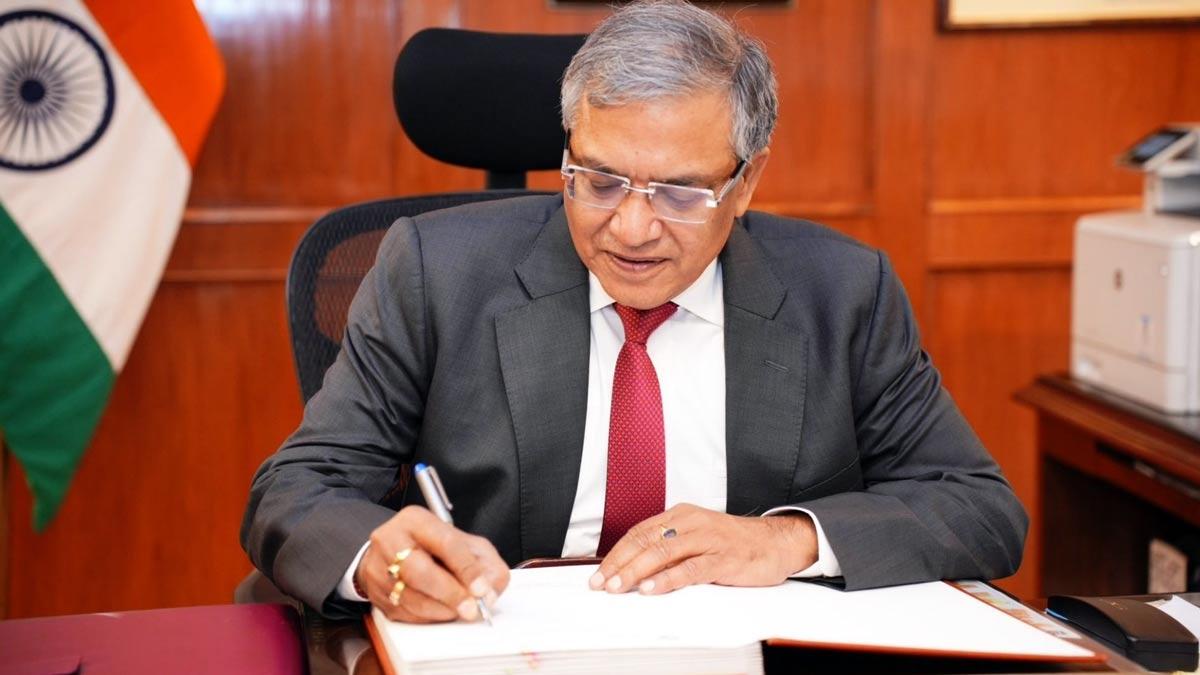


The Election Commission made the announcement on Monday that the Bihar Assembly election will be conducted in two phases, on November 6 and November 11, and the counting of votes will be held on November 14.
121 seats out of the total 243 seats will be election-bound in the first phase, while the rest of the 122 seats will be election-bound in the second.
These dates corroborate what sources had previously informed NDTV — that polling would take place after Chhath and Diwali, which occur between October 18 and October 28 this year. Political parties were said to have appealed to the Election Commission to schedule the elections after the festive period in order to have the highest possible turnout.
The battle will see the incumbent BJP–JD(U) alliance pitted against the Mahagathbandhan, championed by the RJD and Congress.
Throwing an interesting twist to the elections this year, Prashant Kishor, a seasoned campaign manager of victorious campaigns for the likes of Nitish Kumar and Mamata Banerjee, will be contesting his first election. His new political party, Jan Suraaj, aims to contest from all 243 seats.
The election will, however, take place amidst a raging political and legal controversy over the Election Commission's 'special intensive revision' (SIR) of Bihar's voter roll.
The Election Commission has justified the SIR exercise, stating that it was necessary to ensure eligible Indian citizens only are listed on the rolls. It added that new voters' ID cards have already been distributed to authenticated persons and new procedures now insist that the voter cards be dispatched within 15 days of application.
The opposition has, however, criticized the EC and the BJP government of using the revision to disenfranchise minorities, terming it a calculated attempt to erase possible opposition voters.
The EC referred to the identification of Nepali and Bangladeshi citizens in the voters' lists as the reason for the revision, resulting in the number of registered voters reducing from 7.9 crore to 7.24 crore.
The controversy evoked intense legal arguments in the Supreme Court, which noted recently that the entire exercise could be abandoned if it was illegal.
In the 2020 Bihar assembly election, the BJP's National Democratic Alliance won by a thin margin with 125 seats (BJP 74, JD(U) 43, others eight), while the Mahagathbandhan had 110 seats (RJD 75, Congress 19, others 16).
Nitish Kumar initially continued as Chief Minister with the BJP but later switched sides to join the Mahagathbandhan, only to rejoin the BJP after two years — earning him once again the moniker ‘Paltu Kumar’.
The 2025 Bihar election is the opening round of a string of high-stakes state elections running up to the 2029 Lok Sabha poll, with Assam, Bengal, and Tamil Nadu casting their ballots in 2026, and Punjab, Uttar Pradesh, and the others in 2027.
In addition to Bihar, the EC also declared eight Assembly bye-elections — two in Jammu and Kashmir (Budgam, resigned by CM Omar Abdullah upon winning Budgam and Ganderbal) and one each in Rajasthan, Jharkhand, Telangana, Punjab, Mizoram, and Odisha.
Also Read | Bihar SIR 'purified' electoral rolls, to be replicated across country: CEC Gyanesh Kumar
Also Read | Bihar Final Voter List: 7.42 Crore Electors, 47 Lakh Names Removed