

The Taliban administration has blamed a powerful faction in Pakistan's armed forces for promoting animosity and disinformation campaigns to destabilise Afghanistan and divert attention from Pakistan's internal disturbances.
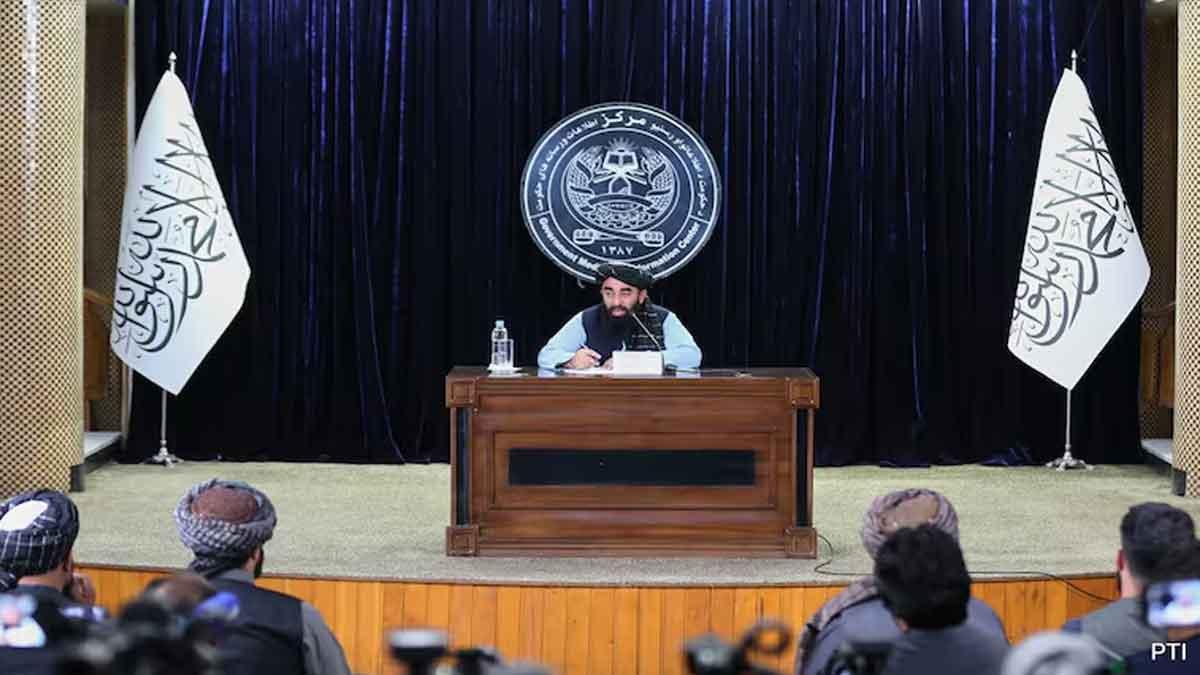
Delivering a statement at a press conference in Kabul, Zabihullah Mujahid, the Islamic Emirate of Afghanistan (IEA) spokesman, claimed the faction “cannot tolerate Afghanistan's peace and progress” and is deliberately provoking clashes along the Durand Line — the contentious border dividing both countries.
Earlier, Mujahid had claimed that more than 58 Pakistani soldiers were killed and 25 military outposts were taken over by Afghan forces in cross-border attacks. Pakistan's Inter-Services Public Relations (ISPR) subsequently confirmed 23 soldiers were killed.
Mujahid blamed the Pakistani group for conducting anti-Afghanistan propaganda, ignoring ISIS havens in Pakistan, and intentionally sabotaging peace initiatives. “This group is creating chaos to mask its own failures,” he said. “It rejects all logical solutions to Pakistan's security crisis and seeks to drag the entire region into instability.”
Afghan border soldiers have reinforced the control of national borders to prevent unauthorized crossings and keep outside attacks away, Mujahid said. Internal security in Afghanistan had been good for the last eight months, with no serious incidents, he said. "Each act of aggression has been responded to firmly," Mujahid said. "Afghanistan has the right to defend its territory and airspace.
Tensions heightened after Pakistan reportedly carried out airstrikes in Bermal district of Paktika province, violating Afghan air space. There were loud explosions heard later that night in Kabul.
Afghan troops responded in kind on Saturday by carrying out coordinated counterattacks against Pakistani military outposts in six provinces, including Kandahar and Nangarhar. Mujahid said Afghan forces captured 20 positions from the Pakistanis, killing 58 soldiers and wounding 30. "Only nine of our warriors were martyred," he added, saying that the operation was temporarily halted at the request of Qatar and Saudi Arabia. Clashes flared up again Sunday after Pakistan resumed firing.
Mujahid also accused the Pakistani side of running an information network whose purpose is to "poison the relations between the Afghan and Pakistani people" but in a deceitful manner fooling the international community. He claimed that Islamabad turns a blind eye to the presence of ISIS-Khorasan in its territory, specifically the Orakzai area, which he called the terror network's root base. "Even recent terror attacks in Tehran and Moscow were mapped out from havens within Pakistan," he asserted.
He stated that ISIS-K leader Shahab al-Muhajir and his associates are in Pakistan at present and asked the authorities to extradite or expel them.
Mujahid also threatened Islamabad with further airspace incursions or "provocative actions" close to the border, warning of "very negative consequences" if forcefulness continues. He stressed that the majority of Pakistanis — including soldiers, politicians, and civilians — do not support the policies of the renegade group, and he added, "They too are victims of its dictatorial behavior."
Even with increased violence, Mujahid stated that the Taliban is willing to talk under Islamic terms but will further defend the sovereignty of Afghanistan. “Afghanistan's stability is vital to regional peace,” he declared. “But those who seek conflict will find Afghanistan ready for it.”
Also Read | US Holds Talks with Taliban to Restore Counterterrorism Forces at Afghan Base: WSJ