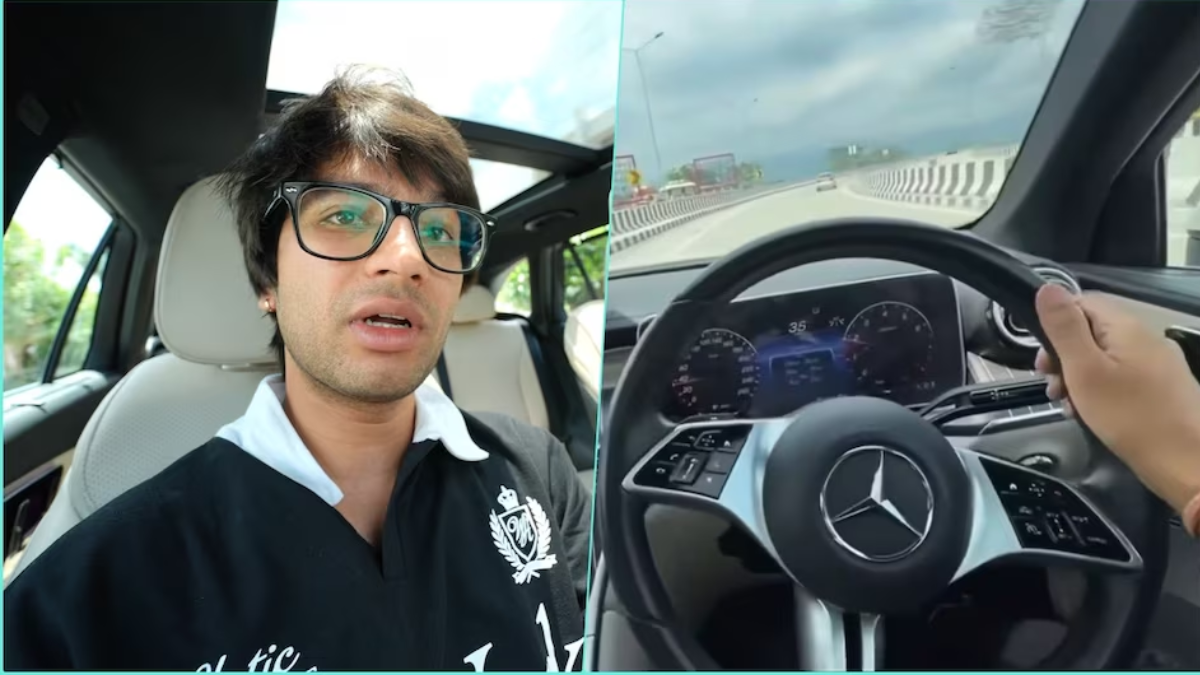



Amid the ongoing debate surrounding ethanol-blended petrol, Union Road Transport Minister Nitin Gadkari said ordinary vehicle owners cannot determine their car’s fuel efficiency with complete accuracy on their own and should instead depend on assessments carried out using authorised dealer equipment.
Gadkari made the remarks during an interview with ABP News on Monday while responding to a journalist who claimed that her car’s mileage had dropped significantly in city driving conditions after the transition to government-mandated E20 petrol.
The journalist said her vehicle, purchased in 2023 and believed to be compatible with E20 fuel, had recently seen its mileage decline from 11 km/litre to 7 km/litre. Questioning the basis of the calculation, Gadkari asked how she had arrived at those figures.
"I checked it in my car, just as everyone does," she replied, referring to the mileage figure displayed on the vehicle’s dashboard.
Gadkari, who has consistently supported the ethanol-blending initiative, responded by stressing that reliable fuel-efficiency measurements require specialised testing equipment available with authorised service providers.
"You and I can’t check the mileage. A car's mileage can only be checked using a company-authorised dealer's machine,” he said.
The discussion took place shortly after the central government admitted that E20 petrol could lead to a 3-5% reduction in fuel economy for certain vehicles, while maintaining that the broader benefits of the policy remained significant.
The Ministry of Petroleum and Natural Gas recently issued a question-and-answer document to address criticism surrounding the Ethanol Blended Petrol Programme. The document acknowledged that vehicles running on E20 fuel may experience reduced efficiency but maintained that mileage alone should not be considered the only measure of the fuel’s effectiveness.
"It is true that in some vehicles there may be a 3-5% reduction in fuel economy. But mileage is only one parameter," the ministry said.
The government introduced mandatory nationwide sales of E20 petrol from April 1 as part of its efforts to increase ethanol blending, reduce reliance on imported crude oil and lower emissions.
However, the implementation of the policy has faced criticism from motorists and concerns from parts of the automobile sector. Several vehicle owners have reported reduced mileage, while some manufacturers have questioned the impact of ethanol-blended fuel on older vehicles.
Automotive specialists note that dashboard mileage figures are not entirely inaccurate and can provide a fairly dependable estimate. Modern vehicles calculate fuel economy using information including fuel injected into the engine, distance covered and data collected by the engine control unit (ECU). Although dashboard readings are estimates, they are often within 2-5% of manual calculations when measured over a full tank, depending on the vehicle.
Experts generally regard the full-tank method as the most reliable way to measure real-world fuel efficiency. Under this approach, drivers fill their tank completely, reset the trip meter, continue driving under normal conditions until the next refuelling, and then calculate mileage by dividing the distance travelled by the amount of fuel added.
Manufacturer diagnostic systems serve a different purpose beyond displaying fuel economy figures. These tools analyse detailed information from the ECU and examine whether critical components, including fuel injectors, oxygen sensors and airflow sensors, are operating correctly. They can also identify engine-related faults and confirm ECU calibration settings that may influence fuel consumption.
However, such diagnostic equipment does not directly determine mileage across every real-world driving scenario. Actual fuel efficiency is affected by multiple factors, including traffic conditions, urban or highway driving patterns, air-conditioning usage, tyre pressure, driving habits and vehicle load.
In practical terms, a vehicle’s onboard mileage display can provide a useful indication of fuel economy, while the full-tank calculation method remains a reliable way to assess actual consumption during everyday use. Dealer diagnostic machines are mainly designed to detect mechanical or electronic problems that may impact efficiency rather than being the only accepted method for measuring mileage.
Also Read | Watch | YouTuber Sourav Joshi Retracts E20 Fuel Economy Drop Claim, Explains The Reason