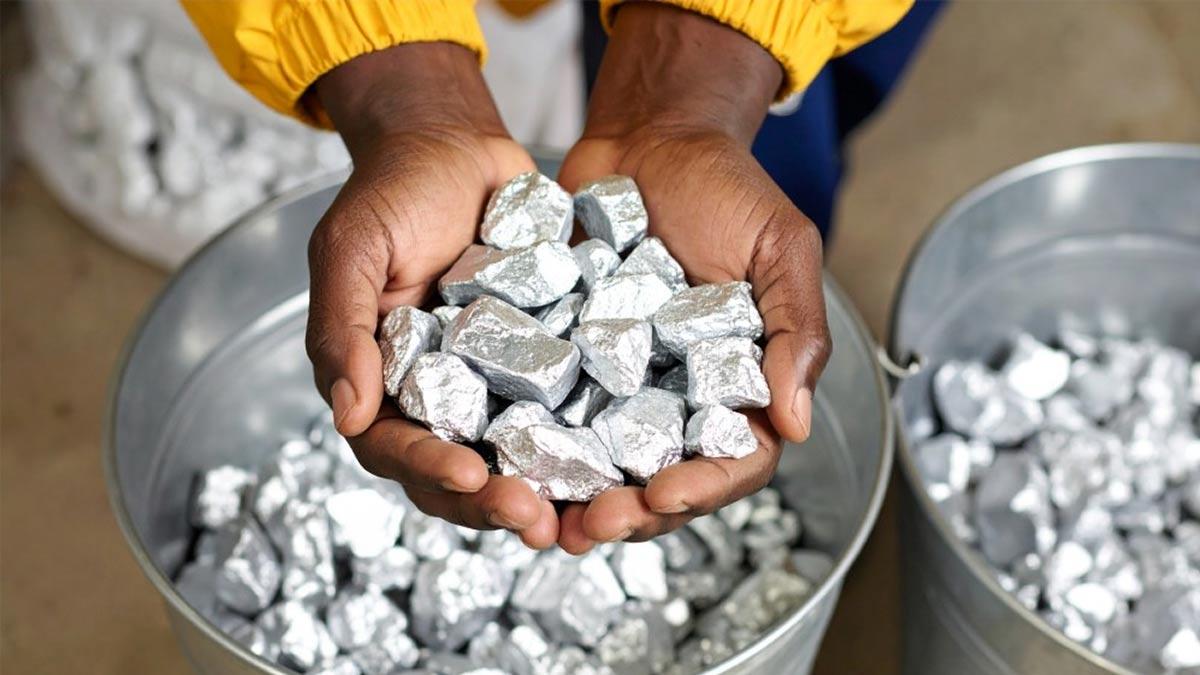


India, with its 8% of the world's rare earth element (REE) reserves, is well-placed to shape the global supply chain as the push to decrease China's hegemony gains momentum, says a CareEdge report published Tuesday.
Although China remains the leading player in the market with regards to both refining and mining REEs, its dominance will probably fade. The International Energy Agency provides an estimate that China's share of REE mining will fall from 69% to 51% by 2030, while its share of refining will drop from 90% to 76%.
This changing dynamics is an extension of a growing global trend towards diversifying and securing supply chains for critical minerals.
Even with significant reserves, India's real contribution to worldwide REE mining is less than 1%. To fill this gap, the government is introducing the National Critical Mineral Mission (NCMM) in 2025 to improve domestic mineral security and lower import dependence.
According to the 2023 edition of the Indian Minerals Yearbook, 130 REE deposits have been found in India, with most in coastal areas—Tamil Nadu, Kerala, Andhra Pradesh, and Odisha. Recent Chinese restrictions on REE exports have led Indian Rare Earths Limited (IREL), a public sector undertaking, to plan reducing its own exports, according to the report. The aim is to maintain domestic stocks and support local processing facilities.
While India is the world's third-biggest holder of REE reserves, its journey to becoming a top producer continues to be a work in progress. To give this a push, the government is promoting manufacturing domestically and will soon introduce production-linked incentives to lure industry players.
Rare earth elements play a crucial role in a number of advanced technologies, particularly clean energy, electric vehicles, and defence. "For countries that have high-tech defence and infrastructure projects, reliable access to REEs is necessary to prevent possible disruptions that would result in cost overruns or delayed deployment schedules," the report emphasizes.
In the short term, the international market will continue to be dependent on China. Even though mining and investment exploration in alternative hubs are on the rise, these supply chains are not yet mature enough to compete with China on scale or consistency.
Based on the report, an acceleration of the development of these alternatives is imperative. Greater investment, faster permitting processes, and cross-border cooperation are necessary measures to decrease supply chain concentration. With these measures taking effect, the REE sector is set to be more diversified and stable and thereby protected from geopolitical and economic risks.
The document also states that, since 2020, the US Department of Defence has invested more than $439 million towards creating a domestic REE supply chain. However, processing continues to be the biggest bottleneck, with a lot of ore mined in the U.S. continuing to get exported to China for processing.
With ongoing trade tensions, China has often leveraged its dominance over rare earth exports as a political bargaining chip. In response, the U.S. is actively seeking international alliances to reduce its dependency on Chinese supply.
Rare earth elements consist of 17 strategically important minerals, which include the Light Rare Earth Elements: neodymium (Nd) and praseodymium (Pr) used for electric vehicle motor and wind energy systems and the Heavy Rare Earth Elements: dysprosium (Dy) and terbium (Tb), the latter two being so critical for advanced military magnets in addition to high-end electronics.
Read also| Bangladesh Tariff Boost: Indian Textile Stocks Surge on US Move
Read also| Trump Sends Notices, Plans 25% Tariffs on Japan and South Korea Starting August 1