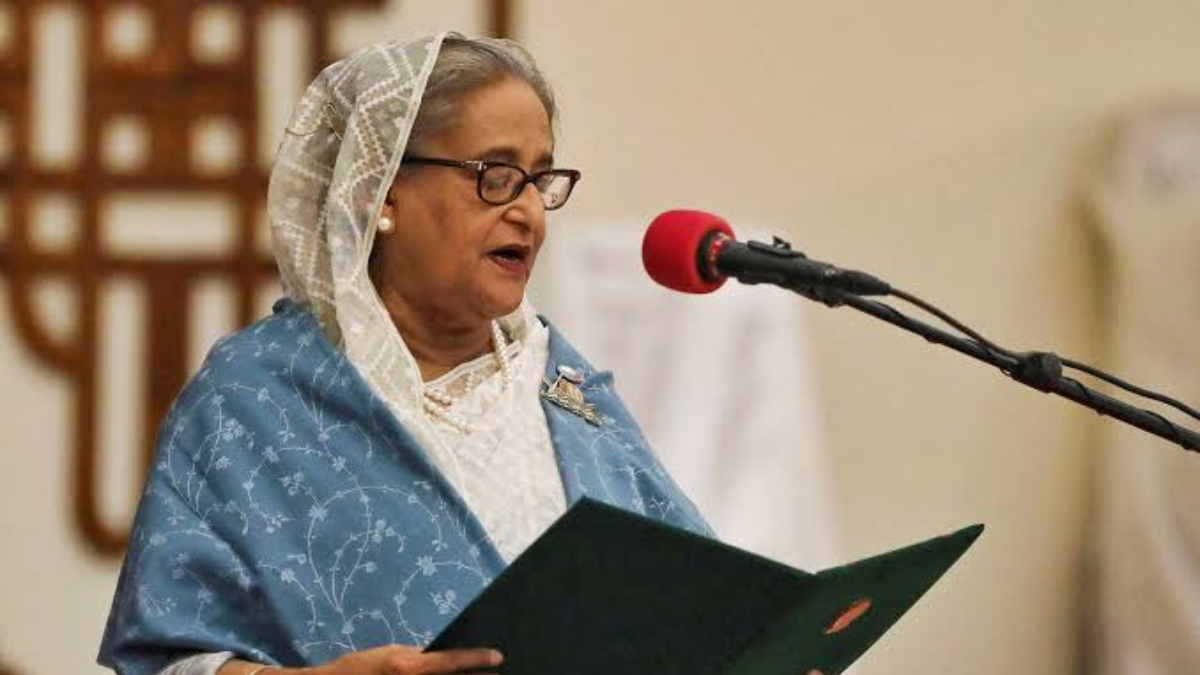


Ousted Bangladesh Prime Minister Sheikh Hasina has announced plans to return to Bangladesh in December and surrender before the authorities despite facing a death sentence, saying she is prepared to risk arrest or even death to return to her homeland.
Speaking to Reuters on Friday, the 78-year-old former prime minister said she and senior leaders of the Awami League, which has since been banned in Bangladesh, intend to return voluntarily and present themselves before the court.
Hasina was removed from power in 2024 after weeks of student-led nationwide protests spiralled into one of the most significant political crises in Bangladesh's history. She had served as prime minister for a total of 20 years across multiple terms.
In November, Bangladesh's war-crimes court sentenced her to death over allegations that she ordered a deadly crackdown on the student-led protests. Hasina has consistently denied the charges while living in exile.
Explaining her decision to return, Hasina said, “They may arrest me on my return, they may even kill me."
“Still, I have to go. My party leaders and workers are being subjected to tremendous repression. If death comes, I want it to come on my own soil, where my parents are buried and where their blood was shed," she added.
Media reports have stated that numerous Awami League workers have faced arrests, criminal cases and physical attacks since her government was overthrown.
Hasina said she had not formally informed the Bangladesh government about her proposed return.
“Democracy, voting rights, the political rights of the Awami League and justice are not subjects for secret talks," she said.
The former prime minister said the prospect of imprisonment did not concern her, noting that she had previously spent time behind bars on several occasions.
She also said she was forced to flee Bangladesh because protesters advancing toward her residence posed a threat to her life.
“When a government works for a long time, mistakes can happen — no government is above error. But the right to judge the good and bad, the right and wrong of a government belongs to the people. I leave that judgment to the people," Hasina said.
She revealed that she has held online meetings covering 125 of Bangladesh's 300 parliamentary constituencies as part of efforts to reorganise the Awami League.
“They may have convicted me, and I may not be able to contest elections. But why should they suspend the Awami League? If we have done badly, let the people decide," Hasina said.
After being forced from office in 2024 following the student-led uprising, Hasina has remained in exile in India. In November, Bangladesh's International Crimes Tribunal sentenced her to death in absentia over the crackdown on the protests, allegations she continues to reject.
Her planned return is expected to intensify political tensions in Bangladesh, where the interim government has been working to restore stability after nearly two years of political uncertainty.
The move could also affect relations between Dhaka and New Delhi, which have remained strained since India granted refuge to the former Bangladeshi prime minister.
Bangladesh has repeatedly requested Hasina's extradition from India.
In her first interview since leaving office, Hasina said she had not discussed her return with any foreign government.
She indicated that this was not the first time she had set a timeline for returning to Bangladesh.
“The authorities in Dhaka ‘want to take me back, they are repeatedly sending letters to India seeking to have me sent back’. I will go myself," Hasina said.
In April, India's Ministry of External Affairs said it was examining Bangladesh's extradition request while expressing its intention to “engage constructively with the new government and further strengthen bilateral ties."
Hasina has remained one of Bangladesh's most prominent political figures since the assassination of her father, Sheikh Mujibur Rahman—the country's founding leader—and much of her family in the 1975 military coup.
Following her return from exile in 1981, she became a leading figure in the movement against military rule and was detained multiple times during pro-democracy campaigns.
She was imprisoned in 2007 on corruption charges by a military-backed caretaker government before being released and returning to power with a sweeping electoral victory in 2008.
Although Hasina has been widely credited with driving Bangladesh's economic transformation, particularly the growth of its garment export sector, her administration also faced persistent criticism from opposition parties and human rights organisations, which accused it of suppressing dissent and eroding democratic institutions—allegations she has consistently denied.
A United Nations report estimated that as many as 1,400 people were killed during the crackdown on the 2024 student-led protests that ultimately led to her removal from office.
“Cases have been filed against almost all of our leaders and workers, and many of them are in hiding," Hasina told Reuters from her residence in Delhi. “So I said that this time I am returning home, and one day, all of you should come. All together, we will all surrender in court," she added.
Hasina did not disclose the exact date of her return or identify the court where she intends to surrender.
“I believe in justice and I feel that once proceedings start, it will be clear to the people how farcical the court is — and that I want to prove it," she said.
Also Read | Andy Burnham Poised to Become UK's Next Prime Minister, Seventh in a Decade
Advertisement