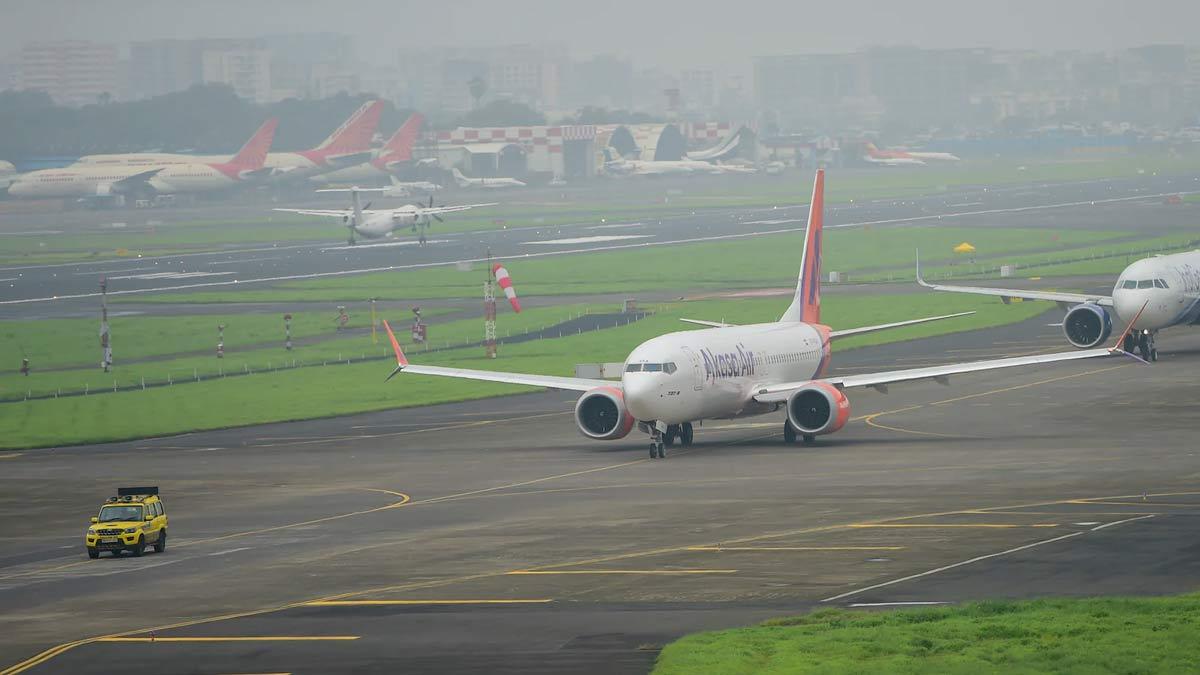


The Centre's Rs 10,000-crore aviation turbine fuel (ATF) price stabilisation scheme has yet to see any participation from airlines, with falling international oil prices making the programme less attractive, according to media reports.
Approved by the Union Cabinet last month, the one-time Rs 10,000-crore initiative was designed to compensate state-owned fuel retailers for supplying ATF to airlines at capped prices for up to three years. The objective was to protect carriers from rising fuel costs caused by the West Asia crisis.
Participation in the programme was optional, requiring airlines to enter into agreements with oil marketing companies to purchase ATF at a capped price of about Rs 115 per litre. However, sources said no airline has signed up for the scheme so far.
They attributed the lack of interest to the decline in global oil prices that began around the middle of June, reducing the attractiveness of the capped pricing mechanism.
ATF prices were further revised downward on July 1, falling to Rs 110 per litre from the Rs 115 per litre rate announced on June 9.
As part of the voluntary arrangement, airlines choosing to participate were to pay a fixed free-on-board (FOB) benchmark price of Rs 86.32 per litre, in addition to airport charges, oil company margins and applicable taxes. This translated into an effective selling price of Rs 115 per litre in Delhi, Rs 114.5 per litre in Mumbai and Rs 139 per litre in Chennai. Carriers opting out of the scheme would continue to purchase fuel at prevailing market-linked rates.
According to sources, market-linked ATF prices were around Rs 142 per litre when the scheme was announced on June 3. Since then, prices have eased following an interim peace agreement between the US and Iran, which reduced fears of supply disruptions through the Strait of Hormuz, a critical global oil transit route.
The stabilisation framework was introduced to provide airlines with greater certainty over fuel costs. Airlines enrolling in the programme would continue to receive ATF at Rs 115 per litre for up to three years, regardless of movements in global benchmark prices. Those remaining outside the scheme would continue to benefit from lower market prices when they fall but would also remain exposed to future increases.
Sources said participation was entirely voluntary, leaving it to individual airlines to decide whether to join.
With no carrier having opted in, they said, the scheme has effectively not been operationalised.
When the government fixed the ATF price at Rs 115 per litre, the prevailing retail price in Delhi was approximately Rs 105 per litre. That level had remained unchanged since April, despite only a partial pass-through of higher international fuel costs following the outbreak of the West Asia conflict in late February. The price freeze resulted in losses for state-owned oil marketing companies on ATF sales, adding to existing under-recoveries on petrol, diesel and LPG, sources said.
To offset those losses, the Union Cabinet approved the Rs 10,000-crore stabilisation programme, which was intended to cap ATF prices, protect airlines from geopolitical price swings and support the financial position of state-owned oil marketing companies.
Under the framework, whenever international benchmark prices exceeded the base rate of Rs 86.32 per litre, the government would provide interest-free advances to oil marketing companies to bridge the gap. If benchmark prices later declined, the differential would be recovered from the companies and credited back to the Consolidated Fund of India.
ATF accounts for roughly 40 per cent of an airline's operating costs, although that share can climb to nearly 60 per cent during periods of extreme price volatility.
Sources said international jet fuel prices had surged to as high as Rs 142 per litre in May from pre-war levels of Rs 60.50 per litre, fuelling concerns over rising airline costs and the possibility of higher airfares.
They added that the mechanism was conceived as a temporary price stabilisation framework rather than a subsidy, with provisions for monitoring, accountability and full recovery of government funds.
For air travellers, the key advantage of the initiative was expected to be greater stability in ticket prices by limiting the impact of sudden spikes in fuel costs. By reducing airlines' exposure to sharp fluctuations in ATF prices, the government aimed to curb the extent to which higher fuel expenses are passed on to passengers through airfare increases.
Also Read | Piyush Goyal Calls US-India Trade Deal 'Very Fair, Equitable': 'The Only Nightmare...'
Also Read | India's GST Collections Rise to Rs 1.95 Lakh Crore, Record Fastest Growth in 13 Months