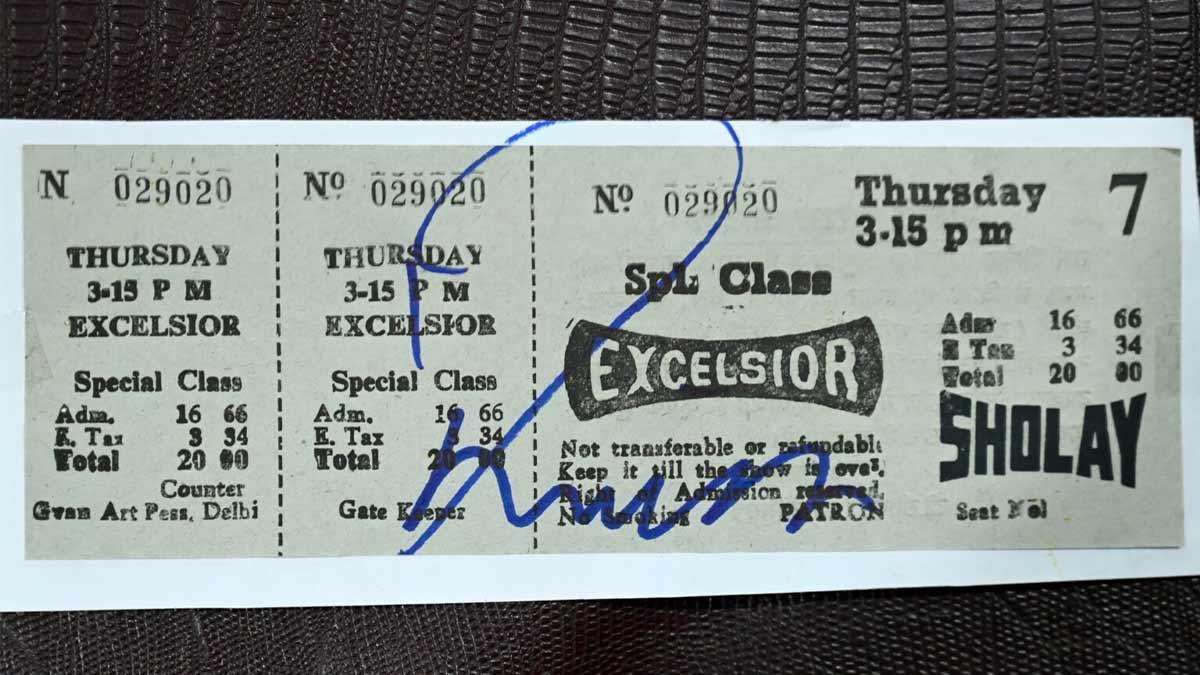


Legendary actor Amitabh Bachchan went on a trip down memory lane recently with a nostalgic post featuring a vintage cinema ticket from his classic 1975 film Sholay. The veteran actor made the reveal that the ticket cost only ₹20—a far cry from entertainment expenses today.
The film star posted the photograph on his personal website, accompanied by a collection of images from his weekly encounter with the public outside his home in Mumbai. One of them was a scrupulously saved ticket stub from Sholay, which has obviously withstood the test of time.
With the picture, he penned: "The SHOLAY ticket… retained and saved, just beaten whatever has been said a few lines above. Rs 20 !! the cost. !!!!!?? (sic)."
In awe of the price of moviegoing today, Bachchan added that ₹20 today can hardly buy a soft drink at the theater.
"I am informed that is how much an aerated beverage costs in Theatre Halls these days. is that a fact ?? So much to say, but say not… affection and love (sic)," he pondered, considering how times have changed so much.
Sholay, directed by Ramesh Sippy, is one of the most iconic action-adventure movies in the history of Indian cinema. The movie is about two gangsters, Veeru and Jai, who are hired by an ex-policeman to apprehend the feared bandit Gabbar Singh.
In his blog entry, Bachchan also touched on the special peace and inspirational energy that usually flow during the still hours of the night. He wrote lyrically about how, in the midnight stillness, the mind tends to become its most perceptive.
"It be the silence of the hour when the awakening occurs. . mysterious is it not. the waken be the ideal for the late hour. There are so many theories regarding this and two such stand out as – the hearing what you write ; and isolation amidst noise. so apparently unsupported opinion or say, but curiously in the very heart of cacophony the creative or thinking mind, excels. sometimes the best. (sic)," he pondered.
He also developed the philosophical concept of "excess," positing that flooding the mind with so many choices or things might actually inhibit creativity and activity.
"Excess is a cess that is desired to be seized, else it absorbs the activities of mind and body and the senses. disposed utilities has been a leaning for some. storing of utilities has been the learning from some. which some accept and act upon is the excess that overwhelms the mind and and body. and regret in the other is sorrow at not acting on the 'do' .(sic)," he finished, providing his readers with a reflective thought to take away.
Read also| ‘Udaipur Files’ Set for August 8 Release After Supreme Court Nod