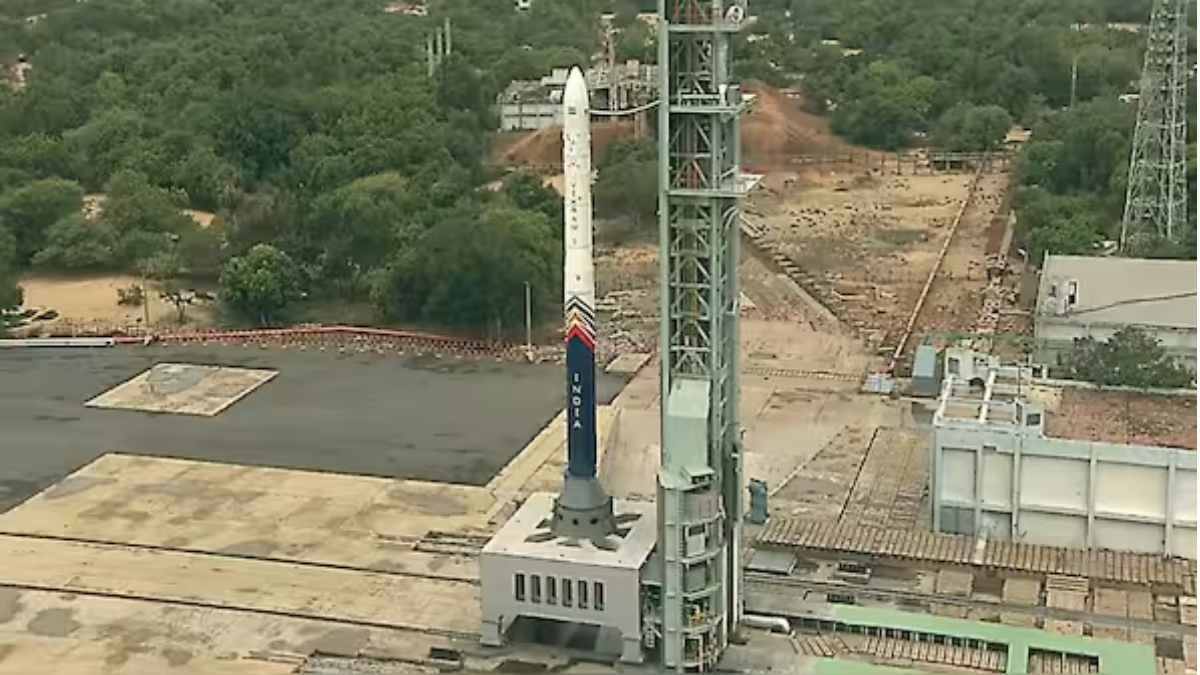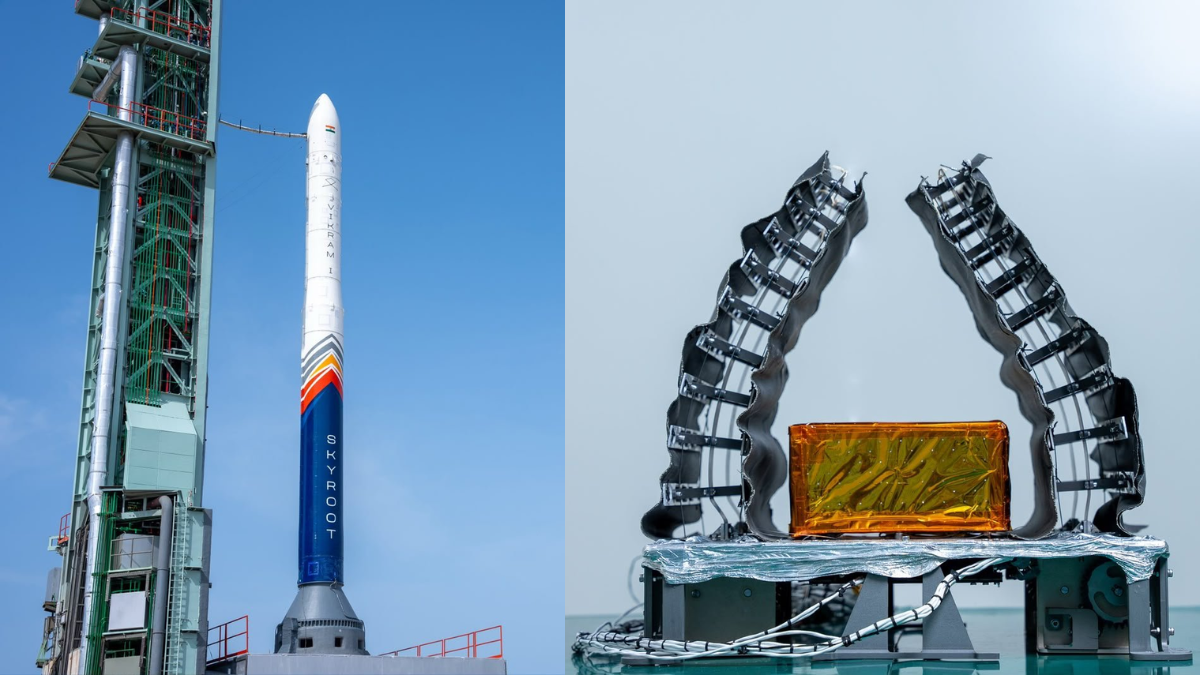
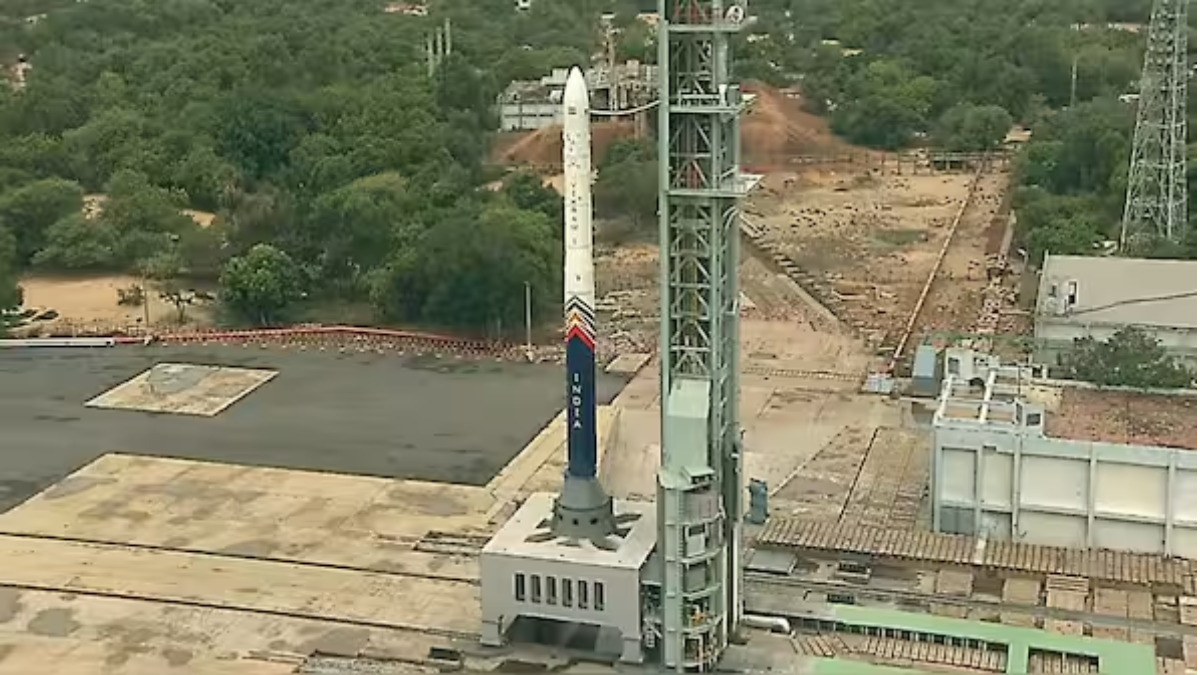


India achieved a landmark moment in the liberalisation of its space sector on Friday as Hyderabad-based Skyroot Aerospace successfully launched Vikram-1, the country's first privately developed orbital launch vehicle, placing six payloads, including two satellites, into low-Earth orbit.
Announcing the success of the mission, IN-SPACe Chairman Pawan Kumar Goenka said the launch had exceeded expectations.
"I am privileged to formally announce that the first ever Indian private sector launch has been completed successfully. The mission objective was to simply clear the tower. It went all the way up to 450km orbit, successfully completed all the tasks and something that is way beyond expected in the very first launch."
Soon after the mission's success was confirmed, Prime Minister Narendra Modi spoke over the phone with Skyroot Aerospace CEO Pawan Kumar Chandana and co-founder Naga Bharath Daka.
Congratulating the team, the Prime Minister described the successful launch of Vikram-1 as a major achievement for India's drive towards self-reliance. He conveyed his "grand greetings" and expressed confidence that their "Mission Aagaman" would continue to achieve new milestones.
The mission "proves we can be Atmanirbhar," he said.
Referring to the handwritten postcard carrying the words "Vande Mataram," which was sent by the Prime Minister and flown aboard the mission to a 450-km low-Earth orbit, Chandana told him, "Your card has successfully reached orbit."
Speaking after the launch, Chandana hailed the Prime Minister's appreciation of the team's efforts.
"It is so heartening to hear the Prime Minister talk so highly about Skyroot. This is a historic moment not just for Skyroot, for India and also for entire global space sector. We have achieved something rare and unique. The rocket is 100% built by Indians in India," said Chandana after mission success.
Vikram-1, a 23-metre-tall launch vehicle with a diameter of 1.7 metres, lifted off from the First Launch Pad at the Satish Dhawan Space Centre in Sriharikota at 12.05 pm as part of Mission Aagaman.
The launch had originally been scheduled for 11.30 am, but the countdown was briefly halted five minutes before liftoff. A revised launch window was announced shortly afterwards, and the rocket successfully lifted off at 12.05 pm.
The mission placed its payloads into a 450-km low-Earth orbit at an inclination of about 60 degrees, achieving its primary objective of validating India's first privately built orbital launch vehicle.
Alongside the satellites, Vikram-1 also carried several symbolic payloads, including Cosmic Bloom, an artwork created using lab-grown diamonds by Cosmos Diamonds, a micro-art payload, and Prime Minister Modi's handwritten "Vande Mataram" postcard.
Vikram-1 is a three-stage solid-fuel launch vehicle fitted with a restartable liquid-fuelled Orbit Adjustment Module (OAM), enabling precise orbital insertion and the deployment of multiple satellites.
The rocket is capable of carrying payloads of up to 350 kilograms to low-Earth orbit and around 260 kilograms to Sun-synchronous orbit, positioning it to serve the expanding global market for dedicated and rideshare launches of small satellites used for Earth observation, communications, scientific research and technology demonstration.
Several of its core technologies—including propulsion, avionics, thermal protection systems and composite structures—were previously validated during Skyroot's Vikram-S suborbital mission in 2022.
Friday's mission is the first of three planned developmental flights before Vikram-1 enters commercial operations.
The successful launch also marks a significant milestone in India's space-sector reforms, under which private companies have been allowed to develop and operate orbital launch vehicles. Until now, launches from Indian soil had been carried out exclusively by the Indian Space Research Organisation (ISRO).