

The FIFA World Cup 2026 has become the centre of an extraordinary political controversy after a senior United States official confirmed that President Donald Trump personally contacted FIFA President Gianni Infantino regarding the red-card suspension handed to United States striker Folarin Balogun.
According to the official, the discussion focused on the circumstances surrounding Balogun's dismissal and the resulting one-match suspension, which was later overturned through an independent appeals process. The sequence of events has prompted intense scrutiny among those closely following the tournament.
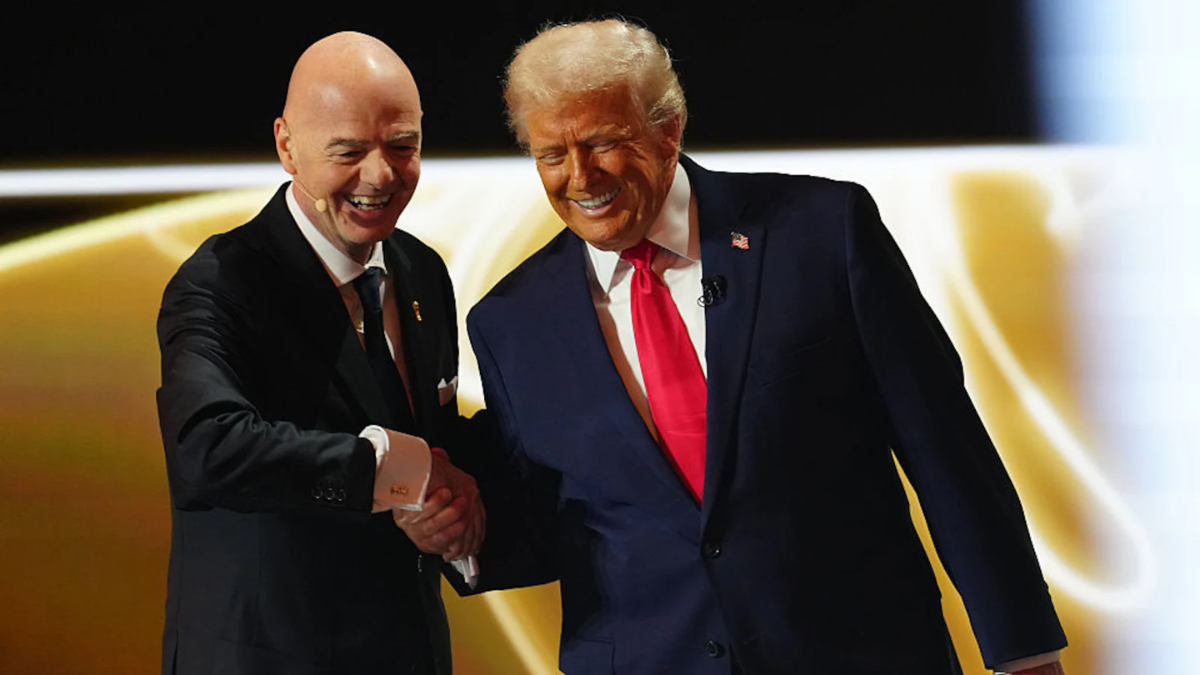
Confirming the conversation, the official said, "The President and Infantino did speak, and the President wanted to better understand the reason why a red card was given and why there was a suspension. The appeal process is run by an independent board. The U.S. government provided additional evidence that was used in the appeal process. Ultimately, the correct and proper outcome was achieved."
The confirmation came a day after FIFA cleared Balogun to play in the United States' high-profile Round of 16 meeting with Belgium in Seattle. The striker had received a red card during the Americans' 2-0 group-stage victory over Bosnia and Herzegovina, resulting in an automatic suspension.
On Sunday, however, the FIFA Disciplinary Committee announced that the mandatory one-match ban would not take effect. Explaining its decision, FIFA stated, "By operation of Article 27 FDC, the implementation of the automatic match suspension for USA player Folarin Balogun is suspended for a probationary period of one (1) year."
Balogun was dismissed in the 64th minute against Bosnia and Herzegovina and has emerged as the leading figure in the United States attack, scoring three goals during the competition. Trump welcomed the outcome on Truth Social shortly after the decision, writing, "Thank you to FIFA for doing what was right, and reversing a great injustice! President Donald J. Trump."
The reversal has triggered a strong backlash in Europe. Belgium's football federation has challenged FIFA's interpretation of its disciplinary rules and said it is reviewing all available legal avenues following the decision to make the American forward eligible for the knockout fixture.
Criticism also came from New Jersey, where Norway manager Stale Solbakken reacted after his side's landmark 2-1 victory over Brazil. Solbakken argued that FIFA's decision risked overshadowing the remainder of the tournament for the United States.
"I have to be honest. I think that's a big mistake by FIFA," Solbakken told reporters. "He's got a red card. And the VAR concluded that it was a red card. He was sent off. That means you are suspended for one game. I think what really is bad about that situation can be that it will be over the United States now. Because if they beat Belgium, they will always have that extra thing about it."
Solbakken also warned that political involvement in disciplinary matters could have damaging consequences for the sport.
"What about the next red card? What happens then? Is there going to be some committee somewhere that is going to take that card away?," Solbakken said. "It's a bad, bad, bad, bad, bad decision that will hurt the World Cup. And I feel also sorry for the United States. Because if they win, it will always be that will hang in the balance of it. So not good for the sport. Bad decision by FIFA."
For the tournament co-hosts, the decision represents a significant lift ahead of the knockout stages. Head coach Mauricio Pochettino will now have his leading striker available as the United States pursues its first FIFA World Cup quarter-final appearance since 2002. The clash with Belgium also revives memories of their dramatic Round of 16 encounter at the 2014 World Cup in Brazil, when Belgium secured a 2-1 extra-time victory despite Tim Howard producing a remarkable 16-save display for the United States.