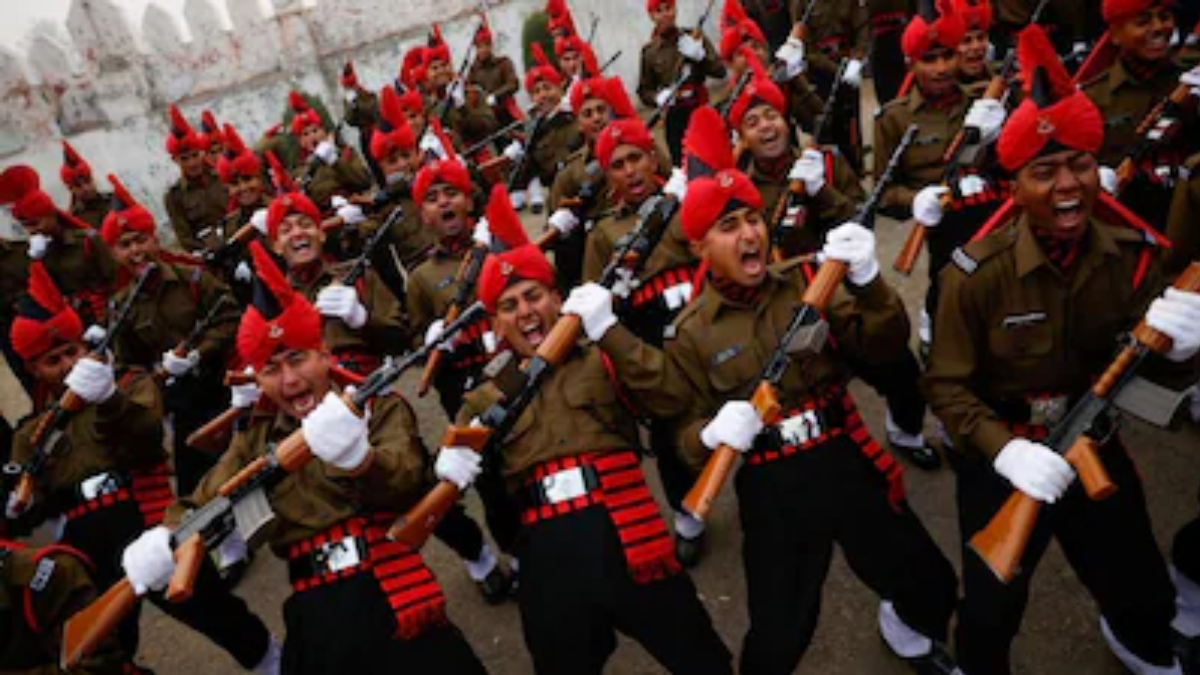


The Indian Armed Forces are weighing a proposal to retain a significantly higher proportion of Agniveers after the completion of their four-year engagement under the Agnipath scheme. As part of the discussions, the Indian Navy is expected to seek permission to retain as many as 75 per cent of its recruits, while the Army and the Indian Air Force (IAF) could advocate for retention levels of about 50 per cent.
Under the existing framework, only 25 per cent of Agniveers become eligible for permanent induction into the armed forces after completing four years of service, with selection determined by merit and organisational requirements. The first groups of Agniveers, who commenced training in early 2023, are due to complete their tenure later this year.
A report by The Indian Express said the three services believe that retaining a greater share of trained personnel would expand the pool of experienced soldiers proficient in modern weapons platforms and evolving military technologies. The matter is expected to undergo further deliberations between the three services and the Department of Military Affairs (DMA) before any final decision is made.
Launched in 2022, the Agnipath scheme recruits candidates aged between 17.5 and 21 years, with a one-time age relaxation granted during the inaugural recruitment cycle, for a fixed four-year term. On completion of service, up to 25 per cent from each batch can be permanently enrolled based on merit, medical fitness and organisational requirements. Those not retained receive a financial package along with skill certification intended to support their transition into civilian careers.
According to the report, even if the overall ceiling for permanent retention continues at 25 per cent, specialised formations may be allowed to absorb a higher proportion of Agniveers, while other units continue to operate with a larger number of personnel serving only their initial four-year tenure. The Army's newly established Bhairav battalions have been identified among the formations where such an approach could be considered.
The report added that an earlier proposal seeking higher retention had already been submitted to the DMA but was returned for re-evaluation. The armed forces have not officially confirmed that any such proposal is currently under consideration.
The Indian Express further reported that one of the principal reasons behind the review is the requirement for a larger base of experienced personnel, particularly in light of lessons learned from Operation Sindoor. Although officials reportedly assessed the performance of Agniveers during the operation as satisfactory, they also concluded that extended field exposure and repeated operational deployments remain essential in high-intensity combat environments.
The report also observed that the annual retirement of thousands of regular personnel could lead to temporary manpower shortages if retention remains limited until subsequent recruitment cycles restore force strength. At the same time, the Army is expected to steadily increase Agniveer recruitment to bridge an estimated personnel shortfall of around 1.8 lakh over the coming years.
Also Read | US Urged Countries To Skip Khamenei Funeral, 13 Withdrew: Report