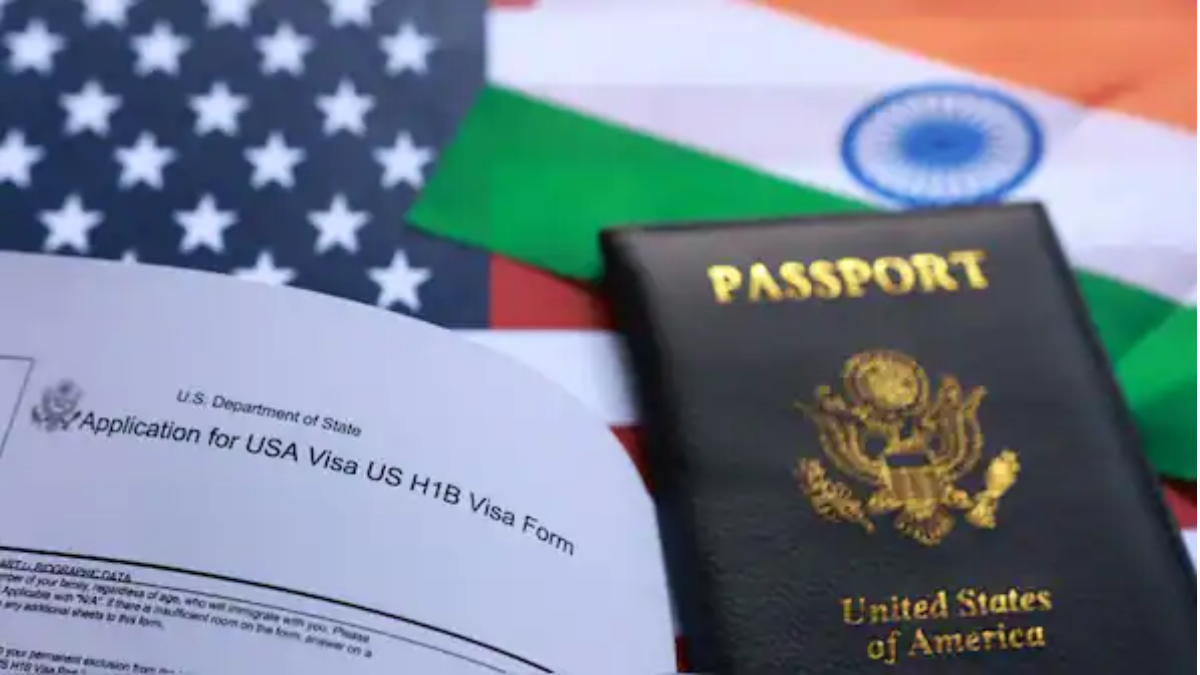


Indian professionals retained their overwhelming presence in the US H-1B visa programme during fiscal year 2025, accounting for almost 70% of all approved petitions, according to the latest annual report released by the US Citizenship and Immigration Services (USCIS). The report also underscores the continued dominance of Indian workers in the programme's long-term workforce, with technology-related roles remaining the primary source of H-1B approvals and the median annual salary rising to $133,000.
During FY2025, USCIS approved 406,348 H-1B petitions. Of those, 283,772 were granted to beneficiaries born in India, representing 69.9% of the total. China was the second-largest source country with 49,161 approvals, accounting for 12.1%, while no other nation contributed more than 2% of all approved petitions.
The figures show an even stronger Indian presence among workers already employed in the United States. Indians represented 50.3% of approvals for initial employment but accounted for 77.6% of continuing employment approvals, highlighting their substantial share of professionals who remain in the country through H-1B visa extensions.
Technology continued to dominate the H-1B landscape in FY2025.
Computer-related occupations received 252,088 approvals, making up 62% of all H-1B petitions and remaining the largest employment category by a wide margin. The next largest sectors were architecture, engineering and surveying at 10.4%, followed by education (6%), administrative specialisations (5.9%) and medicine and health (4.8%).
Within the technology sector, systems analysis and programming alone accounted for more than half of all approved H-1B beneficiaries, reflecting sustained demand for software engineers, programmers and information technology professionals.
The report also provides insight into the educational qualifications of H-1B beneficiaries.
Nearly 58% of approved applicants held a master's degree, while 30.5% possessed bachelor's degrees. Doctorate holders accounted for 8.1% of approvals, and 3.7% had professional degrees such as law or medicine. USCIS noted that individuals receiving H-1B visas for the first time were more likely to possess doctorate or professional degrees than those seeking extensions.
Salaries for H-1B workers continued to increase during the fiscal year.
The median annual compensation for approved H-1B beneficiaries reached $133,000 in FY2025. Those receiving visas for initial employment reported a median annual salary of $103,000, whereas beneficiaries approved for continuing employment earned a median of $142,000, reflecting salary growth over the course of their careers.
Among occupational groups, professionals in law and jurisprudence recorded the highest median annual earnings at more than $225,000. They were followed by miscellaneous professional and managerial occupations ($156,000), managers and officials ($150,000), and computer-related occupations ($140,000). Education professionals reported a median annual salary of $75,000.
The report also found notable differences in earnings based on educational qualifications. Holders of professional degrees received the highest median annual compensation at $205,000, compared with $135,000 for master's degree holders, $132,000 for bachelor's degree holders and $105,000 for doctorate holders. According to the report, professional degrees include qualifications in fields such as law and medicine.
Looking ahead, USCIS reported receiving 343,981 eligible H-1B registrations for fiscal year 2026, a decline of 26.9% from the 470,342 registrations recorded for FY2025. The agency attributed much of the reduction to the beneficiary-centric selection process introduced in 2024, saying the system was designed to curb duplicate registrations and improve the integrity of the H-1B lottery process.