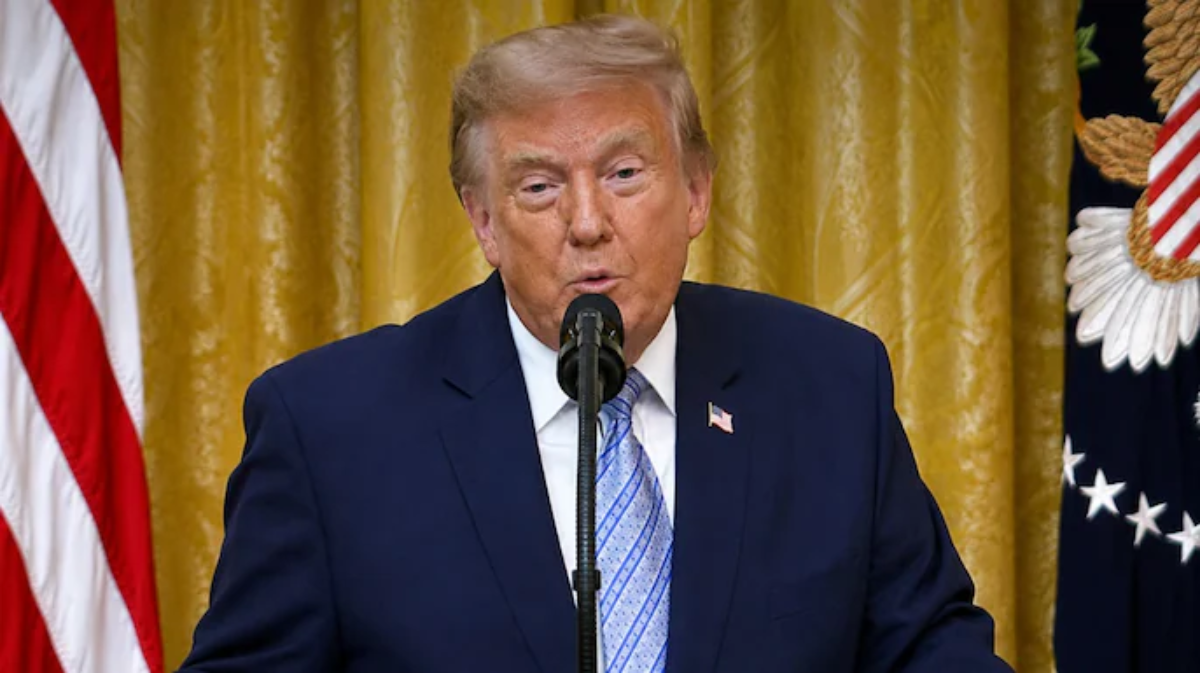


US President Donald Trump has said Iran has accepted nearly all of Washington's demands in the ongoing diplomatic negotiations, asserting that the central goal of the talks is to ensure Tehran does not acquire nuclear weapons.
In an interview with CNBC, Trump voiced confidence that the two sides are close to reaching an agreement.
He stated, "I think they've agreed to just about everything we need."
Trump described the negotiations as a key part of the United States' broader effort to dismantle Iran's nuclear programme.
Highlighting the purpose of the talks, Trump remarked, "We're in the war, and it's really the denuclearisation of Iran. This is not a war per se. This is the denuking of Iran. You can't let them have a nuclear weapon."
The US president also claimed that sustained American military action had significantly weakened Iran's military capabilities during the conflict.
Discussing the impact of those operations, Trump told CNBC, "I ripped their military apart. They have no navy, they have no air force, they have no radar, their leaders are all dead. And they elect - not elect - they raise new leaders. They're all dead also. We're on the third set of leaders, and we actually get along with them."
Trump further asserted that the United States had secured a decisive military advantage over Iran, saying any remaining missile capabilities could be eliminated if necessary.
Detailing recent military operations, Trump said, "I've defeated them militarily. They're totally defeated militarily. They have some missiles left, we could wipe them out too. And I hit them three times last week very hard because they sent a drone into a ship, I hit them. Then they did something else, and I hit them. I hit them three nights in a row, the week before I hit them two nights in a row, very hard. And we're negotiating, and we'll see whether or not. I think they've agreed to just about everything we need."
According to Trump, the United States remains in a dominant position as diplomatic efforts continue.
He pointed out, "We have all the assets. Now they are just waiting."
Addressing Iran's economic condition, Trump argued that the country's economy had been severely damaged by the conflict and suggested the United States could supply essential agricultural products once a final deal is concluded.
Praising the US Navy, Trump added, "We have the great Navy, the greatest navy in the world. These guys are unbelievable. Not one ship got through to Iran. They have 300% inflation, they're making no money. So we're going to take some of the money, and we're going to buy them. They need food. They need corn, and wheat, and soybeans, and we're going to have exclusively our American farmers provide that. Assuming we get to the position where we should get to. I think we're going to get there."
During the interview, Trump also criticised media reports suggesting Iran was in a stronger position than before the conflict began.
Referring to a report published by a leading American newspaper, Trump told CNBC, "The New York Times said the other day that Iran is in better position now than it was four months ago. I said, wait a minute, their military is gone. Their inflation is up to 300% from 5%. Their leaders are gone. Their second row of leaders are gone. Some of their third row of leaders are gone. Their generals are mostly wiped out. But they said that they are in better shape today than they were four months ago, before we attacked."
Trump also described a series of naval operations against Iranian targets, claiming US forces repeatedly destroyed the country's radar systems after they were rebuilt.
Describing the operations, Trump stated, "We did something nobody knew. Every night, we were taking ships out through the South, which is the furthest point from where they have their little weapons, and they were going along the coast with no lights for a month and a half... We blew up Iran's radar, they had no radar, they still don't. We blew it up again the other night. They had a nice new radar, they were all set to go, and we blew it up last week. They have to start all over again for a third time."
Trump's remarks came about a day after US and Iranian officials wrapped up another round of indirect talks in Doha, Qatar.
Reports indicated that the negotiations did not produce an immediate breakthrough toward a long-term peace agreement. Instead, discussions centred on unresolved elements of an interim arrangement that was first announced two weeks earlier.
Qatar's Foreign Ministry said the next round of talks would be deferred until after the funeral ceremonies for Iran's late Supreme Leader Ayatollah Ali Khamenei, who is due to be buried on July 9.
A spokesperson for Qatar's Foreign Ministry said in a post on X that the Doha meetings had made positive progress on the memorandum that halted active hostilities in June, building on the framework agreed during an earlier summit in Switzerland.
Speaking separately in Washington, Trump told reporters that negotiations on possible limits to Iran's nuclear programme were progressing steadily. He reiterated that preventing Tehran from developing nuclear weapons had been the chief objective behind the military campaign launched alongside Israel in February.
Trump told reporters, "The denuclearisation of Iran is moving along well."
He added, "They've had very good meetings, and we'll see."
US Vice President JD Vance also stressed that the administration remained focused on the nuclear issue and said it would continue to be addressed as negotiations advanced.
Vance told reporters, "Obviously, we're worried about the nuclear issue, we're going to start talking about that."
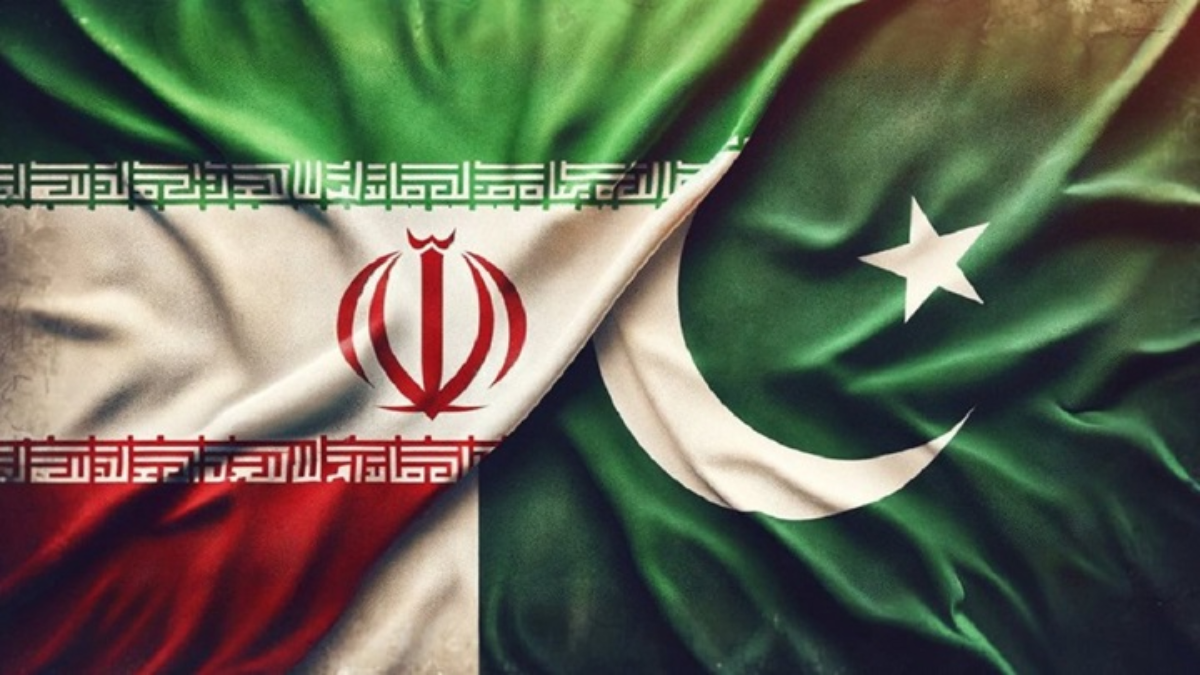
According to official updates from Doha, the American and Iranian delegations held indirect discussions through separate meetings, with Qatari and Pakistani intermediaries conveying messages between the two sides.