

India's electric vehicle (EV) market is on the cusp of a dramatic overhaul, with electric car sales set to surpass 7% market penetration by FY28—subject to challenges relating to rare earth element (REE) supply being successfully overcome, says a new report by CareEdge Advisory.
This bullish forecast comes at the same time as a turning point: US EV giant Tesla's official arrival in India.
The report brings to light the three-year fiscal period of breathtaking acceleration of India's electric vehicle ecosystem. While electric vehicle sales stood at barely more than 5,000 units in FY21, sales exploded to over 1.07 lakh units in FY25—21 times the previous level. While still constituting a smaller percentage of overall EV sales dominated by two- and three-wheelers, the category is unmistakably witnessing a period of explosive growth.
A strong policy push and corporate investments are helping shape this momentum. The Indian government has set an ambitious goal of reaching 30% EV adoption by FY30 and is actively backing this vision through several strategic measures.
Major schemes like FAME III, the Production Linked Incentive Scheme for Advanced Chemistry Cell (ACC) batteries, and customs duty relief on essential battery materials like cobalt, graphite, and lithium-ion waste are likely to increase supply chain stability and lower costs of production.
"India's electric vehicle sales penetration is expected to breach 7 per cent by FY28, subject to rare earth disruption being addressed on a timely basis. With a strong model launch pipeline, scaling up EV charging infrastructure and localisation of batteries under the PLI scheme, India is well poised to speed up EV adoption," said Tanvi Shah, Senior Director and Head of CareEdge Advisory & Research.
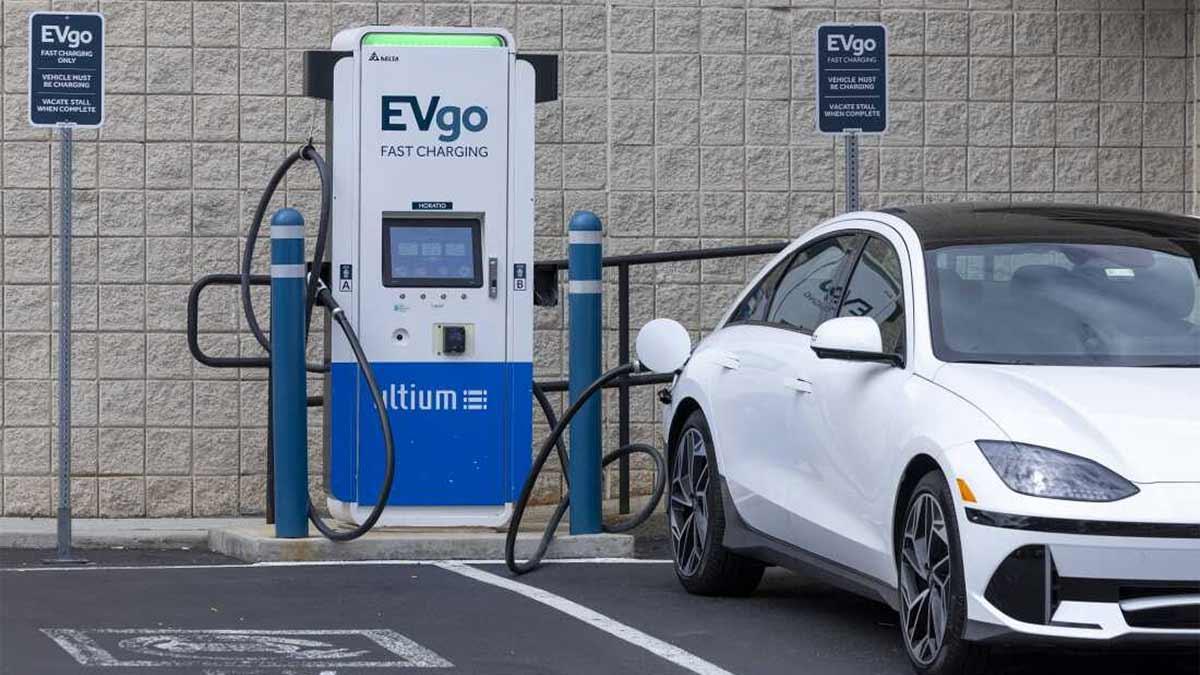
One of the biggest historical challenges—lacking charging facilities—is also making great strides. The report observes that the count of Public EV Charging Stations (EVPCS) has increased close to five times from 5,151 during calendar year 2022 to over 26,000 as of early FY25. This is a staggering compound annual growth rate (CAGR) of over 72%.
The FAME III scheme allocates special funding to augment this infrastructure. Concurrently, states like Maharashtra, Tamil Nadu, Delhi, and Gujarat are implementing specific support schemes such as land provisioning and capital subsidy incentives to induce private and public sector involvement in the infrastructure development process.
Urban cities are also jumping in, implementing policies that mandate EV-friendly parking in commercial and residential complexes. The objective is to allow EV drivers to have access to a charging station every 5 to 10 kilometres in city centers, thus alleviating one of the primary disincentives to EV uptake: range anxiety.
Private charge point operators (CPOs) are busily expanding, frequently entering public-private partnerships with municipal governments and distribution companies (DISCOMs). At the same time, central departments such as the Bureau of Energy Efficiency (BEE) and NITI Aayog are busily developing standardized processes so that every charging station is interoperable—becoming more convenient for users.
The Union Budget for FY26 also consolidated the EV industry further by exempting 16 key minerals employed in battery manufacturing from basic customs duties. This would help bring down import dependence and promote local manufacturing efforts.
CareEdge estimates that India's reliance on imported lithium-ion cells, which was almost 100% in FY22, could decline to about 20% by FY27 due to a spurt in domestic investment in integrated battery manufacturing.
Read also| Kia Launches Carens Clavis EV in India, Priced at ₹17.99 Lakh
Read also| Watch| Tesla Debuts Model Y in India at ₹60 Lakh; Q3 2025 Deliveries Expected