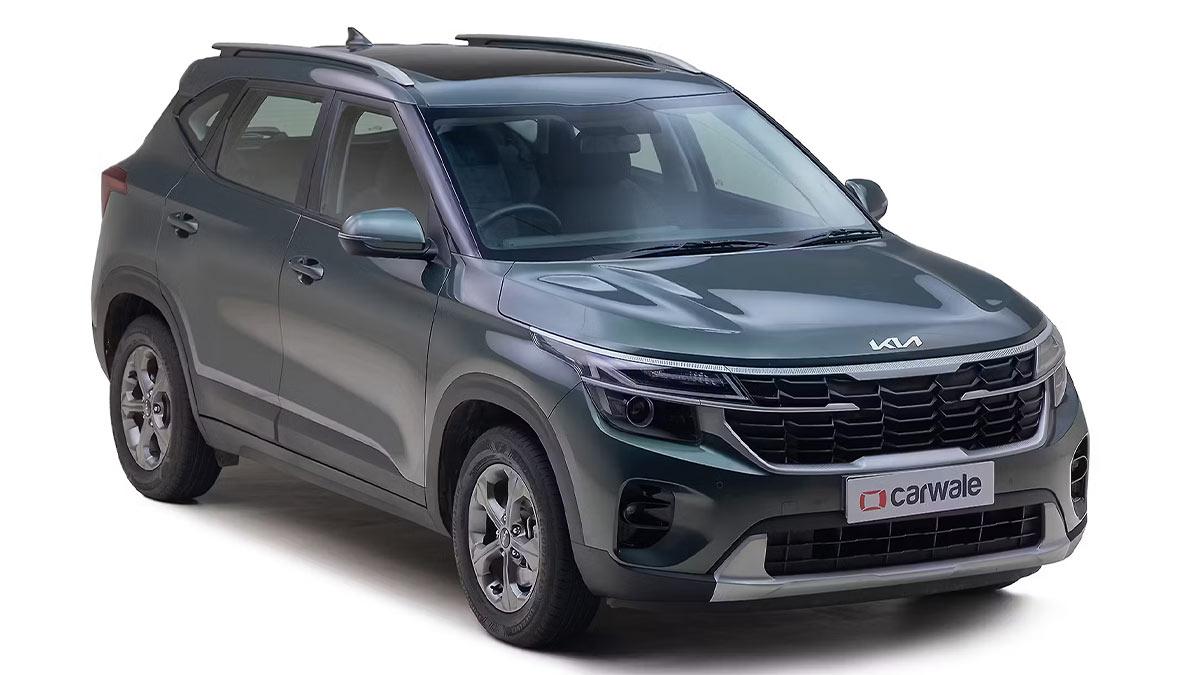


Kia has announced major price cuts across its portfolio in India, directly transferring the advantage of the recent GST 2.0 rate cuts to customers. The new prices, which are effective from 22 September 2025, arrive just ahead of the festive season, making many best-selling Kia models more affordable for buyers.
Kia's mid-size SUVs have witnessed the highest cuts. The Seltos now offers a price reduction of up to Rs 75,372, and the Syros has been cut by as much as Rs 1.86 lakh.
For those who are shopping for subcompact SUVs, the Sonet is also on sale at a discount of as much as Rs 1.64 lakh. The Carens Clavis gets a discount of up to Rs 78,674, while the regular Carens is available cheaper by up to Rs 48,513.
The biggest price reduction has been offered to Kia's flagship MPV, the Carnival, with cuts of up to Rs 4.48 lakh.
Model-wise Discount
Sonet: Rs 1,64,471
Syros: Rs 1,86,003
Seltos: Rs 75,372
Carens: Rs 48,513
Carens Clavis: Rs 78,674
Carnival: Rs 4,48,542
(Effective from 22 September 2025)
The 56th GST Council meeting after the rollout of the indirect tax regime in 2017 introduced broad changes under GST 2.0. Passenger car levies have overall been slashed by 10 percentage points, now at 18%, making cars more affordable for consumers.
Major Changes Under GST 2.0:
Petrol, hybrid, LPG, and CNG vehicles under 1,200 cc (sub-4m): 18% (reduced from 28%)
Diesel and diesel-hybrid vehicles under 1,500 cc (sub-4m): 18% (reduced from 28%)
Three-wheelers: 18% (reduced from 28%)
Motorcycles with an engine capacity of up to 350 cc: 18% (reduced from 28%)
Goods vehicles: 18% (reduced from 28%)
Small cars—such as hatchbacks, compact sedans, and compact SUVs—are now charged 18%, while mid-size, full-size, and luxury cars still cost 40%. Earlier, vehicles powered by internal combustion engines were charged 28% with a cess of 1–22%.
For electrical vehicles, the GST continues to be 5%, while hydrogen fuel cell cars (FCEVs) will henceforth be charged 5% as opposed to 12%. The automotive sector has appreciated these reforms, terms them a step in the right direction toward enhancing affordability and boosting demand.
Read also| Mercedes-Benz GLC EV Debuts with 713 km Range, Taking on BMW iX3
Read also| Renault Duster Set to Launch in India Around Diwali 2025: Report