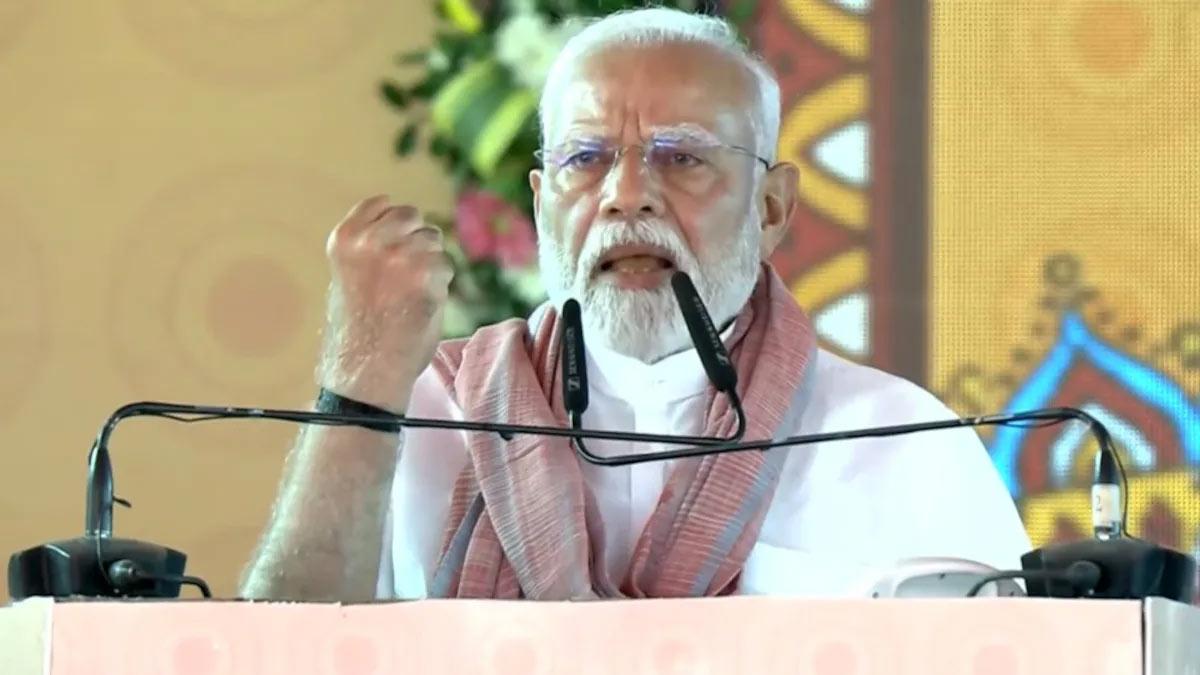


Prime Minister Narendra Modi on Sunday pointed towards the intricacies of India's pre-2014 tax regime, referring to a peculiar case in which it was cheaper for a French firm to export goods from Bengaluru to Hyderabad through Europe instead of moving them directly between the two cities.
PM Modi blamed such a strange phenomenon on the labyrinth of taxes, tolls and roadblocks that rendered trade within the country both expensive and time-consuming.
"Friends, this was the situation at that time due to the complexities of taxes and tolls. Millions of companies and crores of citizens suffered daily because of this system,” the Prime Minister said in his address to the nation ahead of the beginning of the GST 2.0 reforms on Monday.
"The extra costs of moving goods from one city to another were ultimately borne by poor families and common customers," he added.
PM Modi noted that streamlining India's tax structure became a top priority once his government came to power in 2014.
"We made GST a priority in the public and national interest. We held discussions with all stakeholders, addressed every doubt of the states, and found solutions to every concern. By bringing all states together, India’s biggest tax reform became possible," he said.
The Prime Minister reminded that the implementation of the Goods and Services Tax (GST) abolished scores of duplicate levies and one uniform system came in place across the nation.
Terming it as the realization of the dream of "One Nation, One Tax," he stated that GST transformed the world of business and enhanced logistics efficiency in India.
"Earlier, the country was trapped in a web of taxes. Today, because of GST, we have a unified market. Goods can move freely across states, industries are saving costs, and citizens are benefiting through lower prices. This is the strength of ‘One Nation, One Market’," PM Modi said.
Read also| Commerce Minister Piyush Goyal to travel to US for trade talks on September 22