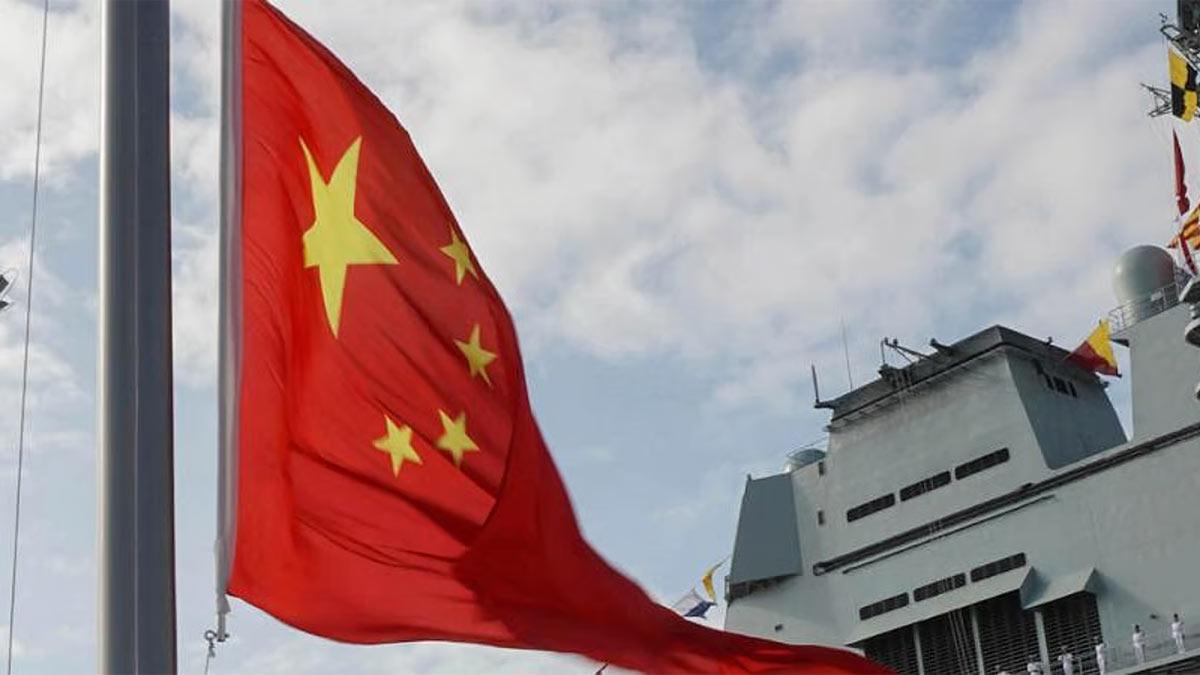


Key Chinese investments in Sri Lanka, such as the Colombo Port City and Sinopec's $3.7 billion Hambantota oil refinery, are facing huge challenges that the government headed by President Anura Kumara Dissanayake is yet to come to terms with, a report released Saturday stated.
While both nations had ambitious designs encompassing several projects, recent setbacks — particularly regulatory problems — have raised questions about the long-term prospects of Chinese investment, the Daily Sun, a leading Bangladeshi newspaper, has stated.
Sulochana Ramiah Mohan, Ceylon Today's Deputy Editor and award-winning journalist, pointed out that in late July 2025, Sri Lanka Customs detained almost 1,000 electric cars from China's BYD—primarily the ATTO 3 model—on six shipments. The cars were detained on account of differences between motor capacity declared and actual motor capacity, which impacted the calculation of excise duty.
15 Memorandums of Understanding (MoUs) were signed during the four-day state visit of President Dissanayake to China in January, involving fields such as economic and technical cooperation, agriculture, tourism, and media. Of most prominence was an agreement finalizing the Sinopec oil refinery project in Hambantota.
The report, however, identified a significant hindrance: Sinopec, having negotiated for almost five years, has asked for another 100 acres of land in addition to the originally agreed upon terms for the refinery. In addition, whereas the first proposal provided for 20 percent of the refinery output for domestic market and the remaining portion for export, Sinopec currently wishes to keep 100 percent of the refined production for local consumption. This development has caused the government to reassess the agreement, even considering reopening the bidding.
Such a shift risks derailing existing oil supply arrangements and puts Sri Lanka's government in a delicate position. The nation's Power and Energy Secretary has already declared that the government cannot unilaterally alter the MoU or go around the tender procedure, going so far as to say that the whole agreement could be scrapped.
Other Chinese Belt and Road Initiative (BRI) developments in Sri Lanka are similarly under pressure. The report highlighted Sri Lanka's widespread engagement in the BRI, some of the key projects being Hambantota Port, the Southern and Central Expressways, and Colombo Port City—all of which are funded and technologically supported by China. The Hambantota Port, which is operated by China Merchants Port Holdings on a 99-year lease after Sri Lanka missed debt repayments, has emerged as an emblem of "debt-trap diplomacy" issues.
The report recommended bringing attention to regional context as well: Bangladesh, having entered the BRI in 2016, is reconsidering its investment strategy, and the Maldives—having joined in 2014—is on the verge of debt distress, as about 40 percent of its public debt (approximately \$1.3–1.4 billion) is held by China. Nepal, meanwhile, has experienced no large-scale completion of BRI projects this year, against a backdrop of increasing strategic concerns driven by Sri Lanka's experience.
Mohan ended by calling on China to be a "cooperative and responsible partner," warning against calls that could tighten the economies of surrounding countries. By aiming for mutually rewarding results and heeding local constraints, China can remain an important development partner without destabilizing the countries it wishes to assist.
Read also| Indian Markets Fall 0.9% This Week on US Tariff Worries, FII Outflows
Read also| US Tariff Hike to Affect Just 4.8% of India’s Overall Exports