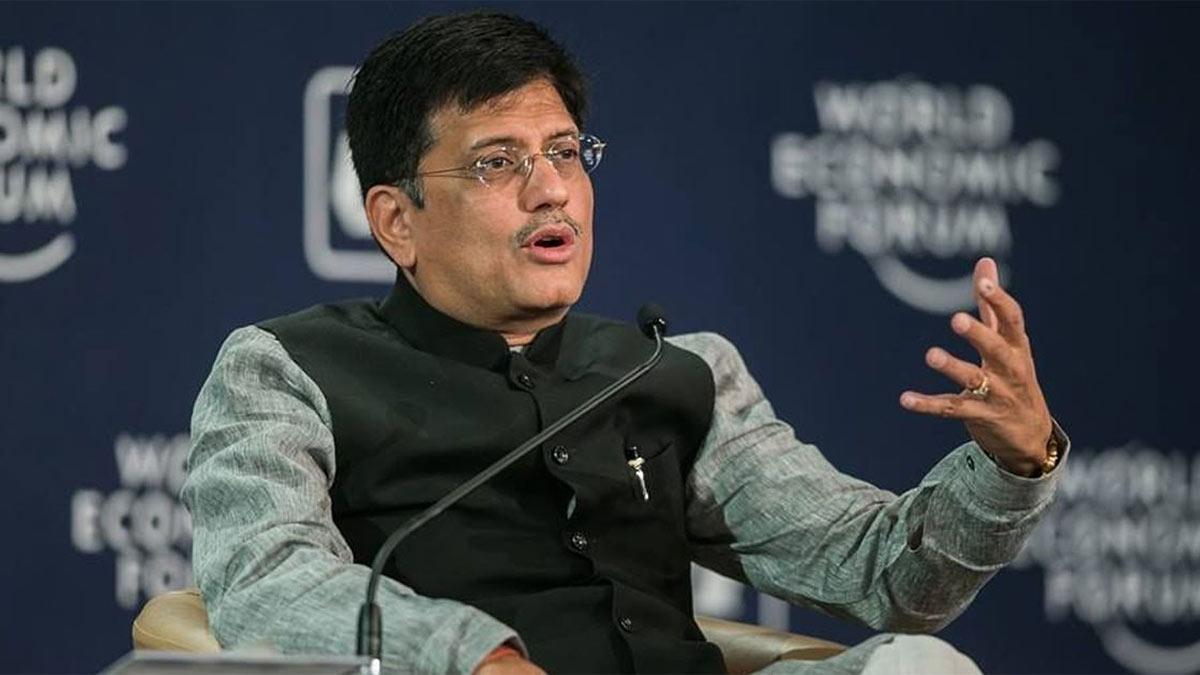


India is looking to increase its trade with America in energy items in the coming years, with the energy security strategies of the country likely to include considerable US involvement, said Commerce and Industry Minister Piyush Goyal.
"Clearly, the world recognizes that (energy security) is one area where we all have to work together. India is a big player in the energy field... we are big importers of energy from across the world, including from the US," Goyal said here on Tuesday.
He spoke at the conference 'Energy Security in an Evolving Global Environment: Creating Resilient Energy Markets Across Borders,' organized by the Consulate General of India in New York, the US-India Strategic Partnership Forum (USISPF), and India's top decarbonization solutions company, ReNew.
"We expect to increase our trade with the US on energy products in the years to come. And being close friends, natural partners, our energy security goals will have a very high element of US involvement, which will ensure price stability, diversified sources of energy for India and help us unlock limitless possibilities with the US on various fronts, energy and beyond," he said.
Goyal is heading a delegation in New York for talks with the US side to try and reach an early settlement on a bilateral trade agreement.
Embracing the fact that September 22 is the start of Navratri, a propitious day on the Hindu calendar, he stated that "things are expected to turn for the better."
The event had the presence of dignitaries like Member of Parliament Anurag Thakur, Ministry of Petroleum and Natural Gas Secretary Pankaj Jain, USISPF CEO and President Mukesh Agni, ReNew co-founder Vaishali Nigam Sinha, and ReNew Chairman and CEO Sumant Sinha.
Goyal emphasized nuclear energy as another important area for India-US collaboration.
"It's an area that we've been talking of for a long time. There were certain elements which needed to be set right. And I believe we are working in India to support private efforts on nuclear power,"
"I think the best way forward for all of us is to ensure resilient critical mineral supplies, see how we can diversify our sources to ensure that trade is not weaponized. We have to work on creating infrastructure, particularly transmission grid infrastructure within countries and across borders," which can become the backbone of clean energy transition for different nations, he said.
Goyal also reconfirmed India's continued investment in nuclear power, hoping to double capacity in the next few years through government intervention, adding difficulties around price and energy costs. "We'll have to make it more competitive," he said.
He emphasized that India is now in a good position to increase clean energy, forecasting expansion from 250 gigawatts to 500 gigawatts in the next five years.
Goyal also covered the European Union's Carbon Border Adjustment Mechanism (CBAM), cautioning against its pervasive implications.
"In fact, it could isolate the EU and hurt their economy because they would be like a small island and everybody else around them would be trading, whereas they would become price-competitive, they would actually cause inflation in their own economy, Goyal said, adding that they would cause their infrastructure and their cost of living to become unviable. Their products would lose market share and exports.
"And at the same time, this green protectionism is like a trap in which, if somebody buries his head, he may find it very difficult to come out of the sand," Goyal said.
Read also| GST 2.0 Comes Into Effect: Prices Drop for About 370 Items
Read also| India to grow steadily at 6.5% in FY 26 due to domestic demand, GST reforms: S&P Global