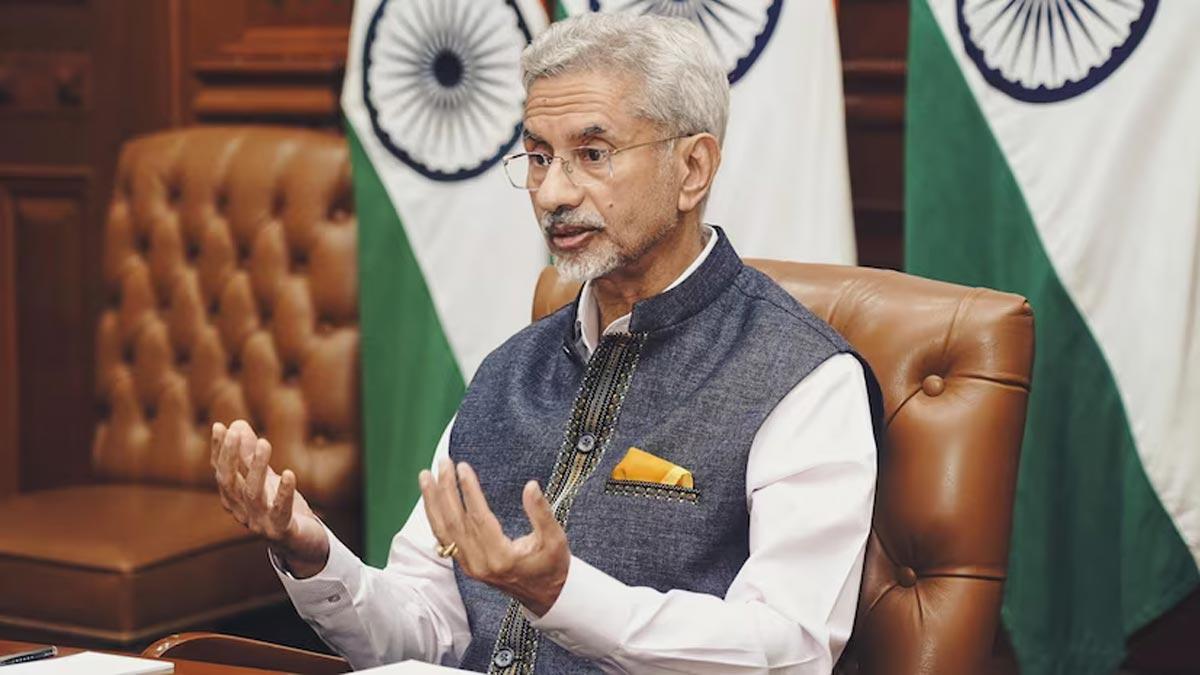


India and the U.S. are having "very active" and "intense" trade talks, External Affairs Minister S. Jaishankar said on Wednesday, as the world waits with bated breath for U.S. President Donald Trump's upcoming reciprocal tariff that will come into effect on April 2.
Addressing an interactive session organized by the Asia Society, a top think tank, Jaishankar avoided making any conclusive forecasts about the short-term implications of trade talks. But he underlined that there is a compelling "business case" for a bilateral trade agreement (BTA) between the two countries.
Following recent talks between Prime Minister Narendra Modi and President Trump in Washington, both governments committed to negotiating the first phase of the BTA by the fall of 2025.
“There’s a very active and intense trade discussion underway at this moment,” Jaishankar remarked during a session moderated by Kyung-wha Kang, President and CEO of the Asia Society and a former South Korean foreign minister.
Brendan Lynch, the US Assistant Trade Representative for South and Central Asia, is visiting India for a five-day visit from Tuesday. Still, it was not known whether the talks were on possible waivers to India before the reciprocal tariff comes into play next week.
Jaishankar once again confirmed that the trade talks have been open and constructive following Modi and Trump agreeing to negotiate toward a BTA this fall.
I am confident beyond doubt that the negotiators will get us the best possible deal. Acknowledging concerns, I would not hazard a guess at this juncture. We must watch how our dialogue with the United States unfolds," he said.
Addressing fears over India's long-protected farming industry, Jaishankar admitted the problem but said it should not turn into an impenetrable hurdle. "There is a compelling business rationale for a BTA with the U.S.," he stated.
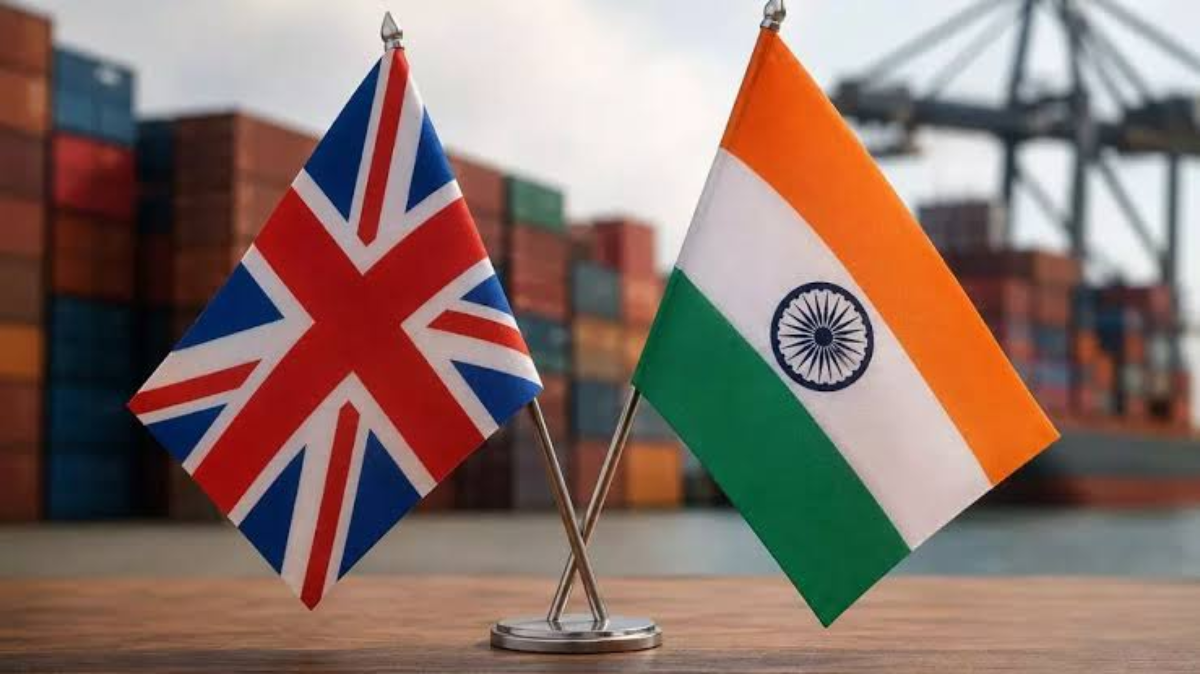
Apart from the U.S., India is also holding independent talks for free trade deals with the European Union and the UK. The negotiations are going seriously, and Jaishankar mentioned they were at a mature stage. "We are waiting to see whether we can finalize a new set of major agreements," he further added.
On the strategic side, Jaishankar sounded hopeful about an intensification of defense relations with the U.S. under the Trump administration, with an eye on hopes for a "substantially larger" and "higher quality" engagement.
"We saw an activist president who was keen to enhance security and defense cooperation," he said, implying the Trump administration is more open to transferring advanced American technologies to India.
Energy cooperation was another major area of discussion, with Jaishankar emphasizing India's aim to provide a "stable, reasonable, and predictable" energy environment to facilitate long-term growth. He mentioned that Trump had expressed interest in diversifying global energy supplies so that nations like India had more choices.
India has also been importing liquefied natural gas (LNG) from the U.S. for many decades, Jaishankar noted. "For some reasons, trade was at a certain level. But we are eager to increase it, as the U.S. is a very stable supplier," he added.
Talking about conversations on technology and innovation, Jaishankar characterized the Trump administration as "very positive" towards cooperation.
On Trump's general trade policy, Jaishankar had said, "Overall, our reading was that we saw a number of changes falling into place according to our interests, or at least providing space for convergence on which we could construct."
Trump's retaliatory tariffs have been at the center of attention for raising the threat of a global trade war, with various countries already initiating countermeasures in advance.
At the Modi-Trump summit in Washington, both leaders reaffirmed their intention to achieve the first phase of the BTA by fall 2025.
Trump's move to impose retaliatory tariffs is in line with his "America First" policy, which he launched earlier in this month. It aims to target nations that impose higher duties on American imports.
India has also, in recent years, brought down average applied tariffs on important trading partners like Australia, the UAE, Switzerland, and Norway under different bilateral pacts. Similar negotiations are currently underway with the EU and the UK, among others.
The Indian government sources say that the talks with the U.S. need to be seen in this larger trade context.
In the 2025-26 Union Budget, India cut tariffs on certain products like Bourbon whiskey, wine, and electric vehicles (EVs). These were broadly interpreted as a gesture to convey to Washington that India was willing to reduce tariffs in certain sectors.
At the same time, the U.S. has been urging India to buy more American oil, gas, and defense equipment as part of attempts to bridge the current trade deficit of around $45 billion in India's account.
The U.S. remains India's biggest trading partner, with overall bilateral trade of goods and services at $190 billion in 2023.
Also, during the financial year 2023-24, the U.S. was the third-largest source of foreign direct investment (FDI) into India, providing $4.99 billion—reflecting a significant proportion of overall FDI inflows.
Read also| India, China trying to rebuild ties, Says EAM Jaishankar
Read also| How Can You Claim Business Vehicle Insurance after an Accident?