

India is most likely to suffer modest economic consequences from the new US tariff hike on Indian exports, with the direct loss amounting to a mere 0.3–0.4% of GDP, a report released Friday by CareEdge Ratings calculates.
The report sees the resilience in this partly due to India's largely domestic-driven economy and its relatively low exposure to the US in goods exports.
"Even as India's overall dependence on exports is fairly modest, its exposure to merchandise exports to the US is also modest at about 2 per cent of GDP, and this provides further strength," the report said.
Notably, India's strong services export sector is also outside the scope of the new tariff regime and is likely to continue to fortify the external sector, it added.
In spite of the tariff action, CareEdge estimates India's current account deficit (CAD) to be contained at 0.9% of GDP in FY26.
The report also wrote off fears regarding India's energy commerce, opining that any deviation from importing oil from Russia would have negligible effects on the CAD. This is primarily due to the fact that the price differential between Russian Urals and benchmark Brent crude has significantly narrowed—from an average of $20 per barrel in 2023 to only $3 per barrel currently.
India exported $87 billion worth of goods to the US in FY25, with electronics accounting for the highest share at 17.6%, followed by pharmaceutical products at 11.8% and gems and jewellery at 11.5%.
The US contributes 37% of India's electronic exports. Yet, the report points out that some items in this category have been exempted from the 25% tariffs in the short term. In a similar action, India's pharmaceutical exports to the US—amounting to 35% of its total pharma exports—have also been exempted from the recent tariff actions.
However, the report warns against complacency, noting that "the overarching risk of sector-specific tariff action remains." Presently, India is home to one of the world's largest numbers of US FDA-approved plants that manufacture generic drugs for the US market. Although this industry maintains its competitive advantage, tariff uncertainties may still remain risks.
The report also noted that India's previous comparative advantage in tariff treatment over other economies in Asia—such as Vietnam, South Korea, and Indonesia—has now been offset following the 25% increase. There is also a pending threat of additional sanctions associated with India's current trade relations with Russia.
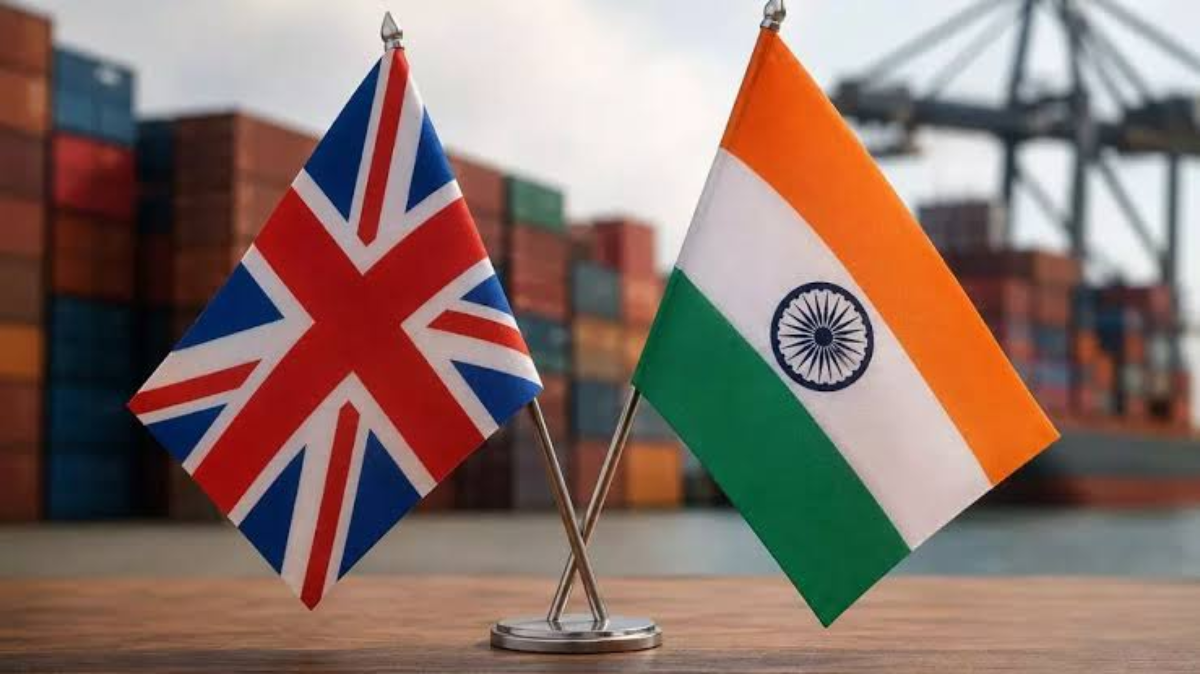
In spite of these issues, the report is cautiously hopeful about the future of India-US trade relations. Negotiations will likely go on, with possibilities for some resolution. But India will likely oppose opening up vulnerable sectors like agriculture and dairy, which may prolong the talks.
In summary, the report highlighted that it is too early to delineate definite beneficiaries or negatively affected sectors from the changing trade scenario. It pointed out that continuing developments, such as changes in tariff policy and fluctuations in global markets, will be important factors determining the trade environment in the months ahead.
Read also| Piyush Goyal Vows Strong Response to Trump Tariffs to Safeguard National Interest