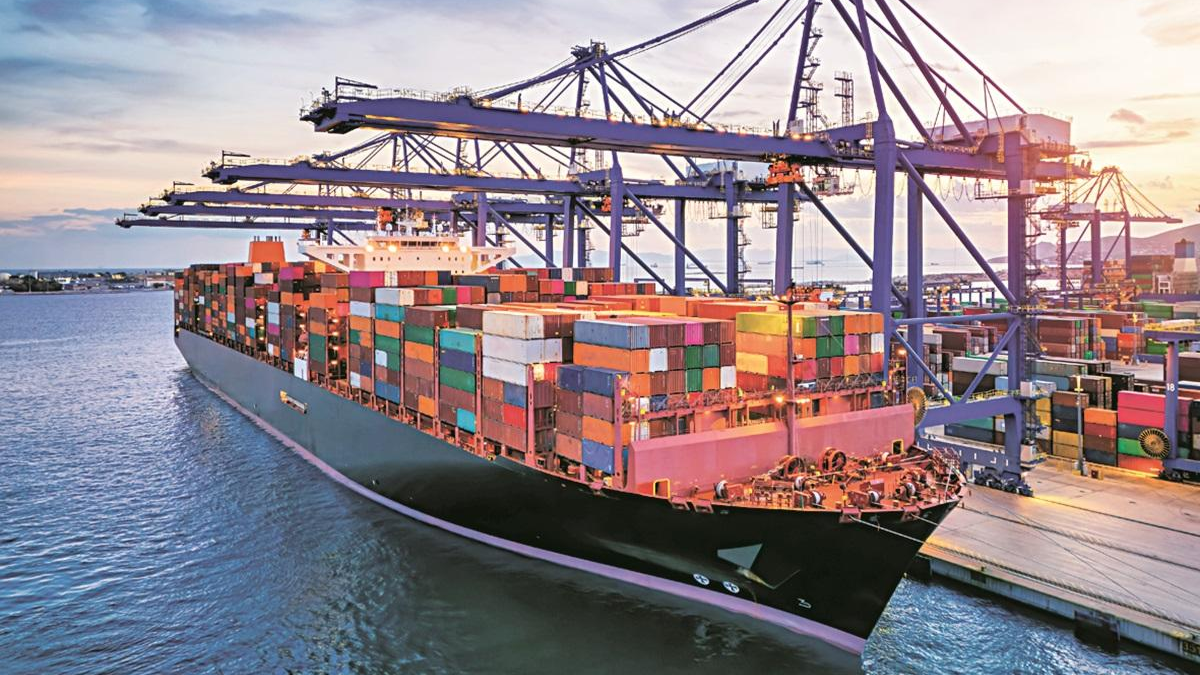



India's manufacturing sector jumped to a 14-month high in June 2025, boosting its logistics business significantly even as warehouse rents across the Asia-Pacific region remained stable amidst global trade risks, a new report published on Wednesday by Knight Frank revealed.
The report also added that India had the best manufacturing performance in the country, as the S&P Purchasing Managers' Index (PMI) rose to 58.4 in June. It was driven by high export demand, higher levels of production, and record job creation in the industry.
"India's logistics market continues to exhibit resilience and stability, supported by the rebound in manufacturing, policy support, and continued occupier demand," said Shishir Baijal, Chairman and Managing Director, Knight Frank India.
The improved manufacturing prospects contributed to a 3.4% increase in logistics rents in India's key three markets during the first half of 2025 (H1 2025), up from a 2.1% increase in the last six months, even as vacancy levels rose.
Baijal further added that as the global supply chains of multinational companies restructure themselves, India emerges as a strong contender with its cost effectiveness as well as growing infrastructure.
Throughout the wider Asia-Pacific, rents across the logistics sector were generally unchanged, falling a mere 0.4% year-over-year. This was despite increasing geopolitical tensions and risk-averse occupier sentiment. Rental growth in other major markets, though, was a mixed bag.
Logistics rents in the Chinese mainland kept declining, while rental momentum eased across Australia and Southeast Asia. The other regional markets recorded marginal increases, keeping the overall rent index stable, Knight Frank said.
The report opined that a lot of this near-term stability might have been fueled by firms bringing forward deliveries before expected tariff increases, and there are concerns that there could be troughs in occupier demand in the latter half of the year.
Tim Armstrong, Knight Frank's Global Head of Occupier Strategy and Solutions, added: "While the next quarter is likely to be challenging, as companies consider their strategic agendas, real estate portfolios are being reorganized more and more to enable more resilient, regionalised supply chains."
This process includes enhanced investment in major distribution hubs, greater access to ports and multimodal transport networks, and the merging of warehouse areas with office and operational purposes, Armstrong added.
Whereas regional logistics markets have been stable to date during H1 2025, the report highlighted that some of this stability might be fig-leafed, as it captures short-term adaptations such as pre-emptive stockpiling of inventories before fresh tariffs—a strategy occupiers have employed to insulate themselves from elevated trade expenses.
With businesses continuing to consider their operating models, longer-term supply chain network flexibility and efficiency will be where attention will increasingly be focused.
Read also| India Accelerates Trade Deals—U.S. Faces Growing Pressure to Respond
Read also| India-Born Shailesh Jejurikar Named Next CEO of FMCG Powerhouse Procter & Gamble