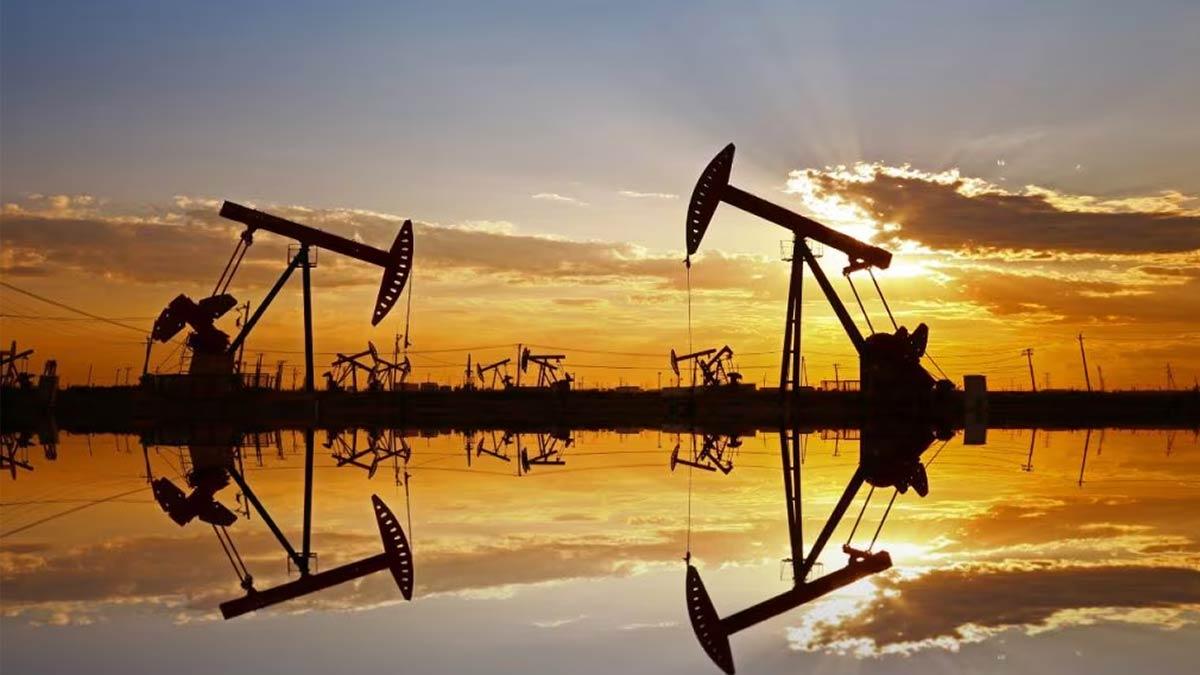


Removing Russian oil from the global market could completely upend price dynamics, according to Dave Ernsberger, co-president of S&P Global Commodity Insights.
He highlighted that geopolitical developments are expected to continue shaping oil markets over the coming year, with policies and prices linked in a complicated interplay.
There is a lot of production that can be offered that can come to the market from OPEC and OPEC Plus, but if it comes to the market in full capacity, it would be excessive," Ernsberger explained in an interview with ET.
On the issue of oil price trends, he said, "We now predict from S&P Global Commodity Insights that the price will be nearer $60 a barrel by next year's end. And maybe as low as $55 a barrel." He further said that the biggest threat to this prediction is higher prices.
Since Russia is the world's third-largest oil supplier, the country plays a pivotal role. Ernsberger explained that if any dramatic step to reduce Russian oil sales—either by policy or sanctions—were to happen, it would basically redesign existing market dynamics.
The world oil supply picture is still geopolitically challenging with several parties each vying to shape the direction of the market while facing similar operational challenges. For example, if India reduced its intake of Russian crude, this would take a big chunk of Russian supply out of the market and could leave the way open for further production from the ranks of OPEC and OPEC Plus countries.
He further added that the United States continues to prioritize maintaining oil supply operations.
Ernsberger pointed out that by high tariffs, a large economy such as the US gives incentives to nations, including India, to be self-reliant and not internationally dependent, even if at a premium. Economically, the environment for global investment is changing: choices are no longer entirely based on cost and value considerations, something he found to be a major implication of tariff imposition.
Unlike traditional expectations, the high tariff rates have not slowed down the US economy considerably nor had a drastic effect on world economic conditions—something Ernsberger termed surprising. The other significant trend is China's declining dependence on the US in comparison to previous projections.
Global supply chains have shown surprising resilience since the February tariff announcements. Ernsberger attributed this to two main reasons: the uncertainty of tariffs making medium-term planning difficult, and difficulty in precisely tracing the origin of products.
Read also| Navratri Festive Sales Rise 23–25% in First Two Days Following GST Cuts: Report
Read also| Trump Announces 100% Tariff on Pharma Imports Starting October 1