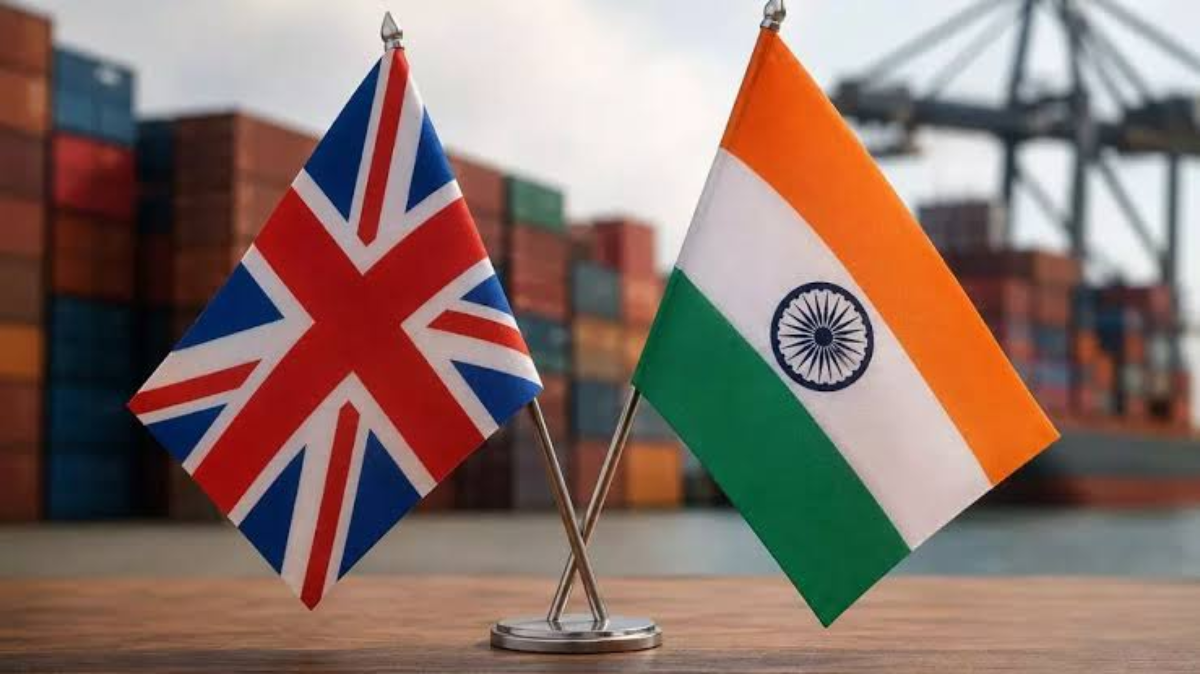
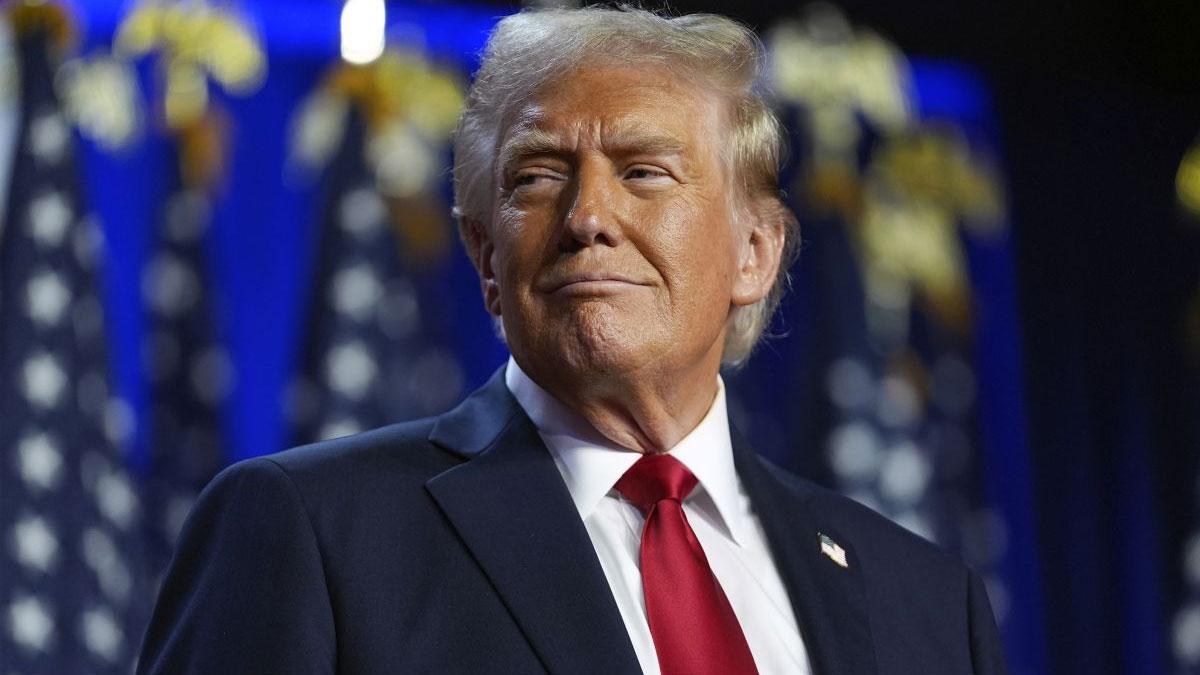


As the deadline to implement new trade tariffs drew near, President Donald Trump made good on his promise to impose a 25% tariff on Indian imports starting Friday, indicating that negotiations between the two nations had stalled.
The late Thursday evening executive order did not include the penalties for India's purchase of Russian oil or its inclusion among BRICS, even though the president had threatened those previously.
India had reacted firmly when Trump initially proposed the possibility of a sharp tariff, stating it would "take all steps necessary to secure our national interest."
In the proclamation, where Trump specified tariff levels for multiple countries, Trump explained the action by invoking ongoing and significant trade deficits, saying they constituted "an unusual and extraordinary threat to the national security and economy of the United States."
India's 25% tariff rate was significantly higher than the rates for most nations, ranging from 15% to 19%. The directive will go into effect at midnight (9:30 a.m. IST).
Although India was among the earliest nations to initiate discussions with the U.S. to avert the tariff, talks appeared to have faltered. Trump reasserted the 25% threat on Wednesday, though he offered a glimmer of optimism by saying, “We’re talking to India now, we’ll see what happens.”
Unlike with other nations, Trump issued no formal notice to New Delhi. However, no eleventh-hour agreement materialized to prevent the tariff increase.
During the negotiating period, Trump called Indian Prime Minister Narendra Modi and India "friends." As recently as last week, he declared that an agreement was imminent. Similarly, Indian Commerce Minister Piyush Goyal stated that the dialogue was making "fantastic" progress.
Trump's executive order, though, referred to disappointment with the outcomes, asserting that some "trading partners, even after they have engaged in negotiations, have presented us with terms that, in my judgment, do not adequately respond to imbalances in our trading relationship or have not agreed sufficiently with the United States on economic and national-security issues.
Myanmar was subjected to the highest tariff of 41%, but Brazil and the United Kingdom were subject to the lowest tariff rate at 10%. Interestingly, Brazil's comparatively less stringent rate was unexpected after Trump had previously threatened a 50% tariff over tensions relating to the prosecution of ex-President Jair Bolsonaro.
Mexico was given a temporary reprieve after an eleventh-hour agreement to maintain negotiations. Canada, a nation already in the midst of a hot war with Trump, was not specifically mentioned in Thursday's proclamation, though a distinct 30% tariff had already been imposed on its imports.
Negotiations with China continue. Under an interim agreement that will lapse on August 12, Chinese products are subjected to a 30% tariff—considerably short of Trump's initial threat of 145%.
Pakistan was given a 19% tariff, and Sri Lanka and Bangladesh received 20% each.
One of the key sticking points of the U.S.-India negotiations was Washington's insistence on securing wider access to India's dairy and agriculture markets. The demand had India's farmers worried about their livelihoods, as millions of Indians in the country's agricultural sector are employed by nearly half of all workers in the nation. India's government made the point in its previous response, arguing: "The government attaches the utmost importance to protecting and promoting the welfare of our farmers, entrepreneurs, and MSMEs (Micro, Small, and Medium Enterprises)."
Whereas economic giants such as the European Union and Japan were able to placate Trump through offers of huge investments in America, India couldn't afford to provide similar scale concessions.
India too was in the middle of the raging US-Russia tensions following Russian President Vladimir Putin's refusal to accept Trump's call for a Ukraine ceasefire. On Wednesday, Trump condemned India's ongoing imports of Russian oil, and by Thursday, India was being cited in an angry outburst between Trump and former Russian President Dmitry Medvedev—even though India itself was not party to it.
In an attack on Medvedev posted to Truth Social, Trump introduced India, saying: "I don't care what India does with Russia. They can take their dead economies down together, for all I care."
Trump has been outspoken on Indian tariffs for a long time, often referring to India as the "Tariff King"—a description Finance Minister Nirmala Sitharaman has categorically rejected. Cutting tariffs on high-end motorcycles, including Harley-Davidsons—a long-standing complaint by Trump since his first term—has been her move in her February budget.
The White House might have to move independently on Indian drug exports, worth $12.7 billion last year. As these drugs are an integral component of the American generic drug market, any increase in tariffs could further escalate already skyrocketing healthcare expenses.
In response to a question on Wednesday about whether he would impose a 100% penalty on India's Russian oil imports, a number he had previously suggested, Trump dodged, instead addressing a potential penalty related to membership in BRICS.
If a Russian oil buying penalty does materialize, it might be coupled with a longer deadline to put an end to the Ukraine war—August 7, probably. Enacting a secondary tariff, though, would be complicated since both India and China are significant importers of Russian energy, and the U.S. does not want to trigger a full-scale trade war with Beijing.
Likewise, any sanctioning of BRICS would affect China, further compounding the already strained geopolitical environment.
Read also| Piyush Goyal Vows Strong Response to Trump Tariffs to Safeguard National Interest
Read also| Maruti Suzuki India Sees Dip in Q1 Profit and Revenue, Exports Show Growth