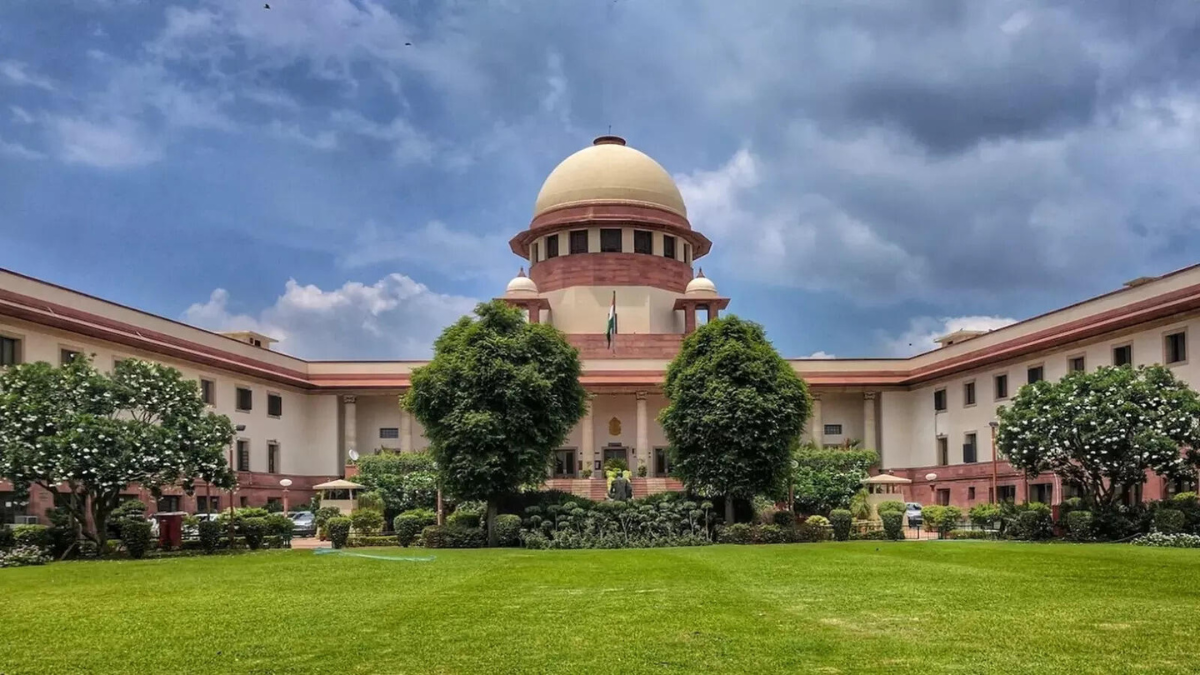
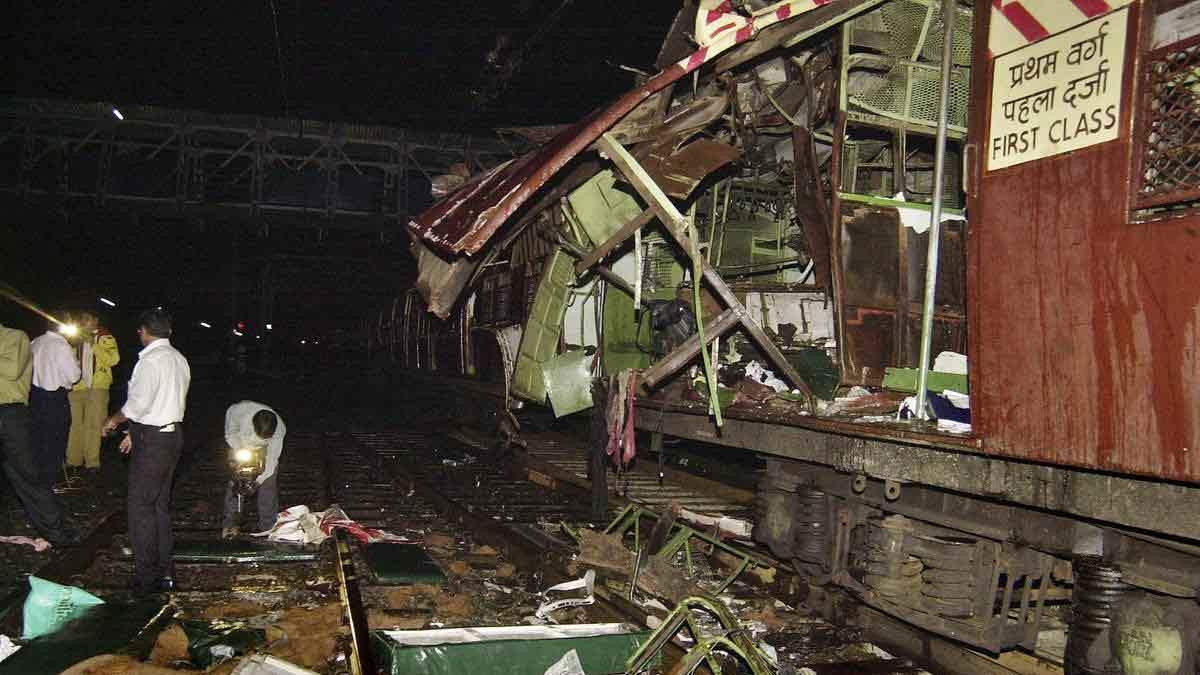


In a historical judgment on Monday, the Bombay High Court overturned death sentences handed to five convicts in the 2006 Mumbai train bombings and acquitted all 12 accused in the case, including those already sentenced to life imprisonment. The court also rejected the Maharashtra government's plea to uphold the death sentences.
A special bench of Justices Anil S. Kilor and Shyam C. Chandak expressed serious doubts regarding the credibility of the prosecution witnesses and the TIP protocols for identification of some of the accused.
The judges directed the immediate release of the acquitted persons, subject to the condition that they are not detained in any other matters, and directed them to submit personal bonds of ₹25,000 each.
The bench noted, "It is unsafe to come to the conclusion that the satisfaction that the conviction and sentence of the accused be quashed and set aside. The accused judgment and order of conviction and sentence are liable to be quashed and set aside."
The court observed that the prosecution was unable to prove the guilt of the accused "beyond reasonable doubt," adding strong points in support of the defense teams' arguments.
Initially, 13 people were charged under the tough Maharashtra Control of Organised Crimes Act (MCOCA). One of them was acquitted by the special trial court. In 2015, the special MCOCA court sentenced five to death and seven others to life imprisonment following a long trial that lasted over eight years. One of the five men sentenced to death subsequently died in jail amid the COVID-19 pandemic.
The High Court gave its judgment five months after finishing hearings on January 31, 2025. The special bench was established in July 2024 and held more than 75 hearings in six months.
The 2006 Mumbai blast, which was one of the most lethal in the city's history, consisted of seven synchronized bomb explosions on suburban trains on the Western Railway track on July 11 that killed 189 and injured more than 800.
The initial convictions were brought under various laws, namely the Unlawful Activities (Prevention) Act (UAPA), the Explosive Substances Act, the Indian Penal Code (IPC), the Railways Act, and the Maharashtra Control of Organised Crime Act (MCOCA). The prosecution had presented the case for the death penalty on charges of terrorism, organized crime, conspiracy, and mass murder.
The five sentenced to death were Kamal Ahmed Mohd Vakil Ansari (Bihar), Mohammad Faisal Ataur Rahman Shaikh (Mumbai), Ehtesham Qutubuddin Siddique (Thane), Naveed Hussain Khan (Secunderabad), and Asif Khan Bashir Khan (Jalgaon). They were accused of having planted the bombs.
They comprised Tanveer Ahmed Mohammed Ibrahim Ansari, Mohammed Majid Mohammed Shafi, Shaikh Mohammed Ali Alam Shaikh, Mohammed Sajid Margub Ansari, Muzammil Ataur Rahman Shaikh, Suhail Mehmood Shaikh, and Zameer Ahmed Latifur Rehman Shaikh.
Wahid Shaikh was previously acquitted by the special court after nine years in prison.
Subsequent to the 2015 judgment, the Maharashtra government then approached the Bombay High Court to uphold the death penalties, while the convicted persons at the same time lodged appeals questioning the special court verdict.
The defence, represented by senior attorneys such as former Delhi High Court judge S. Muralidhar, Nitya Ramakrishnan, and S. Nagamuthu, along with lawyers Yug Mohit Chaudhry and Payoshi Roy, contended that the accused were falsely accused and their confessions were coerced by the Maharashtra Anti-Terrorism Squad (ATS) and hence are inadmissible.
They underlined the lack of concrete evidence and indicated that the accused had already languished in prison for 18 years, losing the best years of their lives to a defective judicial process.
The state, led by Special Public Prosecutor Raja Thakare, argued that the case was one of the "rarest of the rare" and argued that the investigation had yielded sufficient evidence to justify the most severe punishments.
In defiance of the prosecution, the High Court finally acquitted the accused on the grounds of absence of satisfactory evidence and procedural errors that invalidated the previous verdicts.
Read also| US Media Reveals Air India Captain’s Final Cockpit Conversation Before India Crash
Read also| India Warns NATO Chief Against ‘Double Standards’ on Sanctions Over Russia Trade