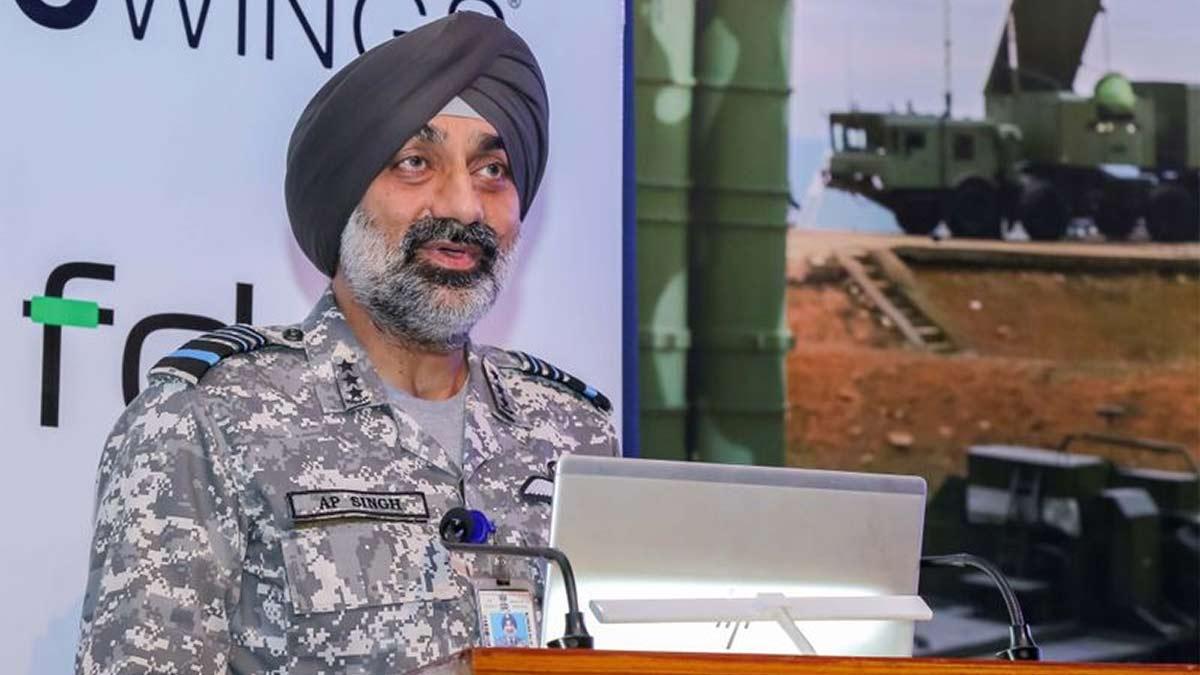


The Indian Air Force was running "on song" and had the strength to take its attack beyond Pakistan but did not do so since the planned targets had already been met, Air Chief Marshal AP Singh said on Tuesday during comments on Operation Sindoor.
Talking in a fireside chat session at the Army War College, the Chief of Air Staff characterized the operation as a demonstration of "conflict termination", noting how it was different from many world conflicts that tend to go on for many years.
"That night, we were on a song. We could have continued to strike, but that was not our aim. Our objective was already achieved," he said, referring to his force's strikes on Pakistan on the intervening night of May 9 and 10.
The Chief of Air Staff also referred to comments, largely on social media, that the Indian military should have continued its strikes against Pakistan.
"It is very easy to say that. But why should you prolong a war which can be stopped after having achieved your objective. I think that is what is required," he said.
Air Chief Marshal Singh also said that the myth in India that the use of air power would escalate any conflict situation was busted following Operation Sindoor.
"We can't shy away from the fact that air power today has to be used offensively. It has to be used to get to a decision point," he said.
"And whether it is a war of today or tomorrow, the relevance of air power will continue to grow. We need to look at leveraging technology to improve in our air and space domain," he said.
Air Chief Marshal AP Singh pointed out that technology was also instrumental in the successful conduct of Operation Sindoor by India.
The operation began on May 7 following the Pahalgam terror attack, with India attacking terrorist infrastructure in Pakistan-occupied territory. The operation resulted in four days of intense fighting, which came to an end on May 10 with a pact of understanding that military action was to be stopped.
After attacking the terrorist bases, India informed Pakistan that its objective was not to escalate but to render the terrorist infrastructure ineffective. But when Pakistan tried to retaliate militarily, India retaliated in full force.
The Indian counterattack on the night of May 9–10 forced Pakistan to request a halt to hostilities, bringing the confrontation to a de facto halt.
Read also| Indian Navy Strengthens Fleet with Commissioning of Two Nilgiri-Class Frigates