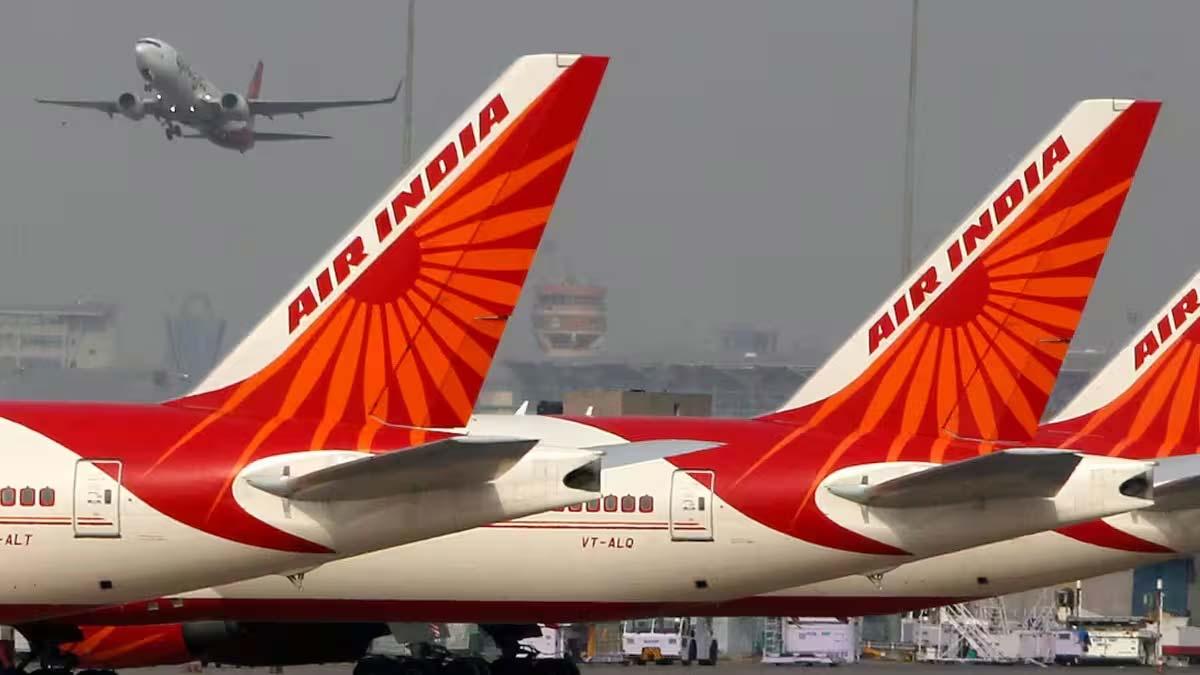


Air India successfully undertook precautionary inspections of fuel control switch (FCS) lock mechanism on all its Boeing 787-8 Dreamliner fleet and found no issues, officials from the Tata Group-owned airline said.
These checks were conducted after a circular was issued by the Directorate General of Civil Aviation (DGCA), which asked operators to check the FCS system in certain Boeing models by July 21.
The circular was issued after the Aircraft Accident Investigation Bureau (AAIB) published its report into a fatal Boeing 787-8 crash in Ahmedabad.
The investigation by the AAIB indicated both engine fuel cutoff switches were moved to cutoff position—within a second of each other—after takeoff, and a devastating accident ensued.
"All our Boeing 787-8 aircraft have had throttle control module (TCM) replacement in accordance with Boeing's maintenance procedures. The FCS is part of this module," a top Air India official explained.
He further stated, "Over the weekend, our engineering team performed precautionary inspections of the FCS locking mechanisms on our entire Boeing 787 fleet. These checks are now completed, and no inconsistencies were found."
This information was internally briefed to Air India pilots by the flight operations department so that crew members were aware of the aircraft's condition.
The official added that similar proactive inspections were carried out earlier on almost all Boeing 737 Max aircraft used by Air India Express, which also did not show any problems.
DGCA's recent directive follows a safety bulletin issued by the US Federal Aviation Administration (FAA) as far back as December 2018. The bulletin warned operators of the danger of disengagement in the locking mechanism of the FCS on some Boeing 737s.
The same lock design—part number '4TL837-3D'—was fitted into the Boeing 787-8 aircraft that crashed in Ahmedabad, taking 260 lives. This same design is found in a number of Boeing models.
The AAIB report noted that Air India had not carried out the FCS safety checks that were suggested in the 2018 FAA advisory, as they were labeled non-compulsory.
As described in the inquiry, the two fuel cutoff switches moved from 'run' to 'cutoff' at almost the same instant, a matter of a second apart, shortly after taking off.
This brought both engines into idle thrust below, and the ram air turbine (RAT) automatically deployed in order to provide hydraulic power. The plane crashed mere 32 seconds after takeoff.
Read also| Tragedy in Nagpur: Two NEET Aspirants Die by Suicide; Leave Apology Notes to Parents”
Read also| India Successfully Tests Indigenous ‘Akash Prime’ Air Defence System in Ladakh