
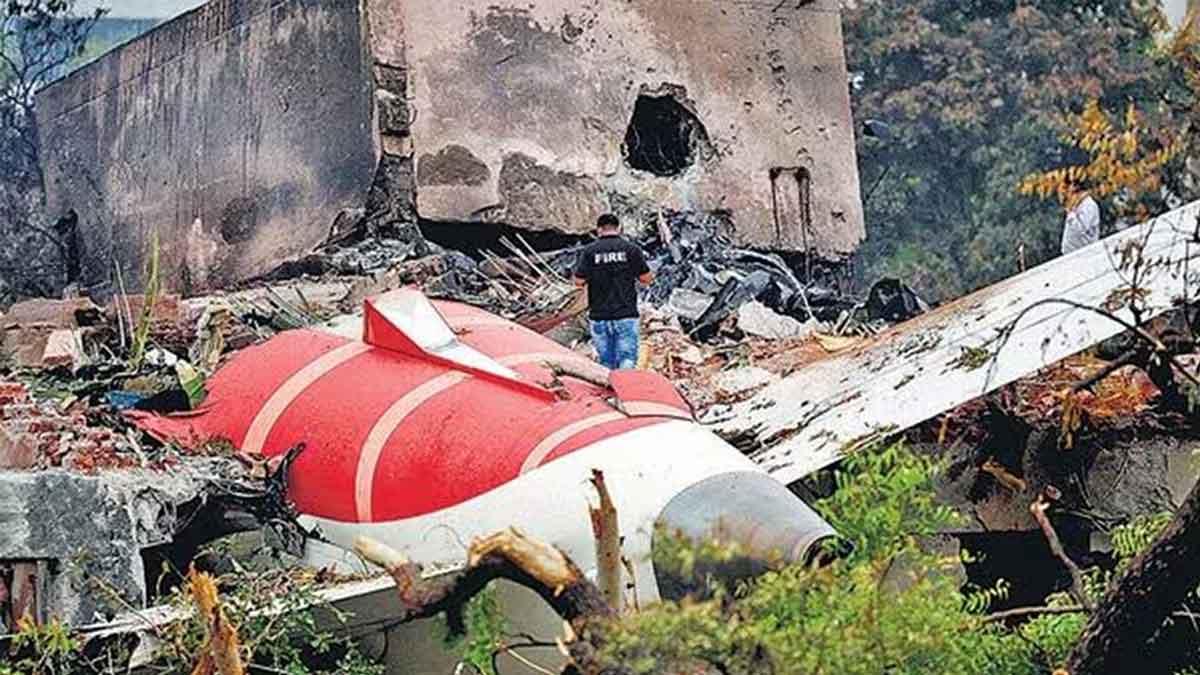


Initial investigation into the disastrous Air India plane crash, which killed 260 people, has uncovered a shocking chain of events mere seconds from takeoff — both engine fuel control switches on the Boeing 787 Dreamliner were inadvertently shut off for a second, shutting down fuel supply and causing an in-flight power shutdown.
Here's a description of the use of fuel switches on an aircraft, where they were located, and how they operated during the critical phase of the flight.
Fuel control switches are vital to an aircraft's engine operation, controlling the flow of fuel throughout different phases of flight. Pilots depend on them to initiate or terminate engines on the ground, and in mid-air, they can manually shut down or re-light an engine if it fails.
As reported by aviation experts, these switches have been made to be anti-pullback, preventing them from being accidentally engaged. If they are manipulated, however, the reaction is instant — engine power is lost as fuel supply is cut off.
U.S. aviation safety expert John Cox noted that the switches and their operated valves are energized by independent, separate systems, making them more reliable and safe.
On Air India's Dreamliner, equipped with two GE engines, the fuel control switches are positioned below the thrust levers on the flightdeck.
They are spring-loaded to prevent them from shifting from their existing position. If a pilot wants to switch the switch from 'RUN' to 'CUTOFF' or vice versa, the pilot has to pull the switch towards him first before he can move it — a feature meant to discourage unintentional switching.
These switches have only two operating states:
- RUN – which allows fuel flow to the engine
- CUTOFF – which shuts off fuel flow entirely
The cockpit voice recorder registered a short communication between the pilots. One of them asked, "Why did you cut off?" to which the other responded, "I didn't." The report is not clear whether these are the captain's or the first officer's words.
Soon after, the switches were adjusted back to the 'RUN' position. Investigators later found that both were in the 'RUN' state at the site of the crash.
In the report, when the fuel switches are reset to 'RUN' in flight, the flight control system of the aircraft automatically triggers a process to restart the engine, restoring fuel and ignition to regain thrust.
Aviation expert John Nance commented on the seriousness of the incident by saying:
"No sane pilot would ever turn those switches off in flight,"
especially in the vulnerable climb-out phase shortly after takeoff.
As the inquiry continues, the center of attention is on why the switches were modified in flight, and if it was due to a mechanical failure, pilot action, or another failure. The solution could be the key to knowing what made the engines lose power so rapidly after departure.
Read also| India’s 22-Year Transformation: NSA Doval Highlights Vision for 2047 Workforce Dominance