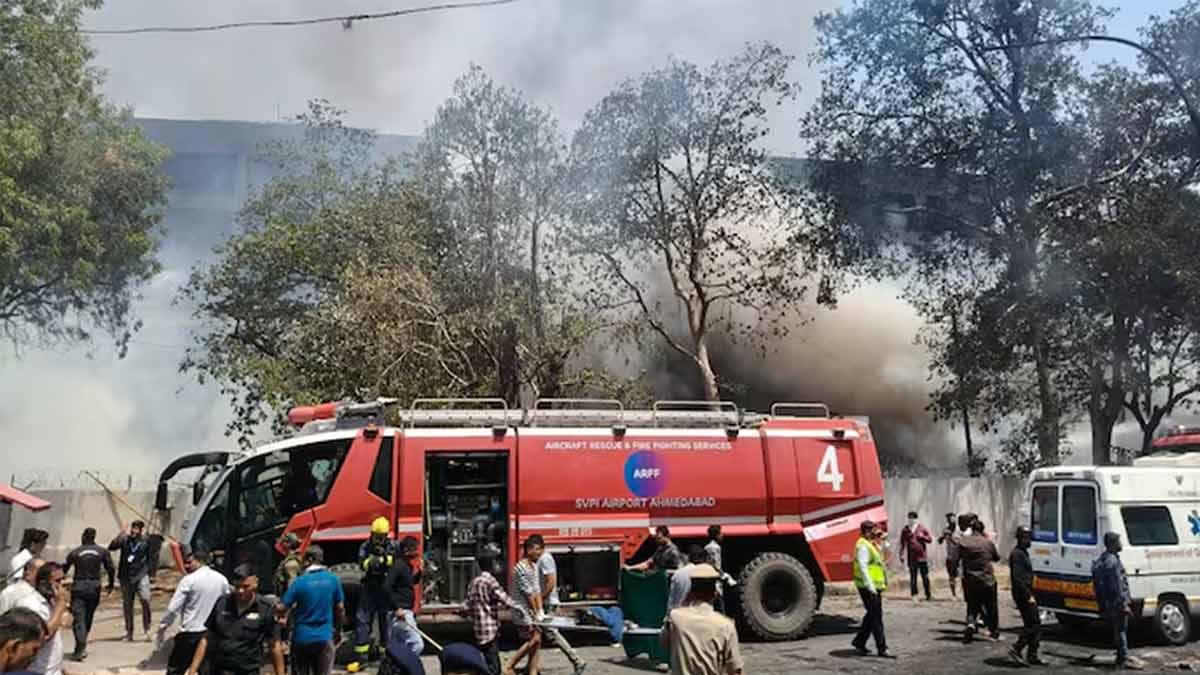


Union Civil Aviation Minister Ram Mohan Naidu has urged restraint as the investigation goes on into the June 12 Air India crash that killed 274 people, including 19 on the ground. Speaking to the Lok Sabha on Monday, the minister warned against speculation and asked that the investigating officials be permitted to work.
“There are multiple theories floating around. but let us respect the process of investigation,” Naidu said. “The AAIB (Aircraft Accident Investigation Bureau) is conducting the inquiry with complete transparency. I’ve come across numerous articles, not just from Indian outlets, but also from Western media, each trying to push its own version of the story.”
We in the government are viewing the investigation from the point of evidence. We are determined to stand with the truth, and that can only come out after the complete investigation," he informed lawmakers.
Naidu's comments in the Rajya Sabha came after a series of global media reports that had been guessing the cause of the crash. They occurred after the AAIB's initial report reported that both the fuel control switches on the Boeing 787-8 Dreamliner plane had moved from the 'RUN' to 'CUTOFF' positions exactly one second apart—shutting off fuel to the engines at take-off.
In its initial report, the AAIB said that the plane was just a few hundred feet off the ground and had only 32 seconds from take-off to impact, not much time to react for the crew.
Most of the speculation has surrounded this detail, as well as a cockpit voice recording that purportedly picked up a conversation between the pilots regarding the sudden movement of the switches. An article in The Wall Street Journal reported that First Officer Clive Kunder questioned Captain Sabharwal as to why the switches were off, and that the captain replied that he did not. The recording itself, however, has never been released.
These reports—perceived by some in the Indian aviation industry as attributing fault to the chief pilot—have attracted fierce criticism. Last week, the AAIB released a withering statement denouncing international reporting as "selective," "unverified," and "irresponsible," alleging the foreign press of creating unnecessary alarm regarding the safety of Indian airlines.
"Such reporting is irresponsible, particularly while the official investigation is still in progress," the AAIB added. "We request that media sources refrain from circulating premature conclusions that might undermine the integrity of the investigation."
The United States National Transportation Safety Board (NTSB), which is assisting the AAIB in the probe, also faulted the coverage. NTSB Chairman Jennifer Homendy labeled some of the reporting—without identifying named outlets—as "speculative" and "premature."
The Boeing 787-8 fuel switches are protected from unwanted movement by design—drivers have to be picked up and slotted into place manually by a pilot. As a precautionary measure, the Directorate General of Civil Aviation instructed all Indian carriers flying Boeing aircraft to check these devices. Air India subsequently confirmed that it had run checks on its entire fleet and found nothing wrong.
A final report on the exact sequence of events that resulted in the crash has not yet been published.
Read also| US Media Reveals Air India Captain’s Final Cockpit Conversation Before India Crash
Read also| India Warns NATO Chief Against ‘Double Standards’ on Sanctions Over Russia Trade