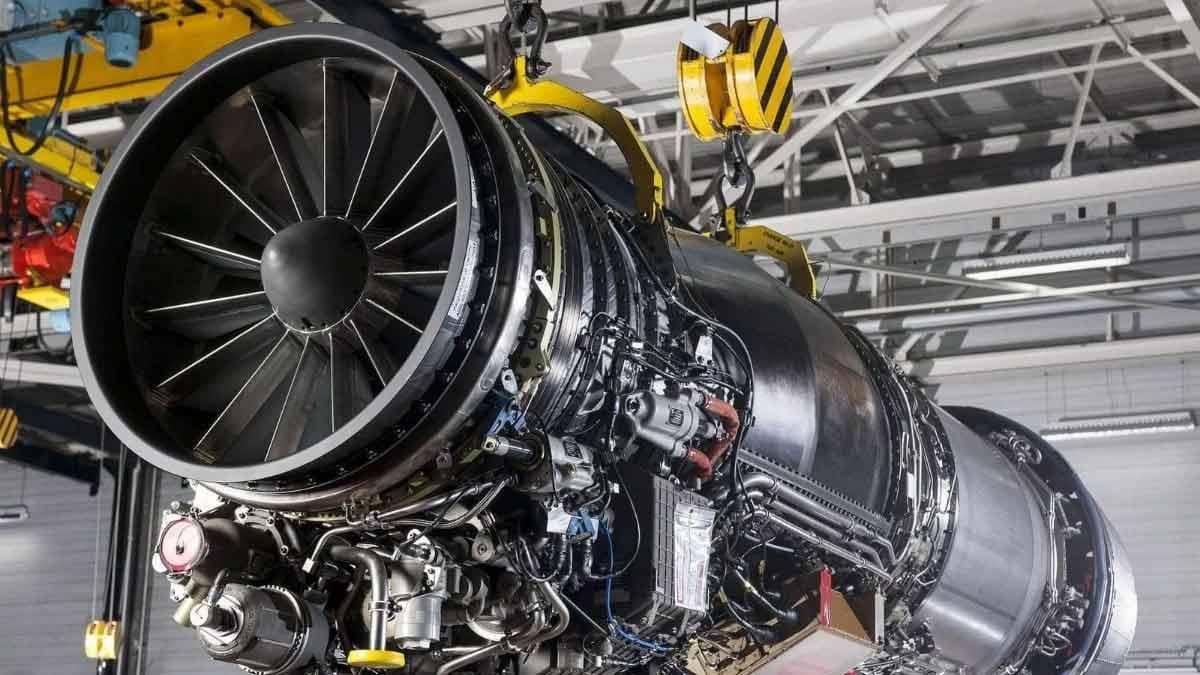


In a strategic move towards attaining defence manufacturing self-sufficiency, the Ministry of Defence has suggested a joint project with France for jointly developing next-generation fighter jet engines.
The initiative is a red-letter day in India's ambition to join the league of aerospace producers, as reported by The Economic Times.
As quoted from senior officials, the report announced that the recommendation follows a far-reaching consultation process with major stakeholders and a high-level technical committee that undertook a thorough assessment of several proposals. The French proposal, especially from aerospace behemoth Safran, was determined to provide maximum benefits for India's long-term needs.
The ambitious initiative, pegged at ₹61,000 crore, is geared to co-develop a high-performance 120kN thrust engine, which would be destined for combat planes in the future, including India's domestically developed Advanced Medium Combat Aircraft (AMCA). Defence Minister Rajnath Singh was a fervent supporter of creating an indigenous ecosystem for producing jet engines, driving this historic move.
In the course of evaluating the proposals, those from France-based Safran and the UK-based Rolls-Royce were also examined, with a thorough analysis encompassing technical capabilities, cost profiles, and conformity with India's development timelines. Safran's proposal incorporating full transfer of technology was the most compatible with the roadmap of the AMCA programme and was already under active consideration even before the final decision.
The early production lots of AMCA are likely to be powered by US-sourced GE-414 engines, while parallel work will be done to develop a fully indigenous propulsion system in partnership with France. Fighter plane engines are one of the most complex and technologically advanced systems in aircraft manufacture, and only a handful of nations in the world have successfully developed them.
In the coming 10 years, India is expected to require over 250 next-generation engines to drive its increasing fleet of combat aircraft. Currently, all Indian fighter aircraft use foreign-sourced engines, with the engine usually being one of the most expensive components of the aircraft, not only in production but in long-term maintenance as well.
India's previous attempt at developing a domestic engine in the Kaveri programme did not live up to the standards expected, most notably in providing enough thrust. Nevertheless, a new model of the Kaveri engine is currently being tailored for unmanned combat air vehicles (UCAVs), which could see inimitable life in limited use.
In addition to the French alliance, India is also negotiating with the United States to acquire widespread technology transfer for the GE-414 INS6 engine, which would be used for the LCA Mk2 fighter. According to The Economic Times, India is looking for more than 80% technology transfer in this contract, including access to key technologies like hot-end coatings, laser drilling, and single crystal blade manufacturing—key components of contemporary engine performance and longevity.
If it works out, these collaborative efforts could dramatically lower India's reliance on overseas engine vendors and create the basis for a self-reliant defense industry.
Read also| US Media Reveals Air India Captain’s Final Cockpit Conversation Before India Crash