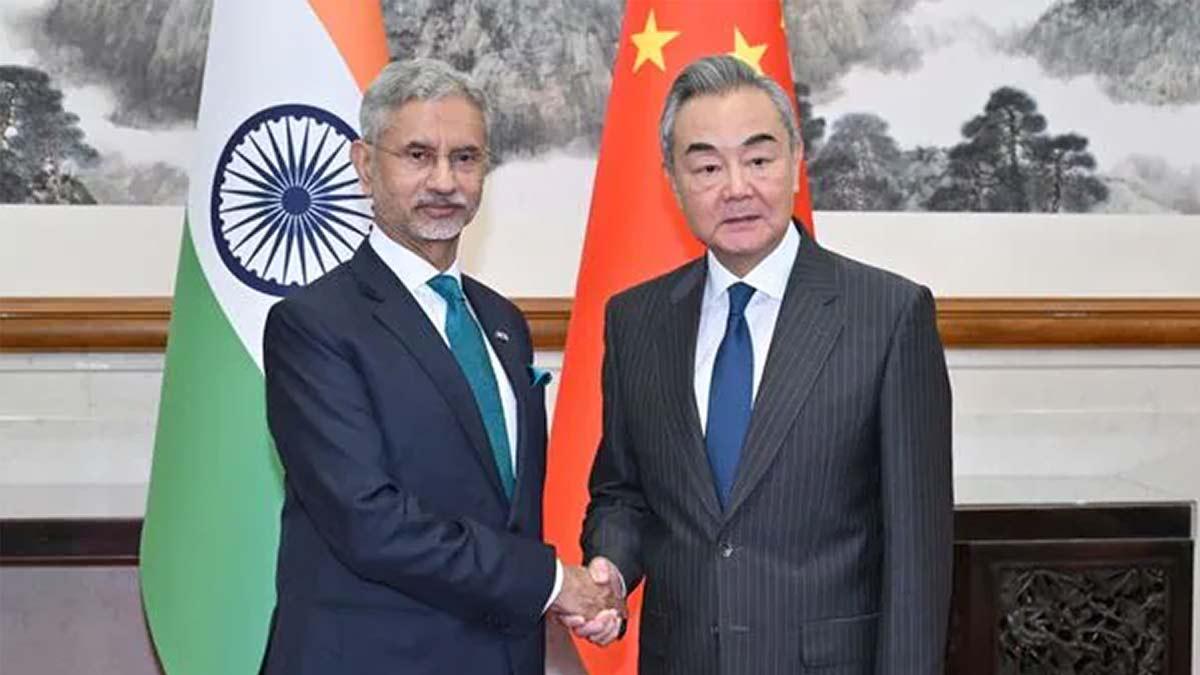


China has positioned External Affairs Minister S. Jaishankar's Beijing visit as a great opportunity to reset the troubled relationship between the two Asian giants. Yet, it emphasized that bringing back stable relations will require both parties' trust and sustained interaction.
Jaishankar is in China for the Shanghai Cooperation Organisation (SCO) Foreign Ministers' Meeting in Tianjin, his first visit to China in five years. He is also holding bilateral talks with Beijing Chinese officials.
In an editorial in The Global Times, which is a publication widely perceived as the voice of the Chinese government, the newspaper admitted that the lack of high-level Indian diplomatic visits over the past few years had highlighted the abnormality of bilateral relations. Jaishankar's visit, however, after last year's meeting between the leaders of the two countries, is being hailed as a diplomatic "fresh restart" and an indication of readiness to reestablish interrupted communication channels.
Referring to Chinese Vice President Han Zheng, the editorial said that "it is the right choice for both sides to be partners contributing to each other's success and realize the 'Dragon-Elephant Tango.'" This was also echoed by Chinese Foreign Minister Wang Yi, calling for the two nations to "build mutual trust instead of suspicion, pursue cooperation instead of rivalry, and support each other's success instead of wearing each other down."
Negotiations are also in progress to restore direct flights between India and China—a step that, if implemented, would represent greater normalization in bilateral ties. The Global Times also referred to a significant change in India's diplomatic pitch, noting that Indian officials and media have used words like "on the mend," "further thawing," and "back on track," implying a more optimistic and practical attitude toward engagement.
The editorial was not afraid to mention the still unsolved boundary dispute, labeling it the most sensitive and complicated issue in bilateral relations. It stated that the standoff along the border is still fomenting distrust in India, further stating that the two nations should work toward a credible mechanism to contain border tensions and revive high-level strategic talks. The article also blamed the United States for using the situation to push a wedge between Beijing and New Delhi.
Even with continuing tensions, the paper noted the possibilities for cooperation through forums such as the SCO and BRICS. These multilateral forums, it stated, could assist both countries in solving wider global issues and contribute to regional stability within the Asia-Pacific.
It was the view of the editorial that "Strategic mutual trust cannot be achieved through a single meeting or a single joint statement; it must be gradually built up through long-term, sustained, and measurable interactions." It pointed out that true political commitment, functional consultative mechanisms, and mutual respect for central interests are the requirements for establishing a robust bilateral foundation.
In sum, the editorial urged India to judge China from the lens of its own development aspirations and not from outside impressions. "The more the two nations can reduce misperceptions and hedge against outside threats by continuous dialogue, the better they will be able to take the initiative to lead the pack in reshaping the global order," it argued.
Read also| SC Rules on Admissibility of Surreptitiously Recorded Spousal Conversations in Court