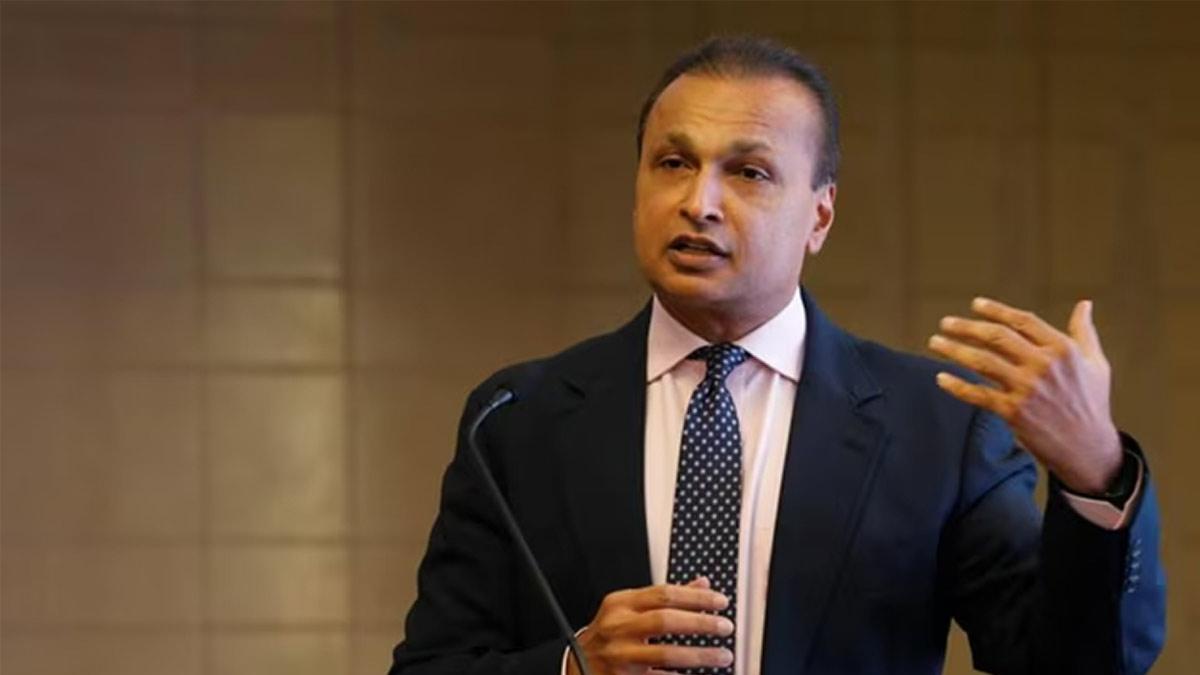


Enforcement Directorate (ED) on Thursday raided premises associated with Anil Ambani, chairman of Reliance Group, in Delhi and Mumbai.
The raids form part of an ongoing investigation of money laundering that is based on two First Information Reports (FIRs) filed by the Central Bureau of Investigation (CBI) that charge widespread financial irregularities.
As per reports known to the case, ED officials are reviewing records of more than 50 companies thought to be involved in the case. Approximately 35 locations are being searched, and over 25 people have been questioned already in relation to the investigation.
Early findings by the ED indicate a planned scheme to steal public money using fake means, misleading banks, shareholders, investors, and public institutions. The agency asserts that the approach entailed faking financial information, channeling funds through dummy firms, and altering loan terms.
The investigation also refers to suspected bribery of senior banking officials, including former Yes Bank promoters, who allegedly sanctioned large unsecured loans. One of the main allegations is that from 2017 to 2019, Yes Bank sanctioned almost ₹3,000 crore in loans to several RAAGA companies — firms linked to the Reliance Anil Ambani Group.
Sources indicate there might have been a quid pro quo deal made illegally, whereby payments were extended to entities held privately by Yes Bank promoters just before such loans were sanctioned. The ED thinks that this arrangement was meant to give preference to both parties under the radar of supervision.
The probe has raised several red flags: loans extended to firms with dubious or unverified financial histories; employing shell companies and shared addresses by borrower companies; inadequate documentation in loan sanction files; diversion of funds into suspect entities; and cases of "loan evergreening" where fresh loans were taken to settle older ones.
Moreover, the top executives and sponsors of Yes Bank are also suspected to have been involved in facilitating the granting of these illegal loans, purportedly in return for individual gains or compensation.
The ED is cooperating closely with a few regulatory as well as financial entities that have provided their own investigative reports. They are the National Housing Bank (NHB), the Securities and Exchange Board of India (SEBI), the National Financial Reporting Authority (NFRA), and Bank of Baroda.
SEBI specifically filed a report presenting key irregularities in Reliance Home Finance Limited (RHFL), a member of the Anil Ambani group. The report identified a sudden increase in RHFL's corporate loan book — from ₹3,742 crore in FY 2017–18 to ₹8,670 crore in FY 2018–19 — which raised the spectre of lending practices.
In a parallel move, the State Bank of India (SBI) has termed both Reliance Communications (RCom) and Anil Ambani "fraud" accounts. This is a follow-up to previous actions — in November 2020, SBI had already marked both RCom and Ambani as fraud, and registered a complaint with the CBI on January 5, 2021. One day later, though, the Delhi High Court passed a status quo order, leading SBI to withdraw the complaint.
Read also| Watch| Indian Army Inducts US-Made Apache Helicopters, Dubbed 'Tanks in the Air'