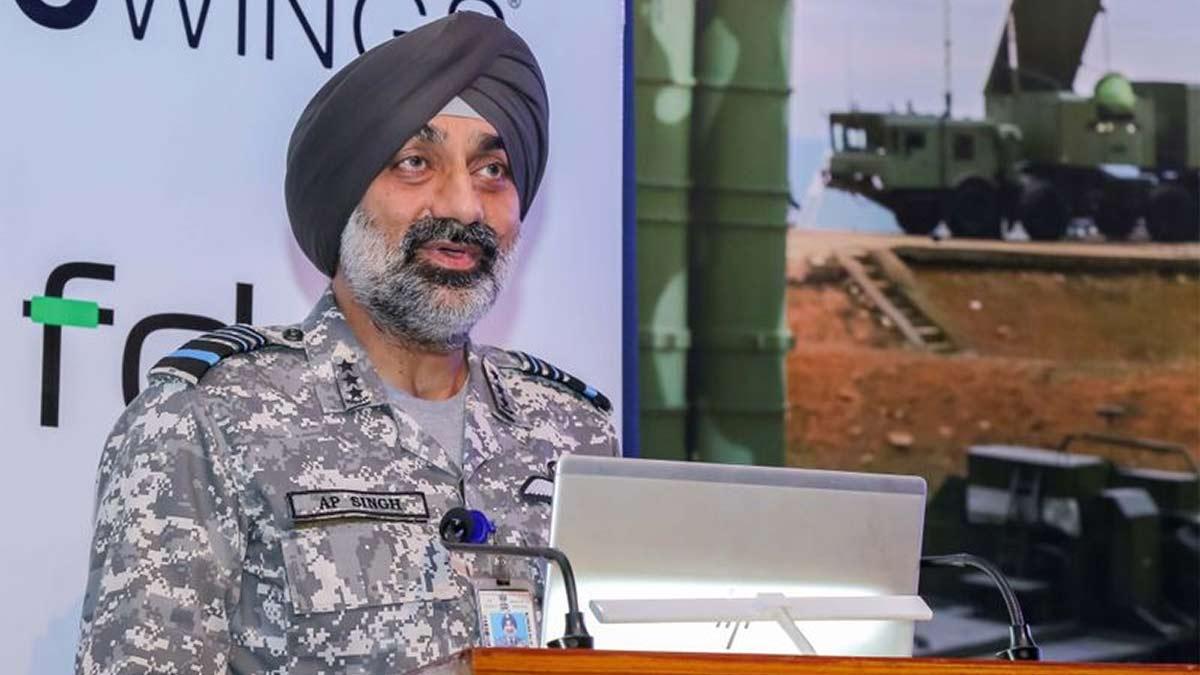


IAF Chief Air Chief Marshal AP Singh said on Friday India had dealt a "nice and hard" punch to Pakistan after Islamabad decided to raise the heat during Operation Sindoor. He said that a number of Pakistani airbases had been damaged and radars, control and coordination centers were majorly destroyed.
Addressing the Annual General Meeting (AGM) of the Air Force Association (ASA), the IAF chief asserted that it is crucial to finish a fight once goals are met, further stating that "the world has to learn a lesson from India."
"Terrorist targets were handed over to us. We hit them accurately. Whenever our enemies would not listen and attempted to attack us, then we hit them nice and hard. Most of their bases were destroyed. A great deal of their infrastructure, their radars, control and coordination centers, their hangars, aircraft were damaged a great deal," he added.
Operation Sindoor was undertaken in response to the Pahalgam terror attack, with the Indian Armed Forces making targeted strikes against terror infrastructure in Pakistan and PoJK in May this year. India retaliated against later Pakistani escalation by attacking its airbases. Hostilities ended when Pakistan's DGMO called his Indian counterpart.
Speaking on the state of constant global wars, the chief of the IAF said that wars continue to occur because no one thinks of ending them. He stated the success in fulfilling the goal of Operation Sindoor.
"The main wars that are going on today, be it Russia, Ukraine or the Israel war. They are going on, years have passed, because no one is thinking about conflict termination...We heard that people said that no, we should have done a little more. We stopped the war very quickly. Yes, they were on the back foot, no doubt, but what were our objectives? Our objective was anti-terrorism. We had to strike them. We had done that. So if our objectives have been met, then why should we not terminate a conflict? Why should we carry on? Because any conflict has a lot of price which has to be paid. It will affect our preparedness for the next one. It will affect our economy," he said.
"It will affect the progress of the country. So, I think this is what the world is forgetting. They do not know what our target was when we started the war. Now their goal post is shifting. Egos are coming in between. And this is where I think the world has to learn a lesson from India how to start and terminate a conflict at the earliest possible opportunity," he added.
The Air Force chief also welcomed India's political leadership for giving clear guidelines and "full freedom."
"Last time, when the Balakot strike happened, the Air Force was repeatedly asked, we ask our own people more, but we think less about others, so it was repeatedly asked that nothing is being seen... I think one of the best things that happened was that there was political will. Our leadership gave us clear directions, and no restrictions were imposed. Full freedom was given to us to plan, and there was jointness; all three services were sitting together, discussing together, planning together, along with the CDS, along with other agencies, NSA was a big part of doing that," he said.
Read also| Rahul Gandhi's Aide Sam Pitroda Advocates Dialogue, Says 'Been To Pakistan, Felt At Home'
Read also| Rajnath Singh Highlights India’s Powerful Response in Operation Sindoor