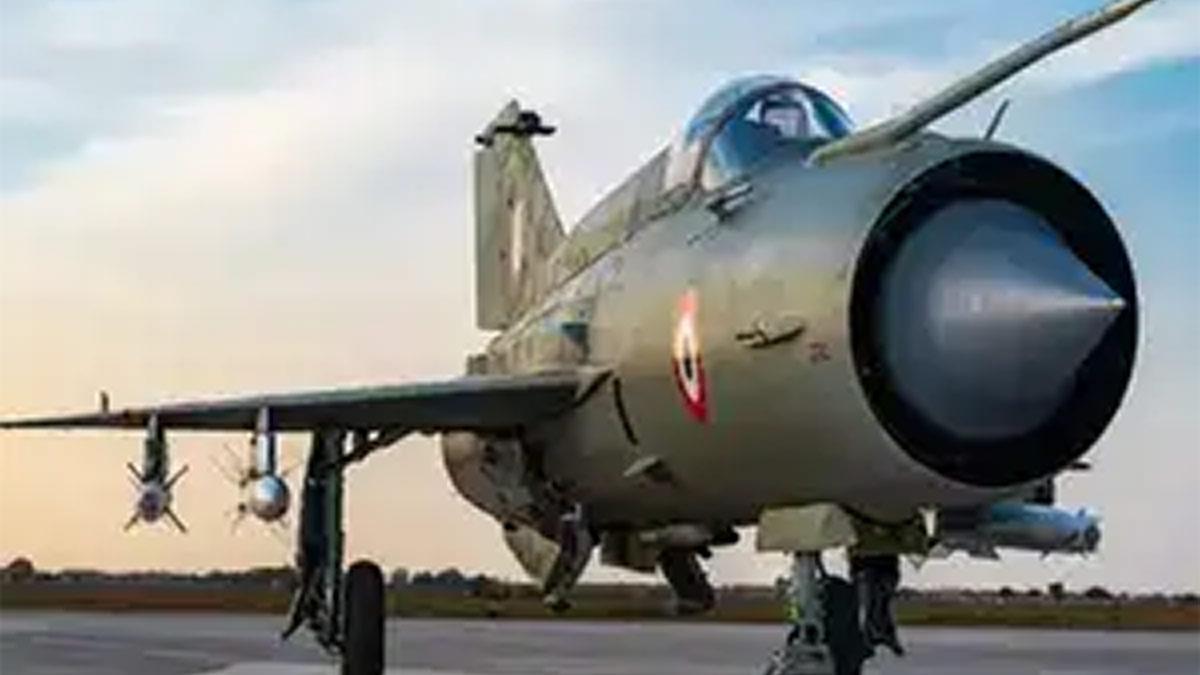


The Indian Air Force's MiG-21 fighter jets, which have served as the backbone of its main combat fleet for over sixty years, concluded their last operational sorties from the Nal Air Force Station, Bikaner. This was done a month before the final retirement ceremony in Chandigarh on September 26.
Air Chief Marshal A P Singh commemorated the farewell of the legendary fighter through solo sorties in the MiG-21 from Nal on August 18-19, 2023. It was a bittersweet experience for the Air Force and for all the Air Force pilots who had honed their skills and flown the Russian-origin fighter that had been integrating into the force's fleet for 62 years.
"The MiG-21 has been the workhorse of the IAF since its induction in the 1960s and we are still continuing with it. It is one of the most mass-produced supersonic fighter jets in history, with over 11,000 aircraft operated by more than 60 countries," Air Chief Marshal Singh told PTI after his sortie.
"My first experience with MiG-21 was in 1985, when I flew the Type-77 variant at Tezpur. It was a revelation -- agile, highly maneuverable, and simple in design, though it required some initial training. It's an amazing aircraft to fly. It will be missed by all who flew it."
Noting the jet's impressive performance as an interceptor, the IAF chief said, "At maximum reheat, it could climb more than 250 metres per second. It was made to intercept, and in that role, it served India remarkably well. But everything has a time and place. The technology is now outdated and difficult to maintain. It is time to move to new platforms such as the Tejas, Rafales and Su-30s."
He also pointed at the continuity in IAF's design philosophy.
"Tejas was actually designed as a replacement for MiG-21. That is why it is a small aircraft. It was designed around MiG-21 and it was conceived from some kind of motivation from Mirage.
"It is going to replace MiG-21 quite well but it will have to evolve. We have to think of new weapons for Tejas also. In initial training role, I think Tejas can fit in very well. With contracts for 83 jets already signed and more lined up, I expect that Tejas in its various versions will gradually take over the fleet's role," Air Chief Marshal Singh said.
IAF spokesperson Wing Commander Jaideep Singh recapped that the MiG-21 has a fantastic legacy and an important role in combat.
"The aircraft participated in the 1965 war and played a stellar role in the 1971 conflict, most notably in the attack on the governor's residence in Dhaka on December 14. The governor resigned the next day, and Pakistan surrendered on December 16 with 93,000 troops laying down their arms," he said.
"It later saw action in Kargil under Operation Safed Sagar in 1999, when a MiG-21 shot down a Pakistani Atlantic aircraft intruding into the Indian territory. In 2019, it was again in the headlines when it downed an F-16."
The MiG-21 has undergone many upgrades over the years, the latest being the Bison variant which sports upgraded avionics, modern radar capabilities, and beyond-visual-range missiles.
Currently the IAF operates two squadrons of the aircraft, both of which will be retired next month.
The formal farewell ceremony in Chandigarh - where the MiG-21 first joined the Indian Air Force back in 1963 - will mark the end of an important chapter in the history of India's aerial defense.
Read also| Starlink Set to Launch in India by End of 2025, Confirms MoS Communications