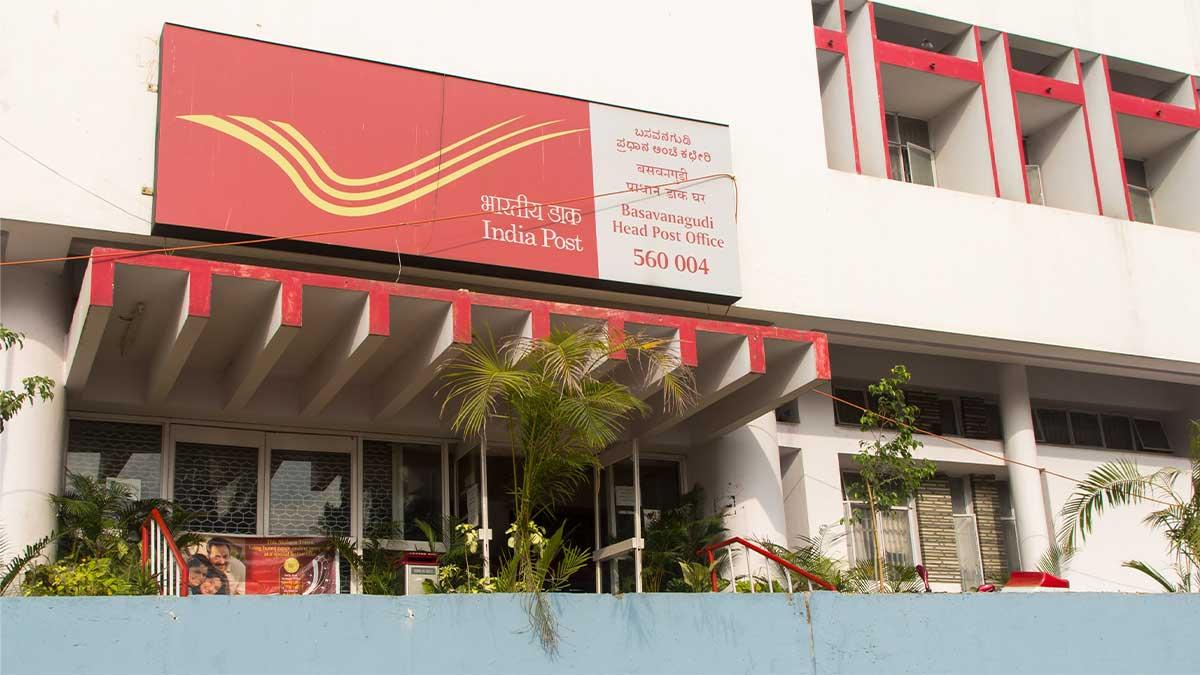


India Post recently said it will suspend temporarily its parcel postal services to America from August 25, following confusion caused by fresh US import rules on the payment of customs duties.
Until further notice, only letters, documents, and gift consignments up to a value of $100 only would still be accepted.
The action comes after the Trump administration announced in July that it would eliminate the global "de minimis" rule on August 29.
The rule had hitherto allowed goods up to a value of $800 to enter the US with minimal documentation. Under the new directive, all parcels entering the country will be subject to customs duties, apart from gifts valued at less than $100.
According to the July 30 directive, airlines or other authorized agencies will have to collect and remit customs duty on parcels arriving from abroad. Yet, the US still hasn't made clear which organizations are these "approved agencies" and how the system will work. Therefore, the airlines notified India Post that they wouldn't be able to transport parcels to the US after August 25.
.all international postal items bound for the USA, whether or not they have value, shall be subject to customs duties according to the country-specific International Emergency Economic Power Act (IEEPA) tariff system," the communications ministry stated in a release on Saturday.
Elucidating the rationale behind the move, LK Dash, deputy director general (IR&GB) of the Department of Posts (DoP), explained to HT that India Post had no other option but to cut services because there was no mechanism available for collecting duties. "We don't have any agreement with any agency who can accept, collect the duty, and pay it.". Airlines have not signed either, and the 'qualified parties' the US government is referring to have not yet been finalized. The order came much quicker than what was expected, so we had no option but to suspend services," Dash said, adding the suspension has no definite end date.
“We have no idea how long this will last. We’ve reached out to US Customs and Border Protection (CBP) and also taken up the matter with the ministry of commerce and ministry of external affairs, since they will be the ones speaking to their counterparts,” he said.
The disruption is likely to be significant, as India Post usually exports up to three tonnes of freight a day to the US—around 100 to 200 tonnes per month. "This will be a heavy blow to exports. Till the time we overcome the problems in between, business and individuals will be severely affected," Dash explained, noting that both exporters and regular senders would be affected. India Post has not yet sought temporary tie-ups with private couriers, although discussions may be initiated to seek alternative arrangements.
"This de minimis exemption limit applies to all nations in the world and not just India," he clarified. India Post also stated that customers whose packages cannot be shipped will be refunded postage charges, stating that "all possible steps" are being taken to revive services at the earliest.
A senior DoP official who has retired expressed that the suspension will be particularly difficult for small exporters and e-commerce merchants. "It is to be seen whether DHL (Dalsey, Hillblom and Lynn), FedEx (Federal Express), which have their own shipping arrangements, will follow suit.
Some European nations have also suspended parcel deliveries to the US. Postal services in Scandinavia, Austria, France, and Belgium suspended delivery, while Deutsche Post would no longer send usual business parcels to the US, DHL announced on Friday. This action puts DHL in league with other European postal services concerned with the US imposition of duties on low-value imports.
Emails sent by HT to DHL and FedEx seeking comment went unanswered.
The suspension comes against the backdrop of escalating trade disputes. Recently, Washington imposed additional tariffs—25% plus another 25%—on Indian exports over New Delhi’s crude oil trade with Russia. However, Dash emphasized that the rollback of the duty-free threshold “is a global measure and not targeted at India alone.”