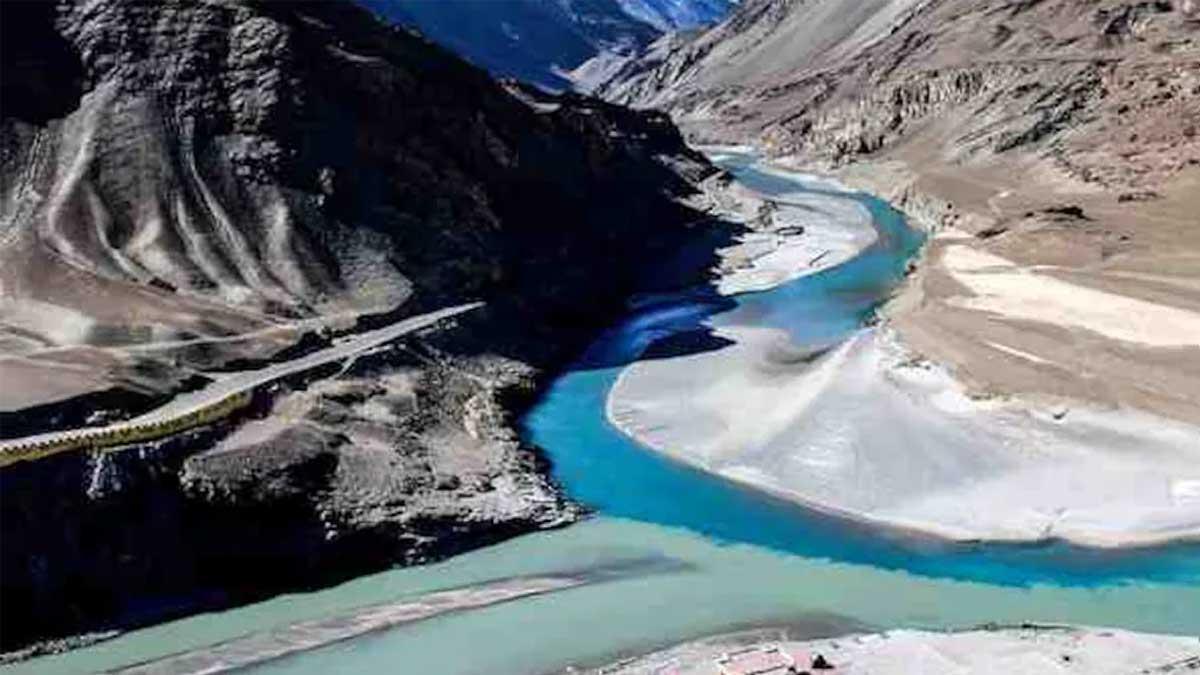


India will proceed with its most ambitious hydropower project to date — the 1,856 MW Sawalkote Hydroelectric Project on the Chenab River in Jammu and Kashmir — just weeks after putting the Indus Water Treaty in abeyance.
In a dramatic change, the project will go forward without Pakistan's okay, which was required hitherto under the provisions of the 1960 treaty.
The National Hydroelectric Power Corporation (NHPC) has initiated the international tender process formally. On Wednesday, NHPC floated an invitation for bidding under the International Competitive Bidding (ICB) process. September 10 is the date of submission for the interested companies. The project is a joint venture of NHPC and the Jammu and Kashmir State Power Development Corporation (JKSPDC).
First envisioned in the 1980s, the Sawalkote project was stuck for more than four decades because of bureaucratic inertia and Pakistani objections. Islamabad has consistently been worried about the dam's possible effect on Chenab's water flow — a river to which it has rights under the Indus Water Treaty.
The project is proposed in two phases and is expected to cost around ₹22,704 crore.
India's move to suspend the treaty followed the Pahalgam terror attack on April 22. The Indian government had said that it would suspend its commitments under the agreement until Pakistan shows an irreversible resolve to put an end to terrorism.
Negotiated by the World Bank in 1960, the Indus Water Treaty placed sole authority of the Beas, Ravi, and Sutlej rivers in the hands of India, while Pakistan was left with rights over the Indus, Jhelum, and Chenab rivers. Even though India is permitted to construct run-of-the-river hydroelectric plants on the western rivers, India has to usually obtain clearance from the Indus Water Commission for project design and dam height — something India is presently circumventing.
The project is scheduled to relocate several hundred families from almost a dozen villages. Rehabilitation and resettlement are part of the plan of implementation.
The JKSPDC had already invested more than ₹400 crore in advance work previously, officials said, before it was stopped nearly a decade ago. In 2021, when J&K was under central rule, NHPC was included and a Memorandum of Understanding was signed, under which NHPC became the majority shareholder. The project would be on a BOOT (Build, Own, Operate, Transfer) model, and would be completely transferred to Jammu and Kashmir after a period of 40 years of operation.
Prior to the tender process, the major stumbling blocks that have slowed down international involvement have been tackled. The biggest development was when the Ministry of Environment's Forest Advisory Committee granted sanction for the transfer of the almost 3,000 acres of reserved forest and jungle land — a step essential for the building of the project, officials assured.
Read also| Watch| US-India NISAR Satellite Launched to Track Earth's Changing Landscape
Read also| Daya Nayak Promoted to ACP Just Two Days Before Retirement