

The Airline Pilots' Association of India (ALPA-India) has shown strong disapproval over the manner in which the initial investigation into the Air India flight AI 171 crash is being conducted, criticizing the process as well as the release of information in regards to the tragedy.
In a letter addressed to the Press Trust of India, ALPA-India President Capt. Sam Thomas strongly criticized the Aircraft Accident Investigation Bureau's (AAIB) first report issued on July 12.
He brought out the fact that the document had been "shared with the media without any official signature or attribution," thus raising serious questions about its legitimacy and professionalism.
The association also disapproved of the investigation on the grounds of it being non-open and non-inclusive.
"Investigation remains behind closed doors, diminishing its credibility as well as public confidence. Trained, experienced staff – mostly line pilots – have yet to be made part of the probe," the statement read.
Reaffirming its previous stance, ALPA-India has again asked to be included in the investigation, citing: "ALPA-India renews its request to be included – at the very least, as observers – in the investigation process to ensure transparency and accountability."
The pilots' body also raised alarm bells over the unauthorized sharing of sensitive information to foreign media. Specifically, it cited a Wall Street Journal report on July 10 that cited the "inadvertent movement of the fuel control switches," which is now the subject of intense scrutiny.
"ALPA-India questions how such sensitive investigative information was leaked to international media," the association said.
The AAIB findings indicated that a service bulletin was released about the aircraft fuel control switch gates, which indicated a mechanical failure. ALPA-India welcomed the recognition of the bulletin in the report but insisted on more explanation.
The report mentions a serviceability bulletin about the fuel control switch gates that reflects a potential equipment failure," ALPA-India said. "Although the bulletin is recognized, ALPA-India calls for clarification on whether the suggested improvements in the bulletin were adopted before the flight was operated."
A second serious concern raised by the association was what it saw as a premature assumption of pilot error in the current investigation.
"The tone and orientation of the investigation hint at a bias in assuming pilot error was the cause of the incident," ALPA-India said. "ALPA-India forcefully rejects this assumption and demands a balanced, evidence-based investigation."
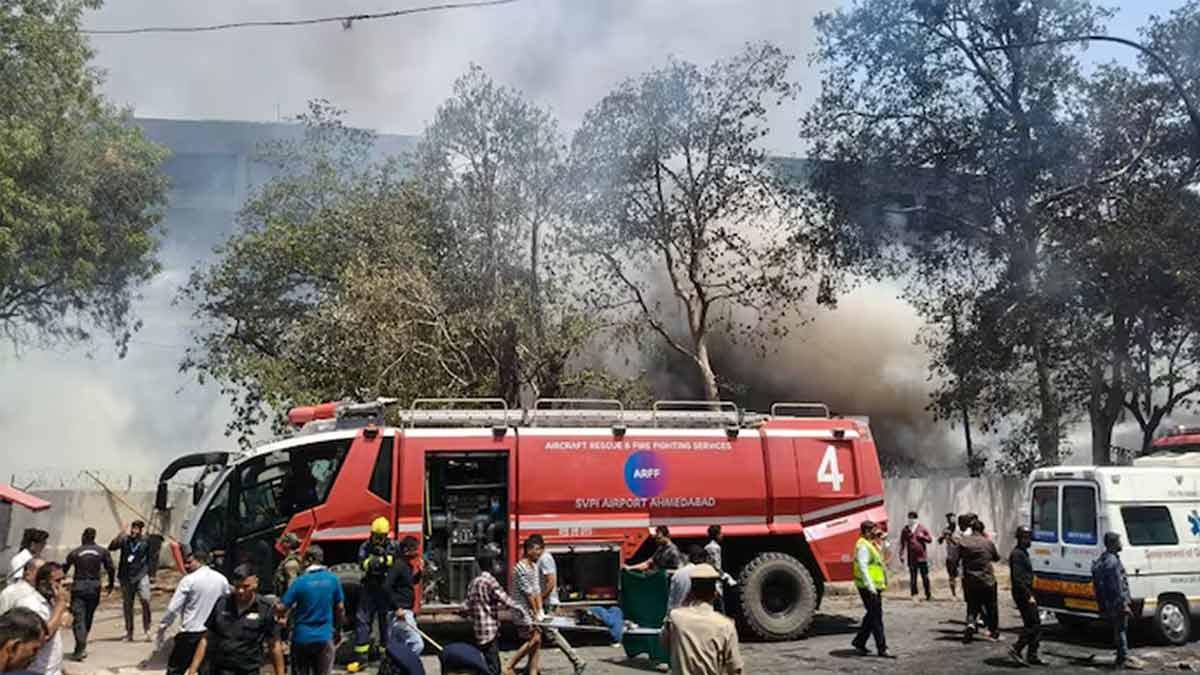
The crash took place on June 12, when Air India flight AI 171, a Boeing 787-8 Dreamliner (reg. VT-ANB), took off from Ahmedabad bound for London with 242 individuals on board, including two pilots and ten crew members. The plane crashed minutes after it took off in Meghani Nagar, striking the campus of BJ Medical College.
Tragically, 241 passengers and crew members perished in the accident. One passenger survived but suffered severe injuries. Additionally, 19 people on the ground lost their lives, including four medical students.
As noted in the initial AAIB report published on July 11, the aircraft engines ceased functioning soon after the fuel control switches were quickly flipped from "RUN" to "CUTOFF" positions. The Boeing 787-8 had a maximum speed of 180 knots at 08:08:42 UTC before both engines—Engine 1 and Engine 2—lost fuel supply.
Audio from the cockpit voice recorder recorded the moment of confusion as one pilot exclaimed, "Why did you cut off?" and the other pilot answering he hadn't cut off. The Enhanced Airborne Flight Recorder subsequently indicated that there were efforts to restart the engines, but they were only partially successful before the plane crashed.
The report ensured that the plane had clean fuel and both pilots were well rested at the moment of the accident.
Nevertheless, the AAIB asserted: "At this stage of investigation, there are no recommended actions to B787-8 and/or GE GEnx-1B engine operators and manufacturers," while ensuring that the investigation is ongoing and additional data is being gathered.
Read also| India’s 22-Year Transformation: NSA Doval Highlights Vision for 2047 Workforce Dominance