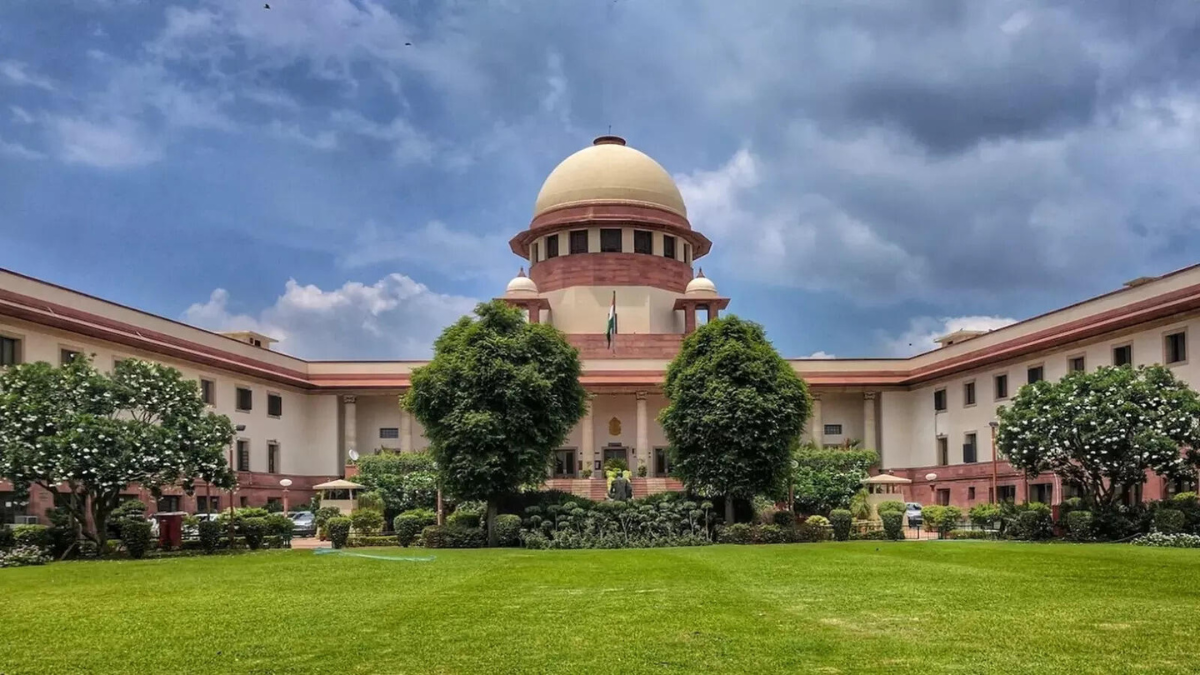



Chief Justice of India B R Gavai on Thursday insisted that judicial activism should not venture into "judicial terrorism" while hearing the presidential reference. The hearing triggered constitutional doubts about whether the Supreme Court can impose deadlines upon governors and the president to respond to bills passed by state legislatures.
The CJI made the observation as Solicitor General Tushar Mehta, appearing for the Centre, emphasized that senior elected representatives must not be belittled.
"We never said anything about the elected people. I have always said that judicial activism should never become judicial terrorism or judicial adventurism," replied Chief Justice in response to Mehta.
Other members of the bench were Justices Surya Kant, Vikram Nath, P S Narasimha, and A S Chandurkar.
As the hearing became three consecutive days old, Mehta continued his submissions citing various Supreme Court judgments relating to the powers of the governor.
At the beginning, the solicitor general showed eagerness for senior advocate Kapil Sibal's submissions on the presidential reference, given his long experience in public life, governance, and as a parliamentarian.
"Elected individuals of whichever political party must today answer to the electorate directly. Individuals now openly pose questions to them. Unlike 20-25 years ago when it was otherwise, voters are educated and cannot be cheated," Mehta added.
He went on to say that "withholding assent" is a standalone and sovereign duty of the constitutional officeholder as per Article 200 of the Constitution.
The apex court made it clear on Wednesday that a governor cannot send bills to the president for consideration if the state assembly returns them a second time after approval.
Referring to preliminary objections of the Tamil Nadu and Kerala governments to the maintainability of the presidential reference, the Supreme Court observed that it would act in its advisory role and not as an appellate body.
In May, President Droupadi Murmu invoked Article 143(1) to ask the Supreme Court to advise on whether the judicial orders could impose deadlines on the president in using discretion with respect to bills passed by the state legislatures.
The Centre, in its submissions on paper, contended that imposing fixed timelines on governors and the president to sign assembly-approved bills would lead to one branch of government usurping powers not intended by the Constitution and lead to "constitutional disorder."
On April 8, while reviewing the powers of the governor in relation to bills adopted by the Tamil Nadu Assembly, the Supreme Court, for the first time, held that the president should rule on bills sent by the governor within three months of receipt of the reference.
In a lengthy five-page reference, President Murmu posed 14 questions to the Supreme Court, asking it to render its opinion on the governor's and president's power under Articles 200 and 201 of bills passed by state legislatures.
Read also| S Jaishankar Urges Russian Firms to Engage 'Intensively' With India Amid Trump Tariffs
Read also| MP Judge Aspirant Archana Tiwari Staged Disappearance to Avoid Marriage Proposal: Police