

After the heavy blow to Pakistan through Operation Sindoor airstrikes, initiatives are reportedly afoot to increase the combat power of the Indian Air Force (IAF).
The expansion is linked with the re-examination of the 1980s Cabinet Committee on Security (CCS) decision that had placed a cap on the IAF's fighter aircraft squadrons at 42.
Quoting its Sources in the military establishment, The Tribune reported that the "42 squadrons" limit is under review now. A squadron normally contains 16-18 jets.
An in-house study made after the May 7-10 standoff with Pakistan suggests that the current mandate of 42 squadrons might fall short in the future. The study recommends a substantial rise above the present number.
"A new mandate will also require a CCS clearance. A rough estimate is that the mandated strength can increase by 30-35 percent," the sources told Tribune.
This development follows as Pakistan and China are also firmly setting about expanding and modernizing their airforces at a galloping pace. The 42-squadron mandate was first conceived to ready the IAF for a two-front simultaneous war against both countries.
According to its report to the US Congress, 'Military and Security Developments Involving the People's Republic of China-2024', the US Department of Defence observed that the air force and navy of China combined have close to 1,900 fighter jets.
“The People’s Liberation Army Air Force (PLAAF) and People’s Liberation Army Navy (PLAN) aviation together constitute the largest aviation forces in the region and the third largest in the world,” added the report.
In contrast, India has never actually maintained 42 squadrons. The IAF peaked at 41 squadrons in 1996, after which the numbers have steadily declined. By September 26, the IAF is set to retire its last two MiG-21 squadrons, reducing its strength to the lowest in six decades. Currently, the IAF has 31 squadrons; after the MiG-21 retirement, it will drop to 29, lower than during the 1965 war with Pakistan.
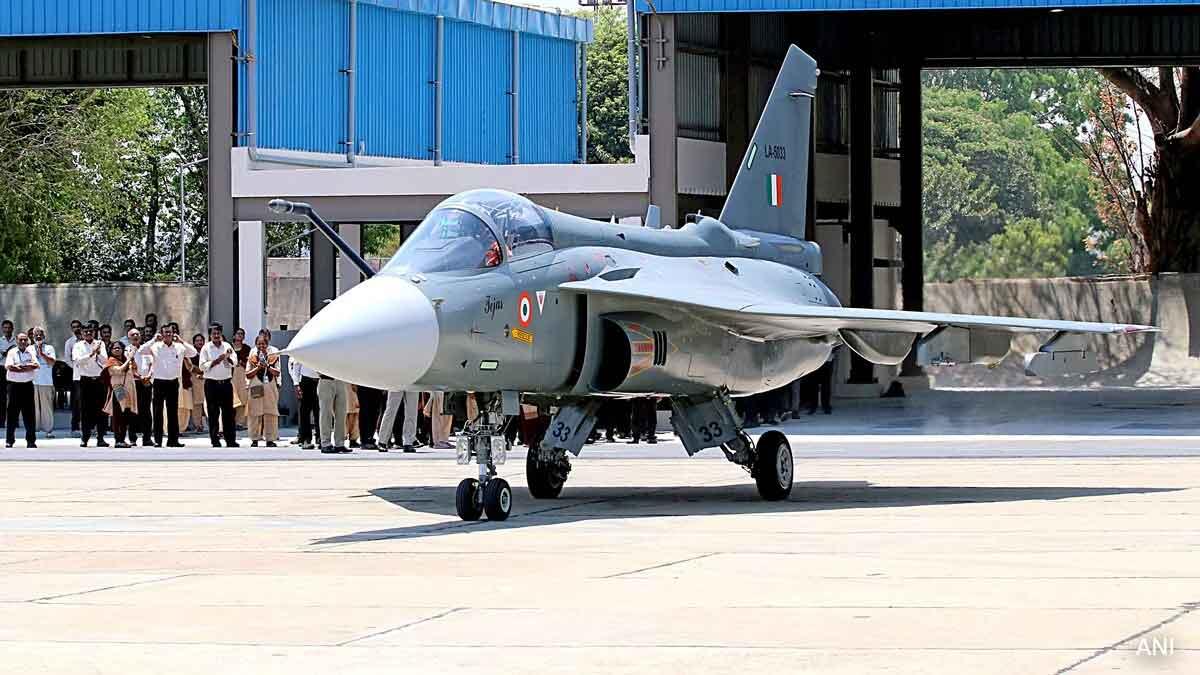
The induction of the Tejas Mark-1A combat aircraft—meant to balance this shortage—has also been delayed. The deliveries, which were meant to start in March 2024 at a rate of 16 jets per year, have not yet started, with Hindustan Aeronautics Limited (HAL) having not delivered any aircraft yet.
The IAF had aimed to phase out the MiG-21 by 1994, though the last MiG-21 Bis variant was manufactured in 1985.
Read also| 8 Bombs Dropped by Pak Air Force Kill 30 in Khyber Pakhtunkhwa Village
Read also| Indian and Canadian NSAs Hold Talks on Counterterrorism and Security Collaboration: MEA