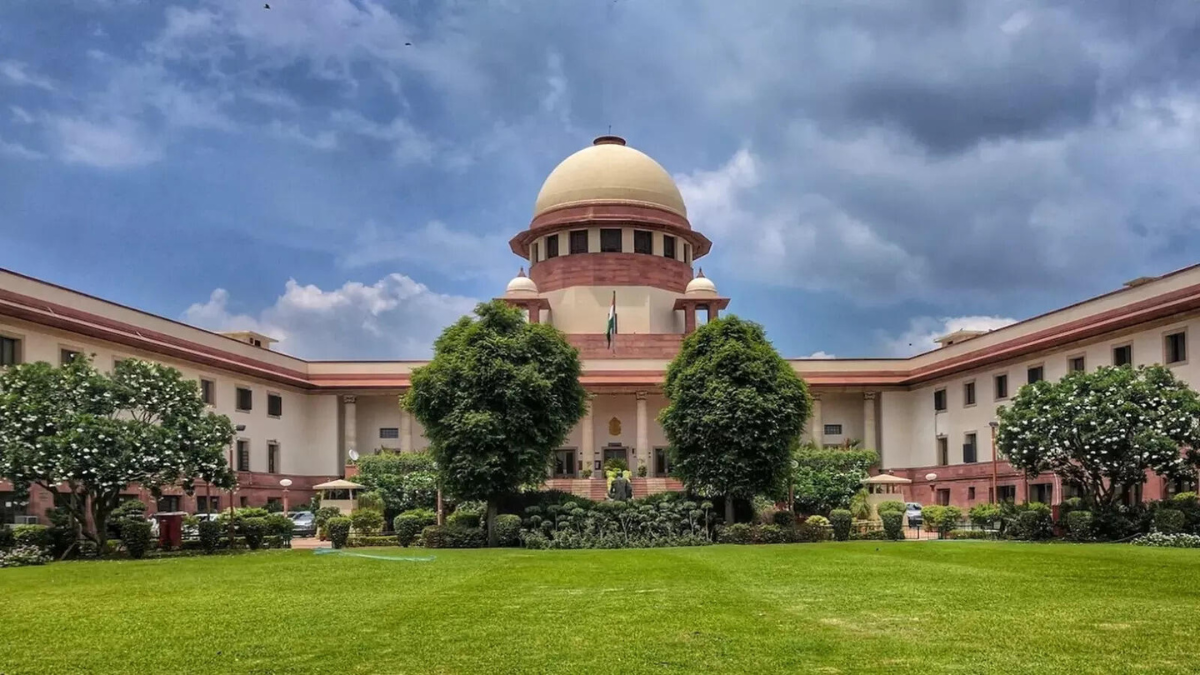
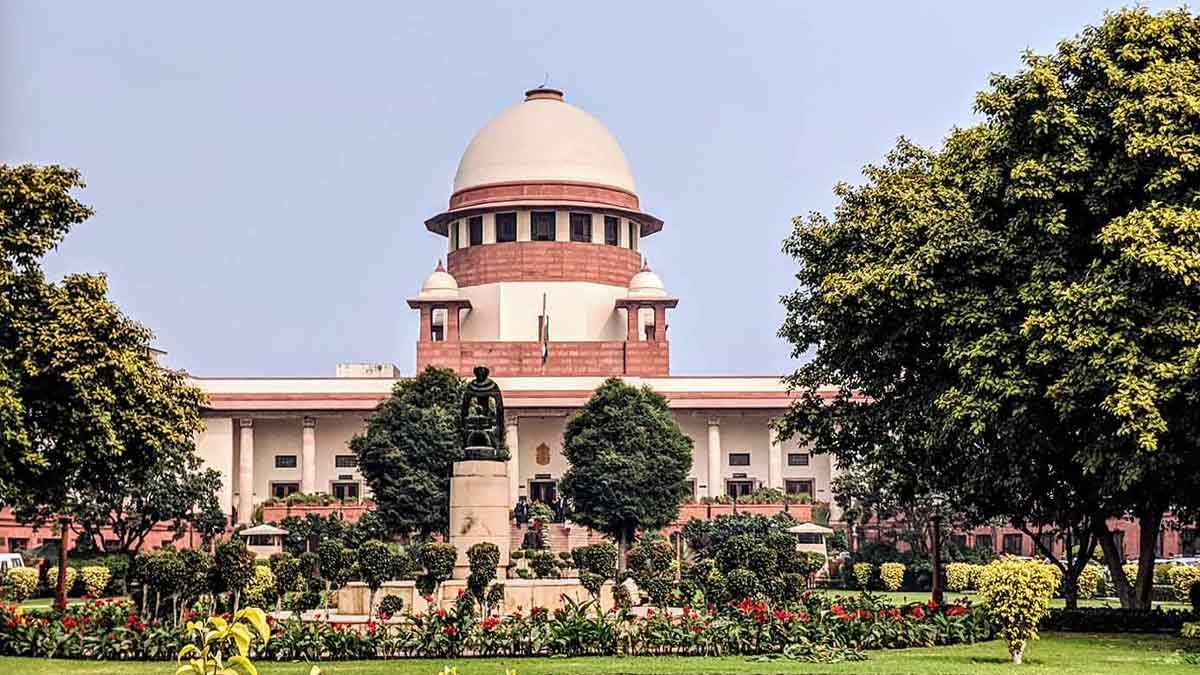


In a development with implications across the country, the Supreme Court on Tuesday sent notices to the Centre and all states in response to a presidential reference seeking clarification on whether governors and the president can be ordered by the judiciary to act within certain timeframes on state legislatures passed bills.
The issue, which arose out of a case filed by the Tamil Nadu government, will now progress towards in-depth constitutional analysis. A five-judge Constitution bench led by Chief Justice of India (CJI) Bhushan R Gavai noted, "We are going to decide for everyone and not only for Tamil Nadu alone," drawing attention to the broader constitutional implications.
Sitting with CJI Gavai on the bench are Justices Surya Kant, Vikram Nath, PS Narasimha, and Atul S Chandurkar. The next hearing has been put on by the bench for July 29, at which the time frame for what will be a lengthy hearing beginning in mid-August will be decided.
"Notice will be issued to the Union of India and all the states. We will hear it again on July 29 to determine a timeline. Tentatively, we intend to begin in mid August," the bench said during Tuesday's hearing.
The bench also noted the presence of Attorney General R Venkataramani and Solicitor General Tushar Mehta, both of whom assured their attendance and support in the hearings. Senior lawyers P Wilson, appearing for Tamil Nadu, and KK Venugopal, for Kerala, raised preliminary objections on the maintainability of the presidential reference. The bench, however, pointed out the necessity to discuss the larger constitutional questions raised, insisting that these affect all states and not merely those parties to the original petition.
"These are questions of interpretation of the Constitution. Issue notice to the Union of India and all state governments through their respective chief secretaries and standing counsel," directed the court in its formal order.
Significantly, the bench has three justices who are next in line to become Chief Justices of India—Justice Surya Kant (in November 2025), Justice Vikram Nath (February 2027), and Justice Narasimha (October 2027)—highlighting the importance and seniority involved in the deliberations.
The reference is a sequel to an earlier Supreme Court verdict handed down in April, where it held the Tamil Nadu Governor's delay of ten bills for several months as "illegal" and outlined enforcible timelines for assent. That verdict had set off wider constitutional discussions on the discretionary authority of governors and the president, especially in cases regarding state legislation.
The current presidential reference before review involves a number of fundamental constitutional questions:
Can governors and the president be legally bound within judicially determined timelines under Articles 200 and 201?
Is the idea of "deemed assent" in sync with the Constitution?
Can the Supreme Court instruct the president or a governor in its extraordinary powers in terms of Article 142?
Is the president's discretion under Article 201 within the purview of judicial review?
Should the verdict of April 8 have been reserved for a larger bench, since Article 145(3) mandates constitutional questions of great legal importance to be heard before at least five judges?
A source privy to the procedural deliberations mentioned that the registry of the court is cross-checking precedents to determine whether a larger bench is actually needed to handle such complicated issues.
This represents at least the 15th time Article 143—available for use in references by the president—has been invoked since India gained independence. Although advisory opinions of the Supreme Court under this article are non-binding, they are highly influential in shaping understanding of the constitution.
Further questions asked in the reference are if Article 361, which gives immunity to the president and governors, prevents courts from judging their actions; if these should only fall under Article 131 (which deals with Centre-state disputes); and whether governors are constitutionally bound to act upon the advice of the state's council of ministers while exercising power under Article 200.
While the Supreme Court is set to have an extensive hearing, its ruling could largely redefine the constitutional relationship between governors, state legislatures, and the president—potentially altering India's framework for legislative assent.
Read also| Bihar: EC Shares List of Missing Voters with Political Parties
Read also| SC May Raise Maintainability Objection to Justice Varma’s Plea Against Inquiry