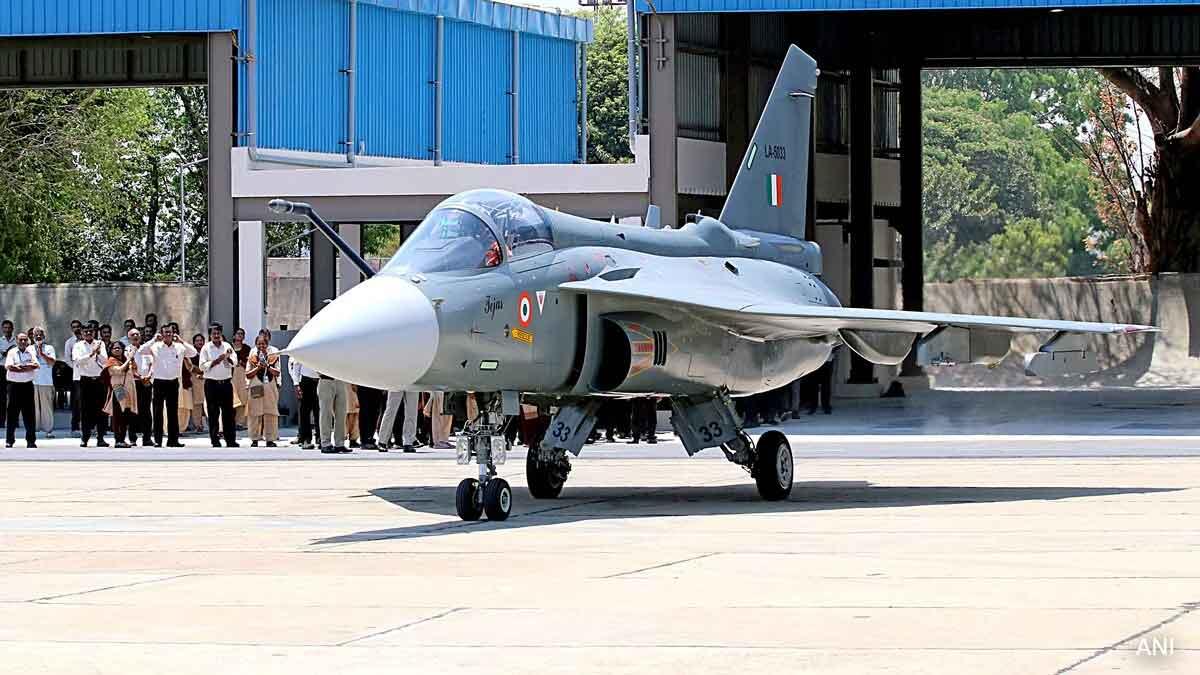


In a significant step forward for India's own defense capabilities, Tejas Mark 1A, India's upgraded Light Combat Aircraft (LCA), is set to feature the cutting-edge Beyond Visual Range Air-to-Air Missile (BVRAAM) Meteor missile, according to HAL chief Dr DK Sunil.
This missile is already deployed on the Indian Air Force's (IAF) Rafale fighters and it will greatly enhance the combat capability of the Tejas Mark 1A, which is a major landmark in India's defense technology self-reliance effort.
The MBDA-developed Meteor missile is the most advanced BVRAAM in the world and has ramjet propulsion, active radar homing, as well as no-escape zone capability. This makes the missile very lethal for air-to-air combat missions, enabling strikes at far distances. Development of this missile being integrated onto the Tejas Mark 1A reflects the IAF's intent to equip indigenous platforms with world-class weapon systems, consistent with the Atmanirbhar Bharat (Self-Reliant India) initiative.
The HAL Chief told NDTV that the Meteor missile would probably be included in the second batch of Tejas Mark 1A fighter jets. The second batch will incorporate the domestically manufactured Uttam Active Electronically Scanned Array (AESA) Fire Control Radar (FCR), supplanting the presently imported ELM-2052 AESA radar by Israel's Elta Systems. Converting to the Uttam radar is one step towards increasing indigenization, decreasing dependence on overseas vendors and enhancing India's defense systems technological independence.
MBDA has signaled its willingness to pair the Meteor missile with the Tejas Mark 1A, if the aircraft uses an Indian-developed radar. This is a support for India's drive for self-reliance and is indicative of the confidence that MBDA has in the DRDO-developed Uttam AESA radar. With its advanced target detection and tracking capabilities, the Uttam radar is an optimum platform for high-end missile systems such as the Meteor.
As per HAL, the process of integrating the second batch of Tejas Mark 1A aircraft (97 aircraft) with the Uttam radar is expected to be initiated first. This is done in a phased manner so that HAL and DRDO can get the radar integration perfected and seamlessly compatible with the Meteor missile.
For the IAF, the induction of the Meteor missile on the Tejas Mark 1A is a major strategic boost. With its long-range engagement and sophisticated guidance system, the airframe's capability to counter the modern airborne threat will significantly enhance. Coupled with the Uttam AESA radar, the Tejas Mark 1A will have heightened situational awareness and combat potential, putting it at par with current fourth-generation fighters.
This progress also reflects the increasing cooperation between India's indigenous defense industry and foreign allies like MBDA. By facilitating the integration of the Meteor missile with a local radar, MBDA is supporting India's ambitions for self-reliance while furthering bilateral defense ties.
Read also| In addition to AMCA, Safran proposes to produce engines for Tejas MK 2 Also: Report