

In a major development of its defense strategy, India is poised to create a state-of-the-art ultra-long-range strategic bomber that can strike targets located more than 12,000 kilometres away.
This bold step marks a transition from regional deterrence to global power projection and is a big leap in the Indian Air Force's offensive strength.
Modelled after the Russian TU-160 'Blackjack' and the soon-to-be-launched American B-21 Raider, the suggested bomber will be a costliest and most strategic aerospace investment of India to date.
The plane would enable India to access targets well beyond its very immediate neighbourhood — across continents like North America, Europe, Africa, and Australia.
The move comes at a time when the nature of war is being transformed by cyber attacks, space missions, and distant-precision strikes. While China is striving to deploy its H-20 strategic bomber and the US is already flying advanced platforms such as the B-2 Spirit and upcoming B-21 Raider, India is looking to bolster its nuclear triad by adding an powerful airborne element to boost its second-strike capability.
The proposed new platform, provisionally christened the Ultra Long-Range Strike Aircraft (ULRA), is in the conceptual and preliminary design stage. Supported by the Defence Ministry, Indian Air Force, and institutions like DRDO, HAL, and ADA, the program promises to deliver a prototype around 2032–2035.
The Russian TU-160 — the world's fastest and heaviest supersonic strategic bomber with a maximum range of over 12,000 km and an 40-tonne payload — will be the basis of the Indian defence scientists' design. But the Indian version will modify the design to meet its peculiar geopolitical and operational requirements.
An important feature that is sure to be preserved is the swing-wing (variable geometry wing) design, which enables the plane to change aerodynamically between flight phases for improved range and fuel economy.
While the Northrop Grumman-designed B-21 Raider is tailored to include stealth, radar avoidance, and autonomous operations, India's ULRA is set to surpass its estimated 9,300 km range. With indigenous and foreign technologies loaded on board, the Indian bomber has the potential to represent a major quantum jump in strike radius, and long-range operations would become a reality.
DRDO will integrate stealth features, radar-absorbent materials, and state-of-the-art avionics to assure survivability and accuracy in hostile airspaces.
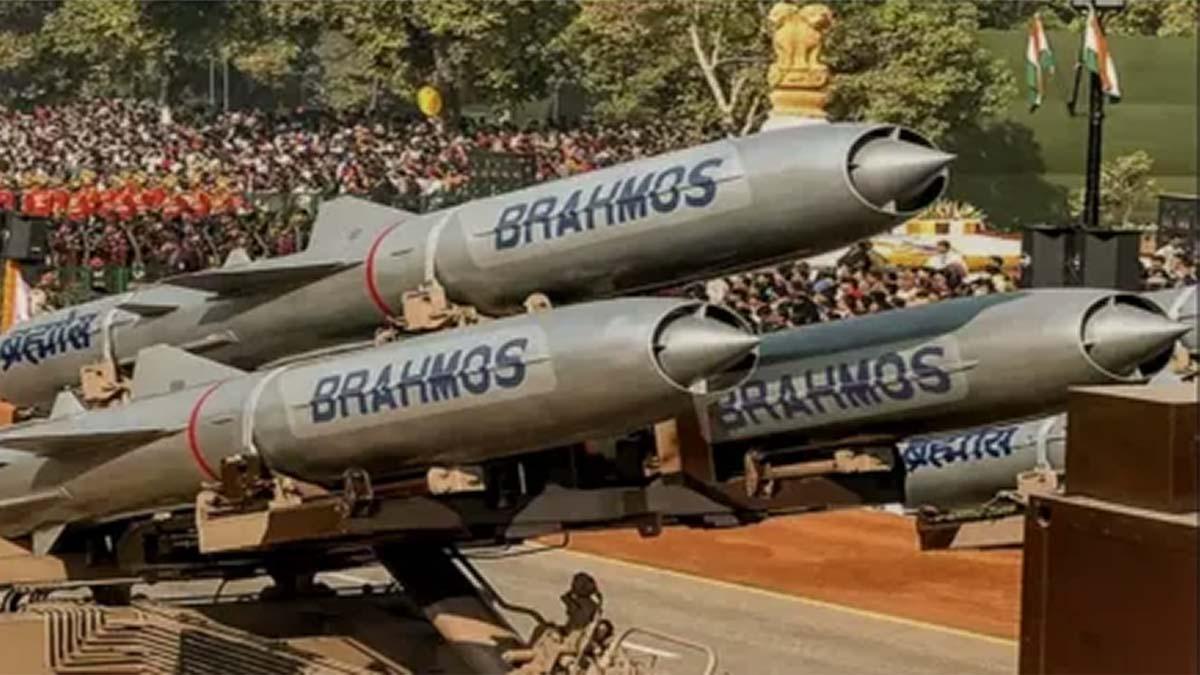
One of the most impressive features of the ULRA will be its weapons payload. The aircraft will be capable of carrying four BrahMos-NG missiles — next-generation supersonic cruise missiles with a range of 290 to 450 km. These weapons can quickly destroy enemy radar stations, command centers, and key military infrastructure.
Other payload options include:
Agni-1P short-range ballistic missiles
Laser-guided precision bombs
Anti-radiation missiles
This mixed armament package would give the bomber the capability to undertake both tactical and strategic missions — including nuclear delivery — in any theatre.
India is negotiating with global allies for the transfer of core technologies, with Russia and France being the main candidates. The design of a high-thrust turbofan engine will be the fulcrum of the bomber's capability. Available choices are to use a variant of the GE-414 engine or a locally modified variant of the Russian NK-32, which is the engine of the TU-160.
When operational, the ULRA bomber will provide several strategic benefits:
Global Strike Capability: To engage targets across continents, well beyond conventional theatres of operation.
Second-Strike Assurance: A credible air leg in the nuclear triad to maintain retaliatory capability.
Power Projection: An instrument to counter the rise of other prominent powers — that is, the US, China, and Russia — in the Indo-Pacific and beyond.
The project reflects India's increasing confidence in domestic innovation and aerospace technology, and is a dream of a more confident, strategically autonomous country.
Read also| Indian Army Set to Bolster Firepower with Induction of US Apache Helicopters Next Week