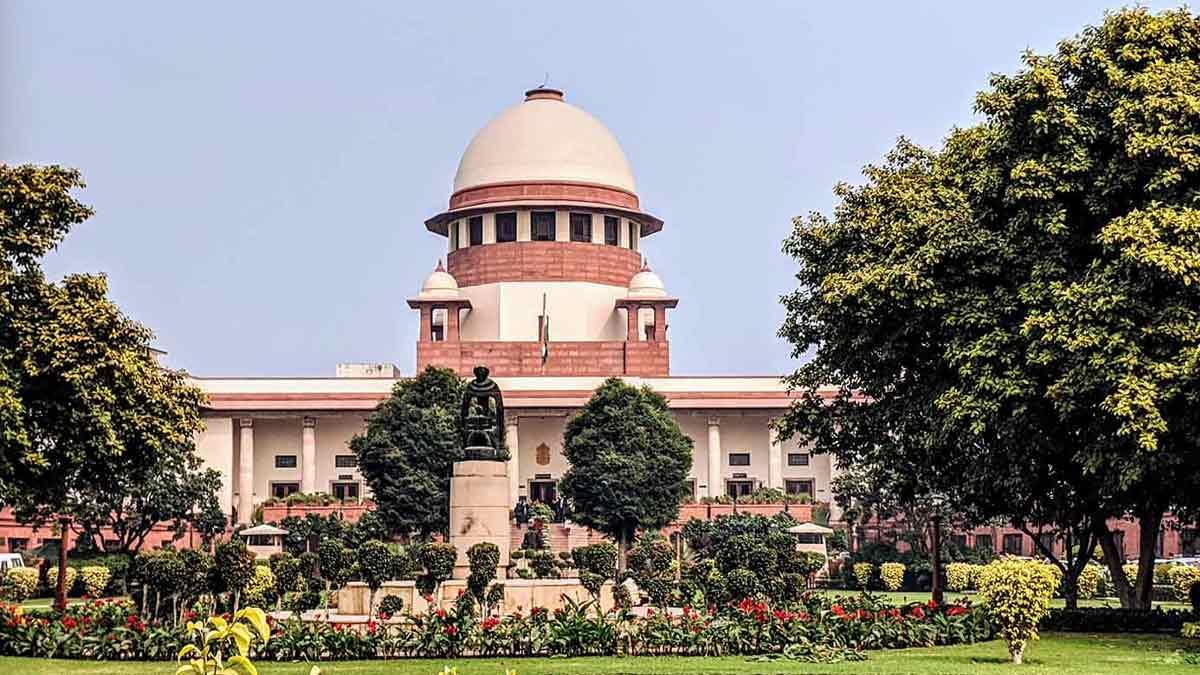


Supreme Court on Wednesday referred to Bihar's special intensive revision (SIR) of the voter rolls as "voter friendly," observing that the exercise calls for 11 documents to be furnished for submission, whereas the previous summary revision needed seven.
A bench of Justices Surya Kant and Joymalya Bagchi, resuming hearing pleas questioning the Election Commission's June 24 order to hold SIR in election-bound Bihar, noted that whereas petitioners contended that the non-acceptance of Aadhaar was exclusionary, the broader list of documents seemed "actually inclusionary."
"The number of documents that underwent summary revision done previously in the state was seven and now in SIR it is 11, which indicates it is voter friendly. We understand your submissions that not accepting Aadhaar is exclusionary but having a large number of documents is actually inclusionary," the bench added.
The court made clear that electors should produce one of the 11 documents.
Senior counsel Abhishek Singhvi, who appeared for the petitioners, differed, arguing that even if the number of documents is more, their substantive coverage is not much.
Referring to passport possession among voters, Singhvi said that barely one to two per cent of Bihar's population hold passports and permanent resident certificates have no provision in the state.
"If we observe the coverage of documents with the population in Bihar it can be observed the coverage is very low," he maintained.
The bench, however, observed that the coverage of 36 lakh passport holders in the state "seems to be good."
Justice Bagchi further added, "The list of documents is made up normally after considering feedback from different government departments to achieve maximum coverage."
On August 12, the Supreme Court had upheld that citizens and non-citizens being added or excluded from voting lists is within the power of the Election Commission. It also followed the EC's stance of not considering Aadhaar and voter cards as final documents identifying citizenship for Bihar's SIR process.
In the wake of mounting controversy in and outside Parliament, the court observed that the row is largely a "trust deficit issue," with the EC pointing out that approximately 6.5 crore out of Bihar's total 7.9 crore voters would not have to produce any documents if their name or their parents' name was found on the 2003 electoral rolls.
Read also| Bombay High Court says Aadhaar, PAN, voter ID don't make one an Indian citizen
Read also| Watch| Poll Panel Targets Rahul Gandhi in Voter Fraud Row: "New Wine, Old Bottle"