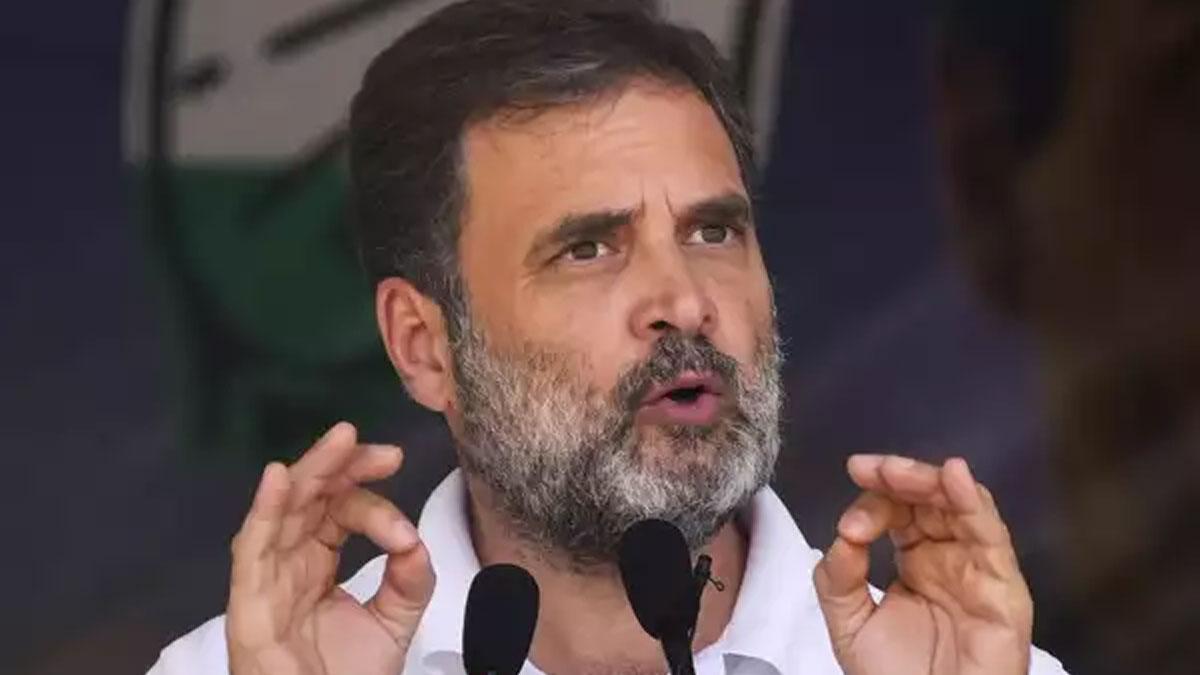


The Supreme Court on Monday severely criticized Congress leader and Leader of Opposition in Lok Sabha Rahul Gandhi for his alleged comments about the Indian Army.
Gandhi, while speaking to the people during the Bharat Jodo Yatra, had allegedly said, "Chinese soldiers are beating up Indian Army personnel in Arunachal Pradesh," about the confrontation that occurred in the Tawang region on December 9, 2022.
A bench comprising Justices Dipankar Datta and Joymalya Bagchi voiced serious reservations about Gandhi’s assertion that China had taken control of 2,000 square kilometres of Indian land. The court remarked, “if he were a true Indian, he would not have said all this.”
Asking sharp questions to senior counsel Abhishek Manu Singhvi, representing Gandhi, the bench inquired, "How do you confirm 2,000 square kilometres of Indian land were taken by the Chinese? Were you present there? Do you possess any authentic material? Had you been a genuine Indian, you wouldn't have spoken like this. Does it happen abnormally when there is a clash across the order that you have casualties on both sides?"
The bench also questioned the rationale behind Gandhi bringing such issues to the public domain outside of Parliament: "Whatever you have to say, why don't you say it in the Parliament? Why do you have to say this in social media posts?"
These remarks followed as Singhvi argued that it would be a disturbing precedent if opposition leaders were not allowed to bring critical national issues to the media.
Despite the sharp observations, the top court agreed to hear Gandhi’s petition, which seeks clarity on whether a notice to the accused is mandatory before the cognisance stage of a criminal case. It directed both the Uttar Pradesh government and the original complainant to respond.
In the meantime, the bench led by Justice Datta granted temporary protection to Gandhi by staying the summons issued by a court in Lucknow.
The complaint, lodged by Udai Shankar Srivastava, a retired Director of the Border Roads Organisation, alleged that Gandhi had made "false and baseless" comments that purported to "demoralise the Indian Army" and damage national sentiment.
Back in May, the Allahabad High Court had rejected Gandhi’s plea to dismiss the criminal defamation case. The court dismissed arguments suggesting that the complainant had no legal right to bring the case since he wasn’t personally named.
Justice Subhash Vidyarthi, delivering the verdict, observed that even individuals not directly referenced in defamatory statements can be considered “aggrieved” if they suffer reputational harm.
"The trial Court has aptly reached the conclusion to order summon of the applicant (Gandhi) to stand trial for the offence under Section 500 I.P.C. after considering all the facts and circumstances of the case," the ruling said.
Declining to exercise its inherent powers, the High Court could find nothing wrong with the lower court's February 11, 2025, order summoning Gandhi, and elected not to interfere.
Later, Rahul Gandhi faced the MP-MLA court in Lucknow, where he was released on bail after depositing a personal bond of ₹20,000 along with two sureties of equal worth.
In addition to obeying the trial court's summons, Gandhi approached the Supreme Court to contest the High Court's denial to quash the defamation case. He had been summoned several times previously but had not attended until then.
Read also| Watch| Shashi Tharoor Counters Rahul Gandhi’s Comments on Trump: “We All Know...”
Read also| ECI Releases Draft Voter List for Bihar SIR, Public Camps to Begin Tomorrow