
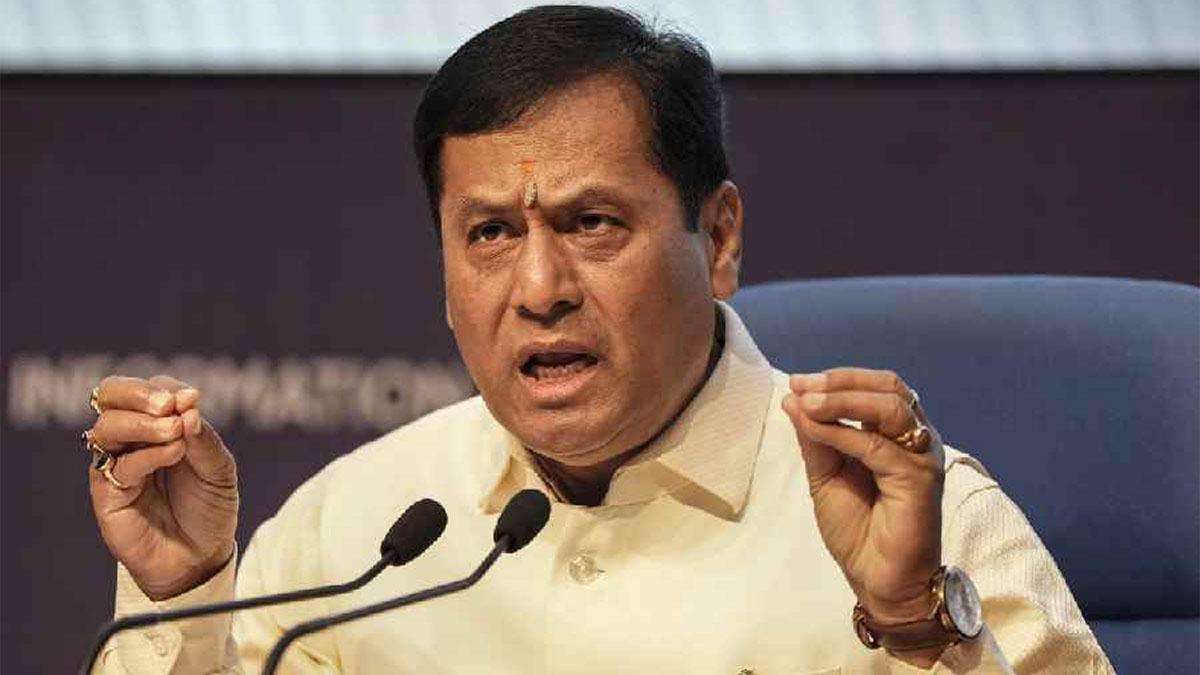


India's shipbuilding industry is undergoing a historic change as the central government, headed by Prime Minister Narendra Modi, steps up efforts to develop a globally competitive maritime infrastructure, Union Minister for Ports, Shipping and Waterways Sarbananda Sonowal has said.
As part of the vision for Maritime India 2030 as well as the overall strategic plan for Amrit Kaal, the Union Budget 2025 has brought in a plethora of policy reforms and fiscal initiatives to scale up Indian shipyard capabilities and boost their global position.
"These efforts are likely to make India a strong emerging global maritime power," Sonowal said in the current monsoon session of the Lok Sabha.
He highlighted the overhaul of the Shipbuilding Financial Assistance Policy, currently being customized to address the cost disparity Indian shipyards suffer in comparison to their overseas rivals. The adjustment is regarded as a move towards leveling the playing field.
Building on the push for sustainability, the government has also made credit notes for ship breaking operations at Indian yards, giving more strength to a phased circular economy model in the maritime arena.
For procuring capital for building large vessels, vessels larger than a specified size will come under the Infrastructure Harmonised Master List, allowing for long-term low-cost funding.
Concurrently, the government is going to set up integrated ship-building clusters with world-class infrastructure, cutting-edge technology, and skills development centers. Under the Union Budget, this initiative aims to increase the range and size of ships being built domestically.
One of the key proposals is the establishment of a ₹25,000 crore Maritime Development Fund with the government contributing a maximum of 49%. The fund is meant to trigger private and port-sector investment, enabling the growth and modernization of ship repair and shipbuilding facilities around the country.
Given the industry's long-term investment cycles, the government has also extended Basic Customs Duty (BCD) exemptions on raw materials and components used in shipbuilding and ship-breaking for another decade.
“Our commitment to empower and enable our maritime sector is absolute and it is with this intent we are working under the dynamic leadership of PM Modi,” Sonowal affirmed.
To increase domestic shipbuilders' prospects in government orders, the Right of First Refusal (ROFR) has also been widened for tenders floated by public sector companies. As per the Public Procurement (Preference to Make in India) Order, 2017, ships worth less than ₹200 crore have to be procured from Indian shipyards — a development keeping in sync with the nation's thrust towards maritime self-sufficiency.
On the repair side, a milestone was reached when Cochin Shipyard Limited commissioned an ₹970 crore International Ship Repair Facility (ISRF) at Kochi, further enhancing India's ship maintenance facilities.
Read also| Watch| Shashi Tharoor Counters Rahul Gandhi’s Comments on Trump: “We All Know...”
Read also| ECI Releases Draft Voter List for Bihar SIR, Public Camps to Begin Tomorrow