
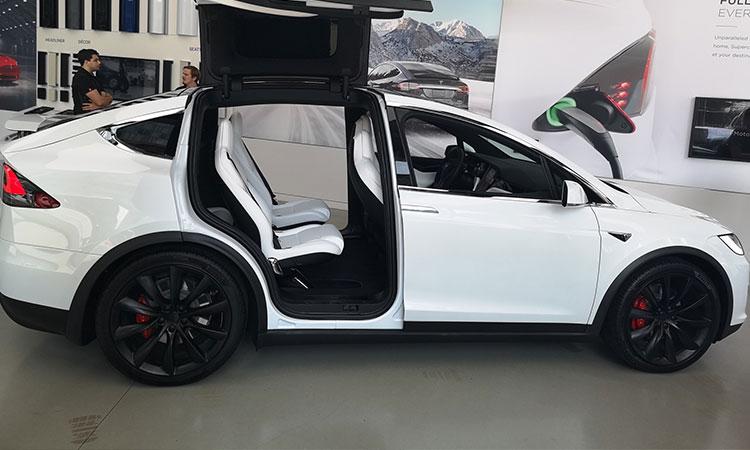


The US National Highway Transportation Safety Administration (NHTSA) has launched a probe into Tesla after receiving complaints from owners that they received their electric cars with defective seat belt parts.
The Office of Defects Investigation (ODI) received two recent complaints reporting a failure of the front seat belt to remain connected to the seat belt anchor pretensioner while driving with seat belts worn properly in 2022 and 2023 Model Year Tesla Model X vehicles.
"Both vehicles were delivered to the owners with insufficiently connected anchor linkages," said the NHTSA.
Nearly 50,000 Model X cars may be affected, NHTSA said.
Also Read | Twitter to show 50% less ads to paid Blue subscribers
The defect involves the point at which the seat belt pretensioner and an anchor are linked.
According to the agency, "the linkage and the pretensioner suddenly separated" when force was exerted on them.
No injuries were reported in connection with the two claims of defects, and the detachment of the seat belt parts occurred "at low vehicle mileage", according to NHTSA.
Tesla was yet to respond to the probe.
The electric car company is also facing a preliminary probe by the NHTSA into 120,000 Model Y cars (2023 models) as reports surfaced about steering wheels dangerously falling off while driving.
Also Read | Apple unveiling VR headset at WWDC, says 'last hope' to convince investors
Tesla has also issued a voluntary recall for its electric semi truck over a rollaway risk related to a potential emergency brake failure just months after it was released.
Last year, Tesla recalled more than 3,21,000 vehicles for a software glitch.
The recall covered certain 2023 Model 3 vehicles and 2020 to 2023 Model Y vehicles.