

As US President Donald Trump's new $100,000 H-1B visa fee sends shockwaves of panic and confusion across the nation, China has proposed a new category of visa intended to lure young science and technology talent.
Beijing is launching a 'K visa' as part of its regular visa system, accessible for qualified young professionals in science and technology.
China's Premier Li Qiang signed a decree to modify rules governing foreigners' entries and exits. The new regulations will become operational on October 1, a Xinhua report says.
Conditions of the K Visa
Relative to the current 12 regular visa types, K visas will grant more flexibility in terms of the number of allowed entries, period of validity, and length of stay. Upon entry into China, holders of K visas can engage in exchanges in education, culture, science, and technology, as well as the corresponding entrepreneurial and business activities.
Candidates should meet specifications and criteria stipulated by Chinese authorities and provide supporting documentation. Unlike in most other visa types, K visas do not need to be issued an invitation by a domestic employer or organization, and the application process is likely to be simpler, with age, educational qualifications, and work experience requirements still in place.
Beijing's Declaration on the Visa
The authorities stated that the action is a demonstration of China's requirement for international talent and China's opportunities for their contribution. The action is designed to further execute the country's labor development strategy, ease the entry of foreign young sci-tech talent, and enhance international exchanges and cooperation between young professionals, according to a press conference statement.
China's Talent Outreach
The launch of the K visa is China's latest move to streamline visa formalities and promote global exchanges. China had made unilateral visa-free entry or mutual visa-exemption arrangements with 75 nations by the end of July.
These lenient visa policies have helped fuel a consistent increase in overseas arrivals. Statistics released by Beijing's National Immigration Administration indicate that foreign nationals took 38.05 million trips to or from China during the first half of 2025, up 30.2% on-year. Of them, 13.64 million were visa-free trips, rising 53.9% compared with the same period of last year.
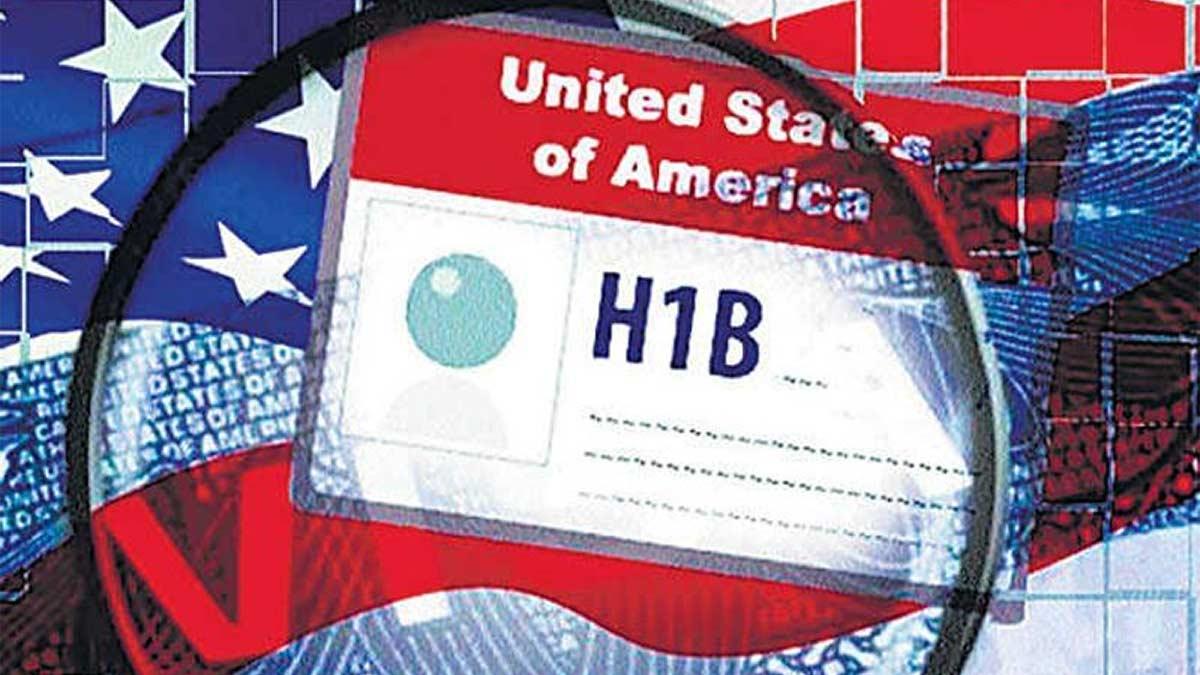
In the meantime, all new H-1B visa petitions filed after September 21, including for the FY2026 lottery, will carry a USD 100,000 fee, as revealed by President Donald Trump. The president defined the six-figure fee within his campaign to protect American employment and national security. He also introduced a "Trump Gold Card" visa program, through which individuals can gain US residency for $1 million.
US Citizenship and Immigration Services (USCIS) clarified in an 'H-1B FAQ' on Sunday that the September 19 proclamation was an "important, initial, and incremental step" towards reforming the H-1B visa program, with the goal of ending abuses and safeguarding American workers.
The FAQ described, "requires a $100,000 payment to accompany any new H-1B visa petitions submitted after 12:01 am Eastern Daylight Time on September 21, 2025," This is for the 2026 lottery and all subsequent new H-1B filings.
For foreign graduate students, the H-1B visa has been an important path to stay in the US after graduation. India was the biggest recipient last year, comprising 71% of issued visas, and China got 11.7%, as per US government statistics.
Trump's policy will lead many young professionals to revisit their strategy for working in the US and look for options elsewhere.
Read also| White House Clarifies $100K Fee Does Not Apply to Current H-1B Visa Holders
Read also| USCIS to Charge USD 100,000 for New H-1B Petitions Filed After September 21