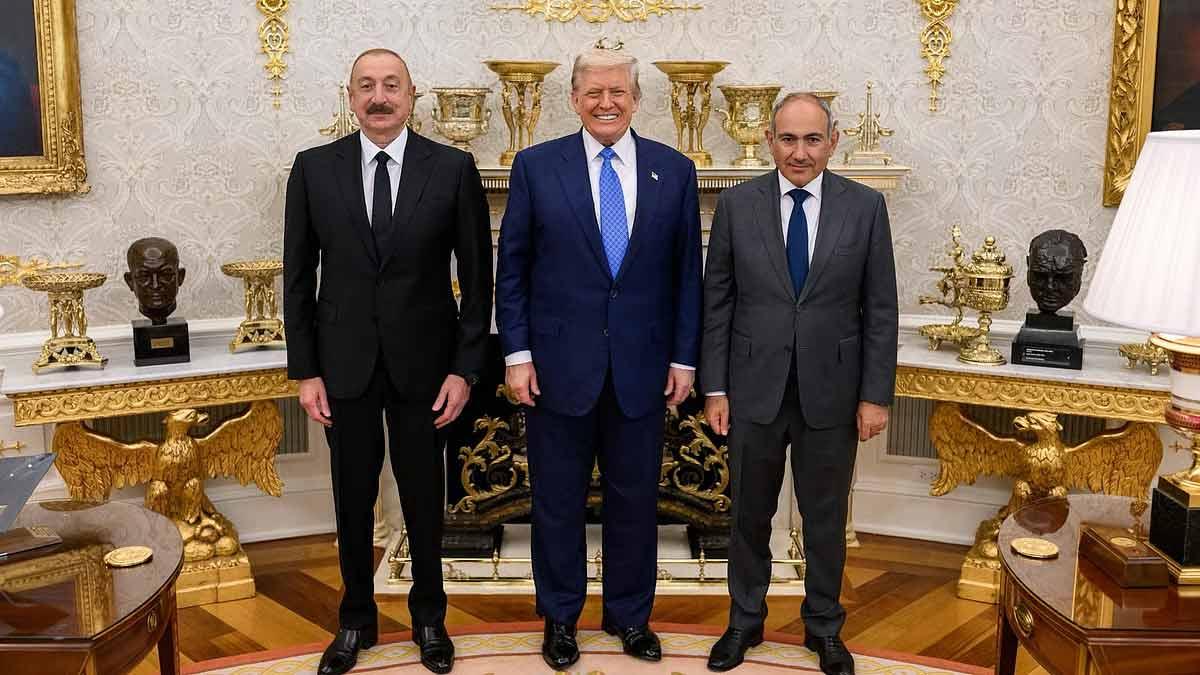


Armenia and Azerbaijan officially signed a historic peace deal at the White House on Friday, bringing decades of conflict to an end in the South Caucasus. The United States-brokered deal seeks to restore transportation ties between the two countries while highlighting Washington's increasing influence in the region as Russia's profile there recedes.
A central component of the agreement is the establishment of a principal transit route, to be called the "Trump Route for International Peace and Prosperity," said the White House. The route will link Azerbaijan with its Nakhchivan exclave, divided from it by a thin band of Armenian land, directly to Turkey and on into Europe. Azerbaijani calls for such a route had long been the source of deadlock in negotiations.
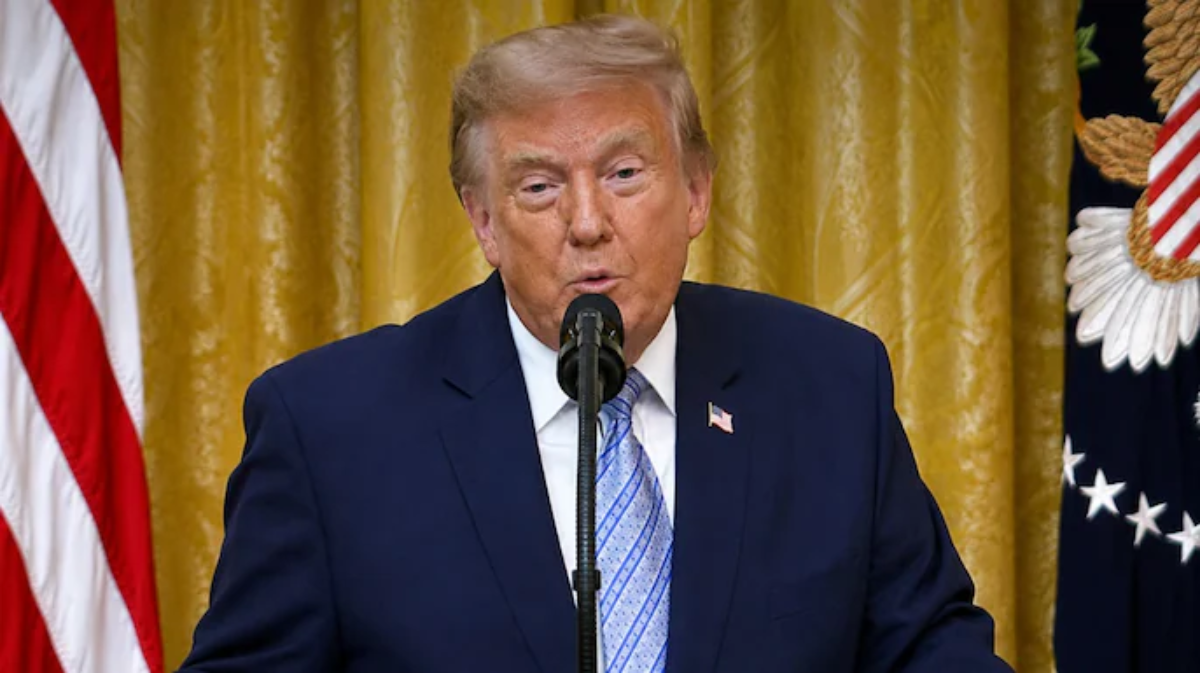
Donald Trump said the designation of the route for him was "a great honour" and pointed out that it was Armenia who had suggested the name. "I didn't ask for this," he also said. It has been confirmed by a US senior official that the proposal was made by Yerevan.
In addition to the joint peace accord, both nations also signed individual bilateral agreements with the United States to enhance cooperation in energy, technology, and economic growth, though the terms are not disclosed.
The handshaking ceremony included Azerbaijani President Ilham Aliyev and Armenian Prime Minister Nikol Pashinyan shaking hands, with Trump taking their hands in his in a symbolic gesture. The leaders welcomed the pact as a breakthrough in a war that has been smoldering for almost 40 years over the Nagorno-Karabakh territory—an ethnic Armenian-dominated area during Soviet rule but within Azerbaijan's borders. The long conflict has cost tens of thousands of lives, following a number of attempts at international mediation that failed.
Azerbaijan retook Karabakh in 2023, which set the stage for the recent negotiations. Aliyev called the result "President Trump in six months did a miracle," while Pashinyan referred to it as "a significant milestone" and a chance "to write a better story than the one we had before.
Trump highlighted the significance of the breakthrough: “Thirty-five years they fought, and now they’re friends, and they’re going to be friends a long time.” He also expressed his intent to visit the Trump Route once completed, saying, “We’re going to have to get over there.” When asked about the prospects for lasting peace, he replied, “Very confident.”
The pact is also a strategic loss for Russia, which for decades was playing the role of the leading mediator in the war but had its presence in the region severely diminished after it invaded Ukraine in 2022.
The peace push gained speed earlier this year when Trump's envoy, Steve Witkoff, sat down with Aliyev in Baku to discuss what a US official called a "regional reset." Tracked planning for the Trump Route—which will involve railroads, oil and gas pipelines, and fiber optic cable—is set to begin next week, with a minimum of nine developers already expressing interest, a senior administration source says.
Read also| China Welcomes PM Modi’s Upcoming Visit for SCO Summit
Read also| Trump Reiterates Claim of Mediating India-Pakistan Tensions