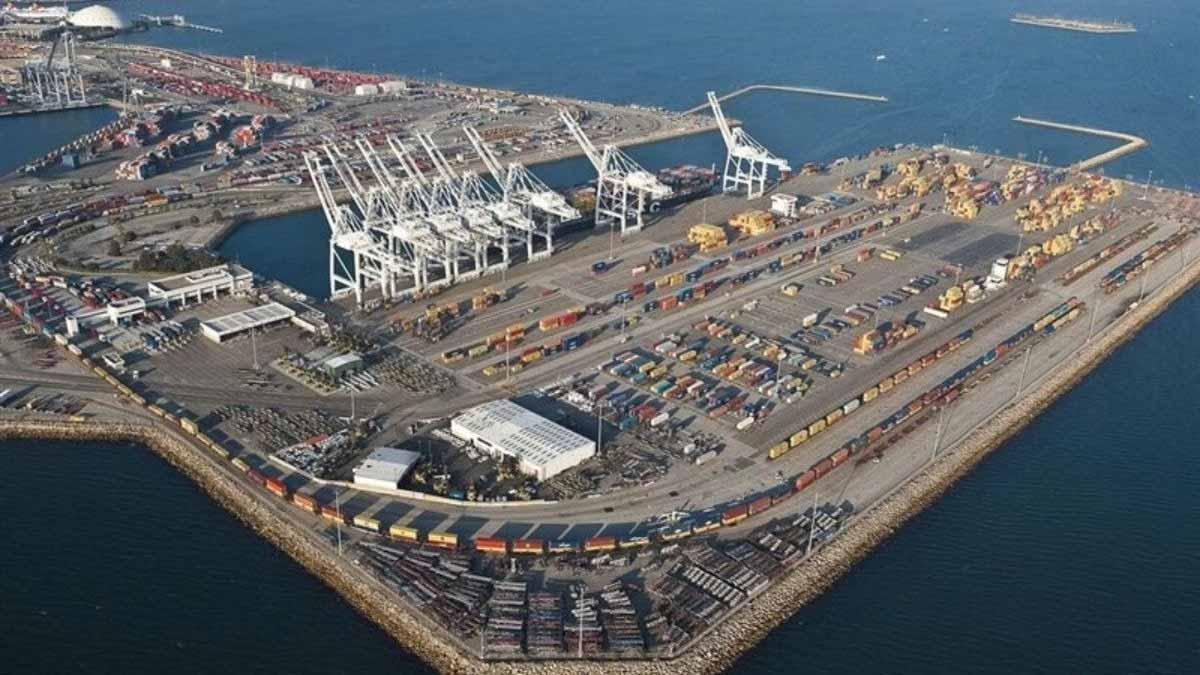


India's vital gateway to Afghanistan and Central Asia, the Iranian port of Chabahar, is now facing serious challenges after the United States pulled out the sanctions waivers that were earlier extended under the Iran Freedom and Counter-Proliferation Act (IFCA).
The move, which will come into effect from September 29, may expose Indian operators at the port to American penalties, putting in limbo the future of one of India's most strategic initiatives for regional connectivity.
Since India assumed operational control of the Shahid Beheshti terminal at Chabahar in 2018 through its state-owned India Ports Global Limited, the port has emerged as a cornerstone in New Delhi’s plan to circumvent Pakistan and maintain direct trade routes to Afghanistan and Central Asia.
Located on the Gulf of Oman, the port serves not only regional trade but also as an essential link for transporting humanitarian aid to Afghanistan. In recent years, cargo has risen dramatically, with more than 8 million tonnes of cargo handled and tens of thousands of containers processed. Aggressive expansion plans to increase the port's capacity to 500,000 from 100,000 TEUs and connect it with Iran's rail network by mid-2026 further underline its increasing strategic importance.
The US Treasury move of last week, which listed an international illicit finance network underpinning Iran's Islamic Revolutionary Guard Corps (IRGC) and terminated IFCA sanctions waivers, is a noticeable escalation of Washington's "maximum pressure" campaign against Iran. The unprecedented sanctions are targeted at individuals and entities engaged in Iranian oil sales financing Iran's military and regional proxy forces, and hit directly Iran's shadow banking system.
For India, the removal of the Chabahar sanctions waiver presents new challenges. The operations of the port can now be exposed to US sanctions, jeopardizing the huge investments India has already made—over $120 million in infrastructure and development credit lines. This puts a fine diplomatic balancing act on India to pursue its increasing friendship with the United States without compromising its strategic and economic ties with Iran.
Chabahar Port project is also a major countervailing influence of China's inroads through Pakistan's Gwadar port and is in tune with India's vision to increase trade channels to resource-habitat-rich Central Asian republics and Russia through the International North-South Transport Corridor (INSTC). Its geographic location close to the Strait of Hormuz also adds to its value for regional stability as well as protecting sea trade routes.
Read also| PM Modi Talks with Nepalese Leader Sushila Karki, Reiterates India’s Support