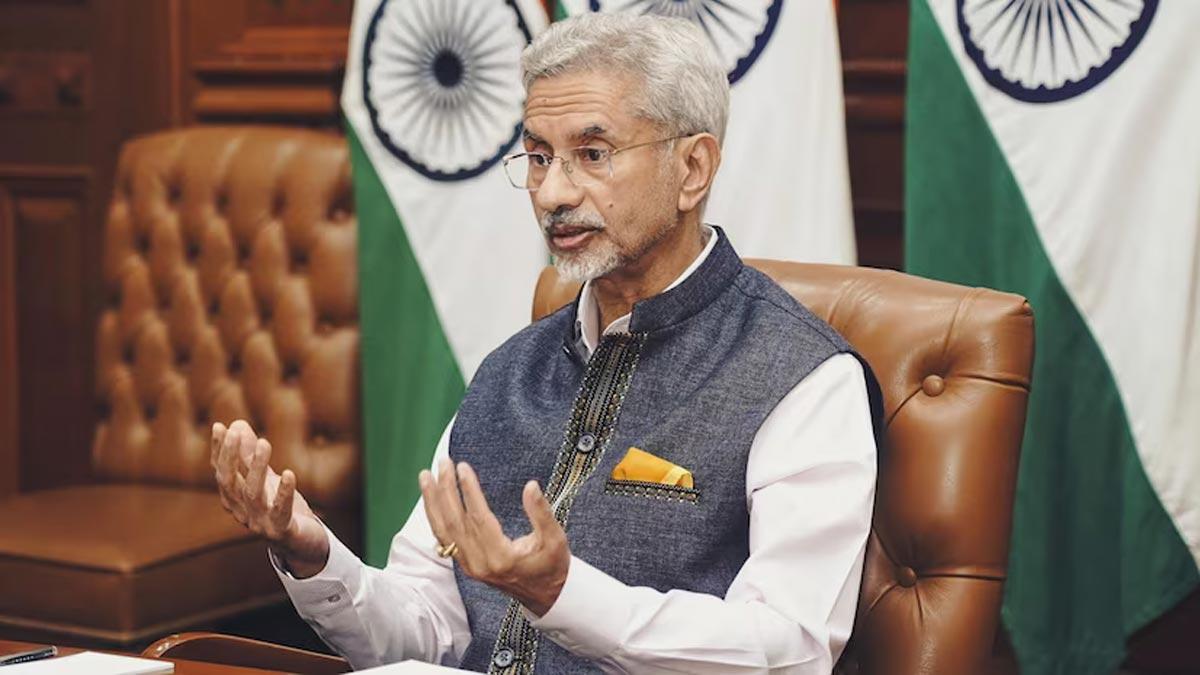


Chinese Foreign Minister Wang Yi on Monday reassured External Affairs Minister S. Jaishankar that Beijing is working hard to address India's issues of export curbs on fertilizers and rare earth elements, according to media reports.
The reassurance was made during Wang's meeting with Jaishankar on Monday. Wang is here for a two-day visit that also includes negotiations with National Security Adviser Ajit Doval under the Special Representatives mechanism on Tuesday.
China reportedly promised to resolve three main Indian concerns regarding export restrictions made in the last few months. Foreign minister Wang reportedly assured the external affairs minister that China is working on India's requirements of fertilisers, rare earths and tunnel boring machines.
No statements have come from either side. Jaishankar previously said he brought "particular concerns" to Wang—topics also on the agenda during their meeting in July. Back then, Jaishankar highlighted the importance of preventing "restrictive trade measures and roadblocks" that would impede economic cooperation, citing China's restriction on the export of rare earth minerals, which are essential for goods such as smartphone and electric vehicles, and fertilizers. The restrictions also impacted Indian electric vehicle producers.
China provided almost half of India's fertiliser imports during 2023 but ended sales worldwide last year. Even though Beijing relaxed the ban in June, the restrictions on India continue. India's Chinese imports of urea dipped to around 100,000 tonnes in 2024-25, down from 1.87 million tonnes in the previous year, according to the Fertiliser Association of India. To offset the shortage, India inked five-year deals with Saudi Arabia for 3.1 million metric tonnes of DAP fertilizer per year. DAP, or di-ammonium phosphate, ranks as India's second most popular crop fertilizer.
China has also been said to have delayed the export of three giant tunnel boring machines meant for the Ahmedabad-Mumbai high-speed line project. These machines are crucial to a 21-km underground part of the line and were due in India between late 2024 and early this year.
During the meeting, Jaishankar emphasized the imperative of a "candid and constructive" approach based on mutual respect and sensitivity to enhance bilateral relations after a turbulent phase. He reaffirmed India's invite to further the de-escalation process along the Line of Actual Control (LAC). Economic and trade issues, sharing of river data, border trade, connectivity, and other bilateral interactions were also discussed.
Wang is the first Chinese minister to visit India since the two sides reached an understanding in October to end the military standoff on the LAC that began in April–May 2020. The standoff, coupled with the Galwan Valley clash in June 2020, brought bilateral ties to a six-decade low.
On Tuesday, Wang will discuss border issues with Doval, the designated Special Representatives for the longstanding border dispute. He will also meet Prime Minister Narendra Modi, ahead of Modi’s first trip to China since the LAC face-off, to attend the Shanghai Cooperation Organisation (SCO) Summit in Tianjin on August 31 and September 1. Modi is expected to hold a bilateral meeting with President Xi Jinping during the summit. After the October agreement on the LAC, Modi and Xi formally met in Kazan, Russia, and decided to revive some mechanisms to resume normal relations and resolve the border issue.
Wang's visit has become significant against the backdrop of geopolitical and economic transitions triggered by the policies of the Trump administration in the US. Jaishankar and Wang both made reference to this backdrop in their initial addresses. Jaishankar underscored India and China's common vision of a just, balanced, and multipolar world, a multipolar Asia, with an emphasis on sustaining stability in the international economy. Wang cautioned that "unilateralism is running rampant" and that "free trade and international order are confronted with serious challenges." He underscored that India and China, being the largest developing countries, bear a duty to pursue "strength and dignity" for developing nations.
The enhancing relations have already borne fruit with India and China resuming the Kailash Mansarovar Yatra to Tibet after a five-year hiatus. India has resumed tourist visas for Chinese nationals for the first time since 2020, and the two nations are in detailed negotiations to resume direct flights and border trade.
Read also| Trump Aide Criticizes India’s Russian Oil Purchases, Urges Strategic Alignment with US
Read also| ‘A Very Good Step’: Trump Plans Putin-Zelenskyy Talks, Trilateral Summit to Follow