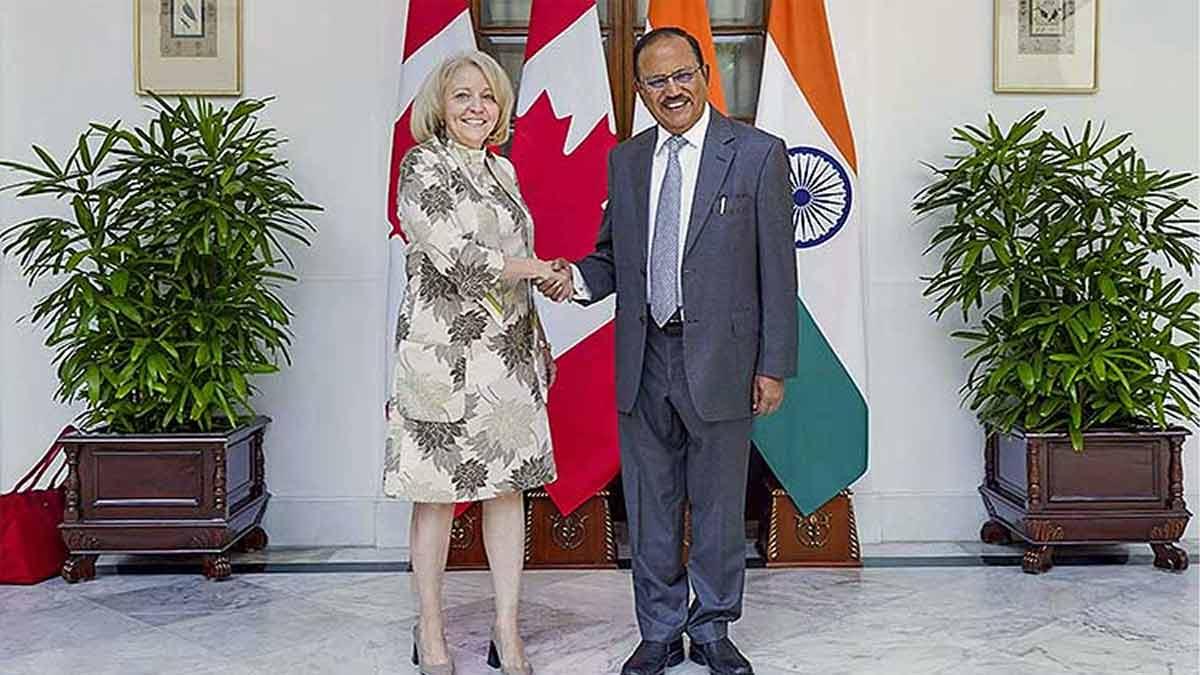


India-Canada relations had been strained after baseless accusations by Justin Trudeau regarding the activities of Khalistani terrorists operating from the canadian soil. Ties have improved since Trudeau's departure and the installation of a new government led by Mark Carney, although at a slow rate.
Indian agencies noted some hope after a report from Canadian intelligence that Khalistan activists were operating on Canadian turf to mobilize funds for terrorist activity. Though India was unsure at first if Canada would take action against the operatives, the arrest of Inderjeet Singh Gosal, the principal coordinator for the Khalistan referendum, is viewed as a positive sign.
India now feels that Canada is finally taking the issue seriously and is ready to cooperate closely.
National Security Advisor Ajit Doval has headed a team working in coordination with Canadian agencies. India has been providing dossiers and intelligence on Khalistan units, which led to cooperation that culminated in Gosal's arrest.
Officials pointed out that India has sent such dossiers to Canada before, but the difference this time lies in Canada's intent to act upon them, as opposed to earlier instances when the information was more or less dismissed.
The NSA and his staff have emphasised that these groups are not just pressure groups but are part of a terror network backed by the ISI, Indian agencies have informed Canada.
The breakthrough came after an earlier meeting of NSA Doval with his Canadian counterpart Nathalie Drouin this month. The talks laid the ground for a re-setting of relations, with both sides agreeing that it was time to deal with the threat effectively.
Doval and Drouin agreed to closely cooperate and exchange intelligence. On the diplomatic level, the two nations have also agreed to resolve the issue of Khalistan together. Canada has admitted that Khalistan sympathizers are a serious threat and not only are they using Canadian territory to attack India but also becoming aggressive within the country.
A case where Khalistan groups ordered a group of Canadians to vacate the nation, as it "belonged to them," marks the menace these groups present today.
Intelligence evaluations confirm that the Khalistan movement has not been successful in India, with constant efforts at reorganization in Punjab foiled by increased security and weakening youth support. Aggravated by these failures, the elements have increased propaganda and hostility in Canada to the detriment of Canadian interests.
Authorities reiterate that an overall reset in the bilateral relationship will be gradual, especially on the issue of Khalistan, and Gosal's arrest represents a significant beginning.
India has made 26 extradition requests to Canada; Ottawa has processed only five and the rest are pending. India had earlier accused Canada of doing nothing, with the Ministry of External Affairs recalling that these 26 requests relate to persons who had been charged in India with terror and related offenses. Provisional arrests for these individuals had also been requested.
Read also| Jaishankar Holds First Post-Tariff Meeting with Rubio on UNGA Sidelines
Read also| Jimmy Kimmel Show Set to Resume After Pause Over Charlie Kirk Remarks