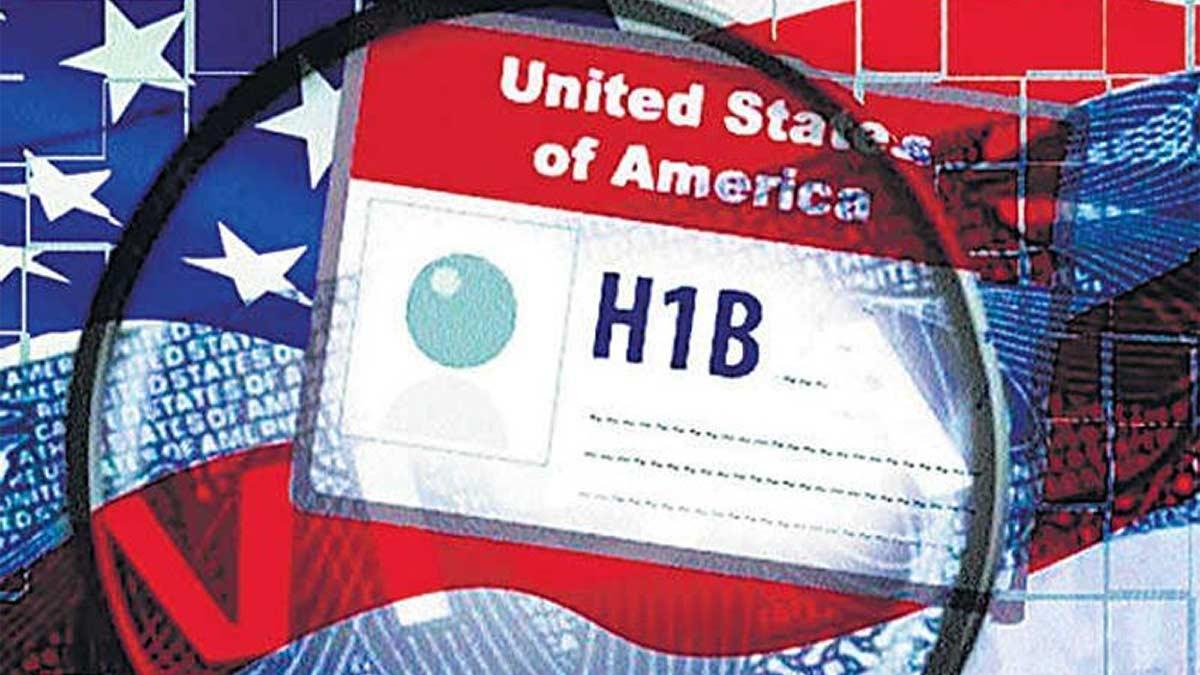


India on Saturday reacted to the move by the United States to impose a $100,000-a-year fee on H-1B visas from September 21, saying it could cause humanitarian problems, specifically due to disruption caused to families. The government said that it expected the US administration to take measures to resolve these problems.
"The Government has seen reports related to the proposed restrictions on the US H1B visa program. The full implications of the measure are being studied by all concerned, including by Indian industry, which has already put out an initial analysis clarifying some perceptions related to the H1B program," read a statement issued by the Ministry of External Affairs (MEA) spokesperson Randhir Jaiswal.
He reiterated that entrepreneurs on both sides share a common interest in promoting innovation and creativity and that constructive consultations would chart the future.
"Skilled talent mobility and exchanges have contributed enormously to technology development, innovation, economic growth, competitiveness and wealth creation in the United States and India. Policy makers will therefore assess recent steps taking into account mutual benefits, which include strong people-to-people ties between the two countries.
"This measure is likely to have humanitarian consequences by way of the disruption caused for families. Government hopes that these disruptions can be addressed suitably by the US authorities," the statement added.
Government officials further said New Delhi is in close cooperation with the Indian Embassy in Washington and has also started talks with Nasscom, the nation's leading technology industry association.
The H-1B visa fees are expected to increase sharply, and experts say that the move will predominantly affect American businesses that rely heavily on Indian talent for highly technical positions. The phenomenon has the potential to fuel the growth of Global Capability Centres (GCCs) in India, with companies seeking alternatives for mitigating the impending skill shortage in the US.
Indian nationals currently hold the highest proportion of H-1B visas, followed by Chinese professionals.
Read also| Under US Pressure, EU Announces Stricter Sanctions on Russia
Read also| Pakistan Defence Minister Khawaja Asif Makes Conflicting Remarks on 'Pak Nukes for Saudi'